Yarrow
Achillea millefolium
Meaning and Symbolism
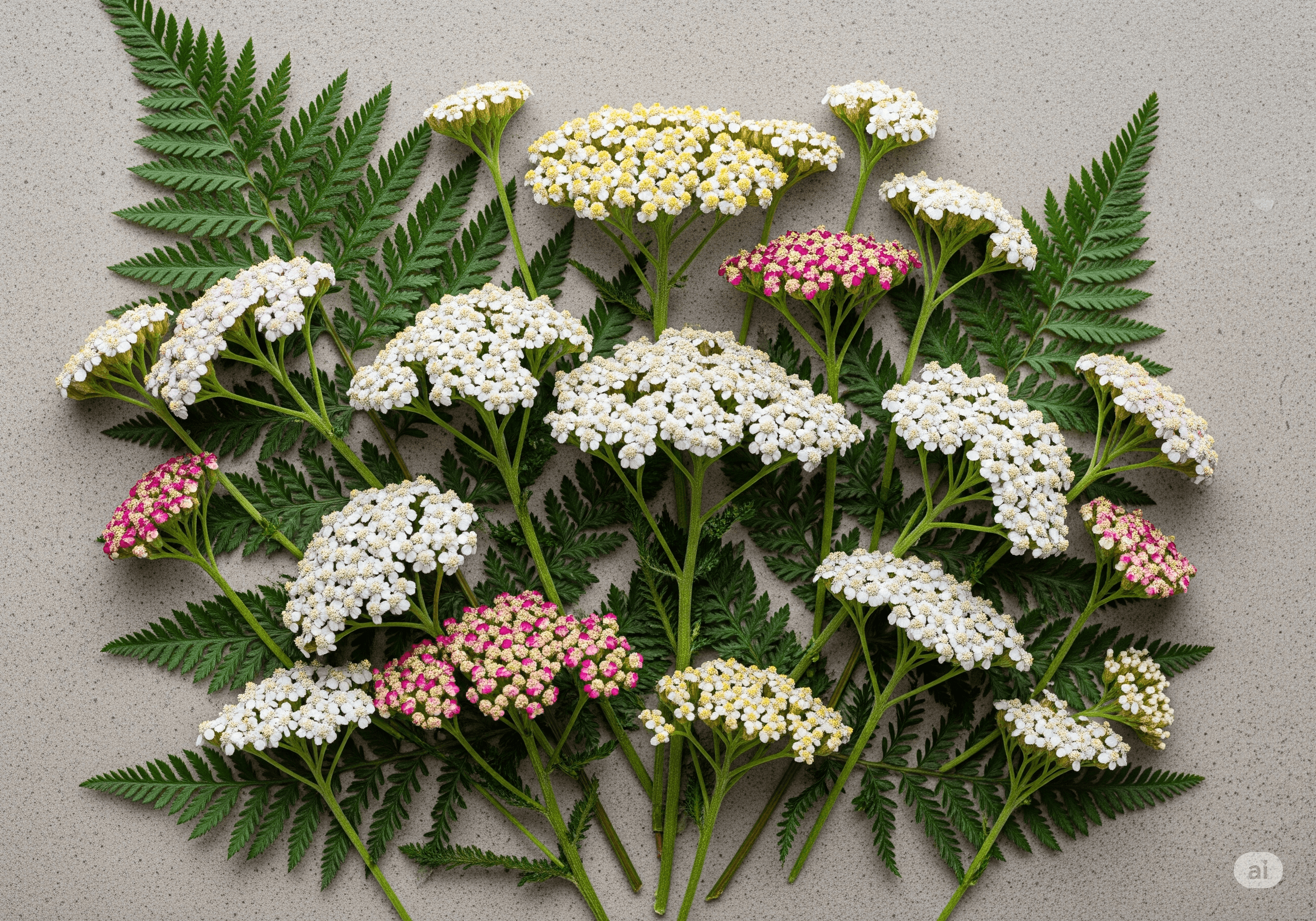
Yarrow’s fernlike foliage and flat-topped umbels give it a meadow-medicine look, which suits its symbolism perfectly: protection, healing, and the courage to recover. In love language, yarrow is the bloom of mending—apologizing well, forgiving thoroughly, and reweaving bonds. It’s also a talisman flower; folklore said bunches over doorways guard a home, and bridal bouquets with yarrow ensure a love that stays strong after the feast. As a Friendship emblem, yarrow honors those who show up with soup and good humor when life knocks you down. For “Get Well,” it’s almost on the nose: a nod to convalescence and the body’s intelligence. “New Beginnings” get yarrow’s blessing as a hardy pioneer plant that stabilizes rough ground, both literally and metaphorically. Color deepens the message: white for clarity and peace, yellow for upbeat vitality, pink for affectionate care, terra-cotta and rust for grounded strength. Because the plant blooms for months and hosts pollinators, it also symbolizes stewardship—healing that extends to community and landscape. If you want a flower that says “You’re safe; you’re strong; we’ll fix this,” yarrow is your ally.
History and Cultural Significance
The species name honors Achilles, who, legend says, used yarrow to staunch soldiers’ wounds during the Trojan War—hence old names like “soldier’s woundwort” and “herbal militaris.” Across Europe, Asia, and North America, traditional healers brewed yarrow teas and tinctures for fevers, digestion, and topical care; its astringent, aromatic qualities made it a staple of cottage apothecaries. Divination lore—especially in China—used yarrow stalks for I Ching consultations, entwining the plant with wisdom-seeking and fate-reading. In the British Isles, yarrow stitched itself into wedding customs as a charm for lasting love, while in Scandinavian tales it protected against ill luck. Farmers valued yarrow as a pasture tonic, and modern ecologists plant it to stabilize soils and invite beneficial insects, aligning the plant with regenerative agriculture. In the 20th century, yarrow rode both herbalist revivals and prairie-inspired design; cultivars exploded in color diversity from soft pastels to vivid “Paprika” and “Terracotta,” broadening its decorative role. Today it’s a mainstay in naturalistic landscapes and bouquet work, where its flat umbels provide a platform for bees and a visual rest for the eye among frillier blooms. Yarrow’s cultural throughline is consistent: a practical beauty that helps and holds. It’s the garden’s first-aid kit and the bouquet’s steady hand.