Xeranthemum (Everlasting)
Xeranthemum annuum
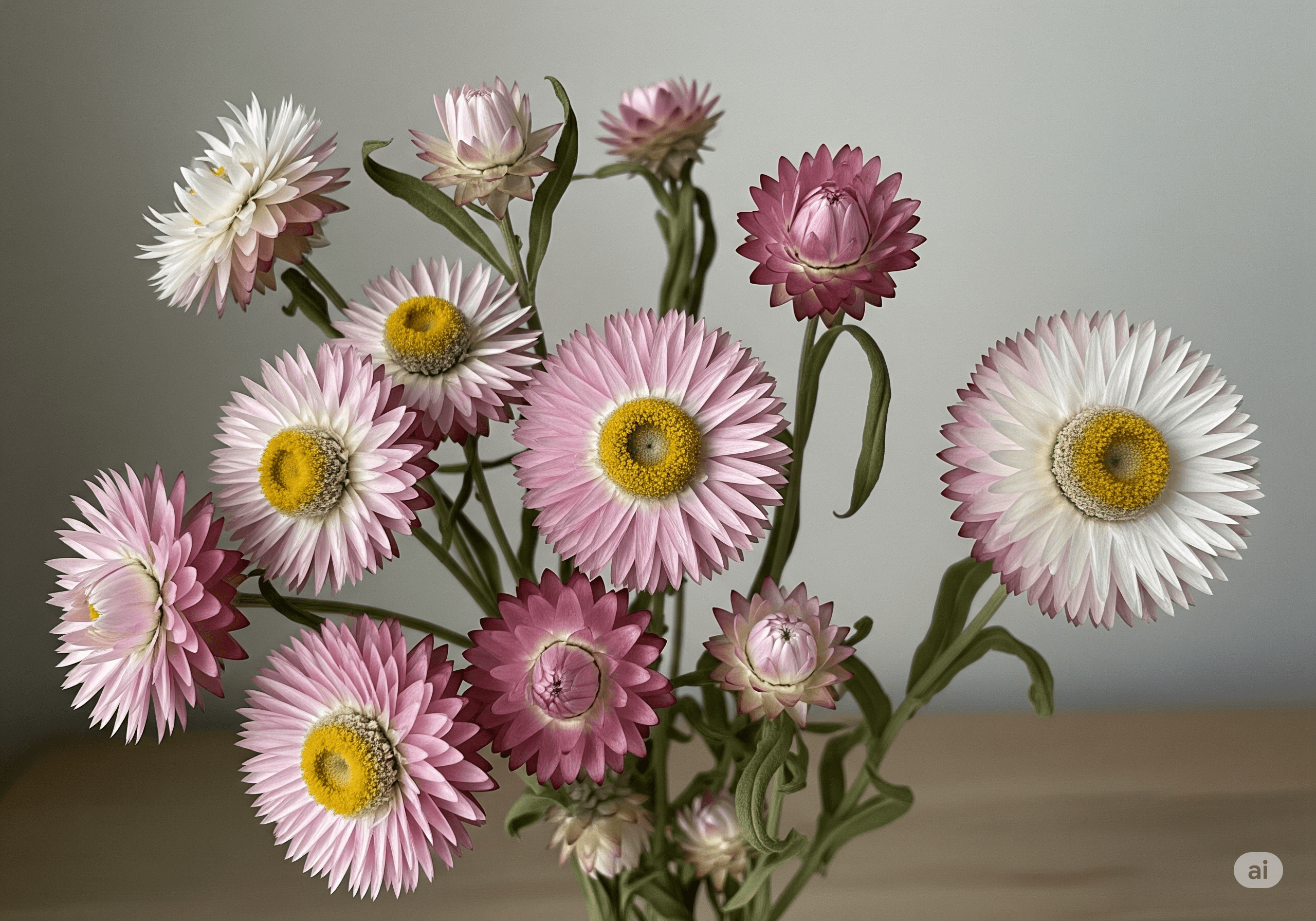
Meaning and Symbolism
Xeranthemum wears eternity in its texture. The blossoms are naturally papery, holding their color and form when dried, which is why they’ve symbolized immortality and unfading love since antiquity. In bouquets, they say “my feelings endure beyond time and distance,” making them compelling tokens for long separations, memorials, and vows that outlast season and circumstance. As a friendship emblem, Xeranthemum honors bonds that persist through life changes; for anniversaries, it affirms constancy and the quiet heroism of everyday devotion. In funerary tributes, their lasting beauty becomes a comfort: memory preserved, love unperishable. The flower also nods to resilience—the willingness to weather sun and drought without losing grace—so it carries a secondary meaning of stoic courage. Colors refine the message: white for pure remembrance, rose for affectionate constancy, lilac for dignified memory, and soft yellow for hope held through time. Because the blooms look almost crafted even when fresh, they connect handwork and sentiment—love meticulously made and carefully kept. If roses are fire, Xeranthemum is the ember that glows all night.
History and Cultural Significance
Native to southern Europe and western Asia, Xeranthemum traveled easily with traders because it dried beautifully, making it a staple of ancient and early-modern wreaths, keepsakes, and herbarium books. The very name combines Greek roots for “dry” (xeros) and “flower” (anthemon), telegraphing its talent. Victorian floriography sealed its reputation as the “everlasting” of everlasting bouquets—tokens exchanged between distant lovers and soldiers, tucked into letters, and preserved in lockets. Rural craftspeople in the 18th–19th centuries built a cottage industry around dried-flower domes and shadow boxes featuring Xeranthemum, integrating them into mourning art that found solace in beauty made to last. In modern craft culture, the flower resurged with the renaissance of dried botanicals—designers prize its authentic, matte glow among bleached grasses and strawflowers. Gardeners appreciate its thrift: direct-sown in lean soil, it blooms on scant water and dries on the stem for easy gathering. Symbolically, the plant bridges ancient rites with contemporary minimalism; its message hasn’t aged. Even as cut flowers chase ever-bigger, brighter novelties, Xeranthemum’s quiet defiance endures in small studios and home altars—the conviction that love is something you can hold in your hand years later and still recognize. It’s the bouquet equivalent of a well-worn letter: fragile, perhaps, but intact and eloquent.