Heather
Calluna vulgaris (and Erica spp.)
Meaning and Symbolism
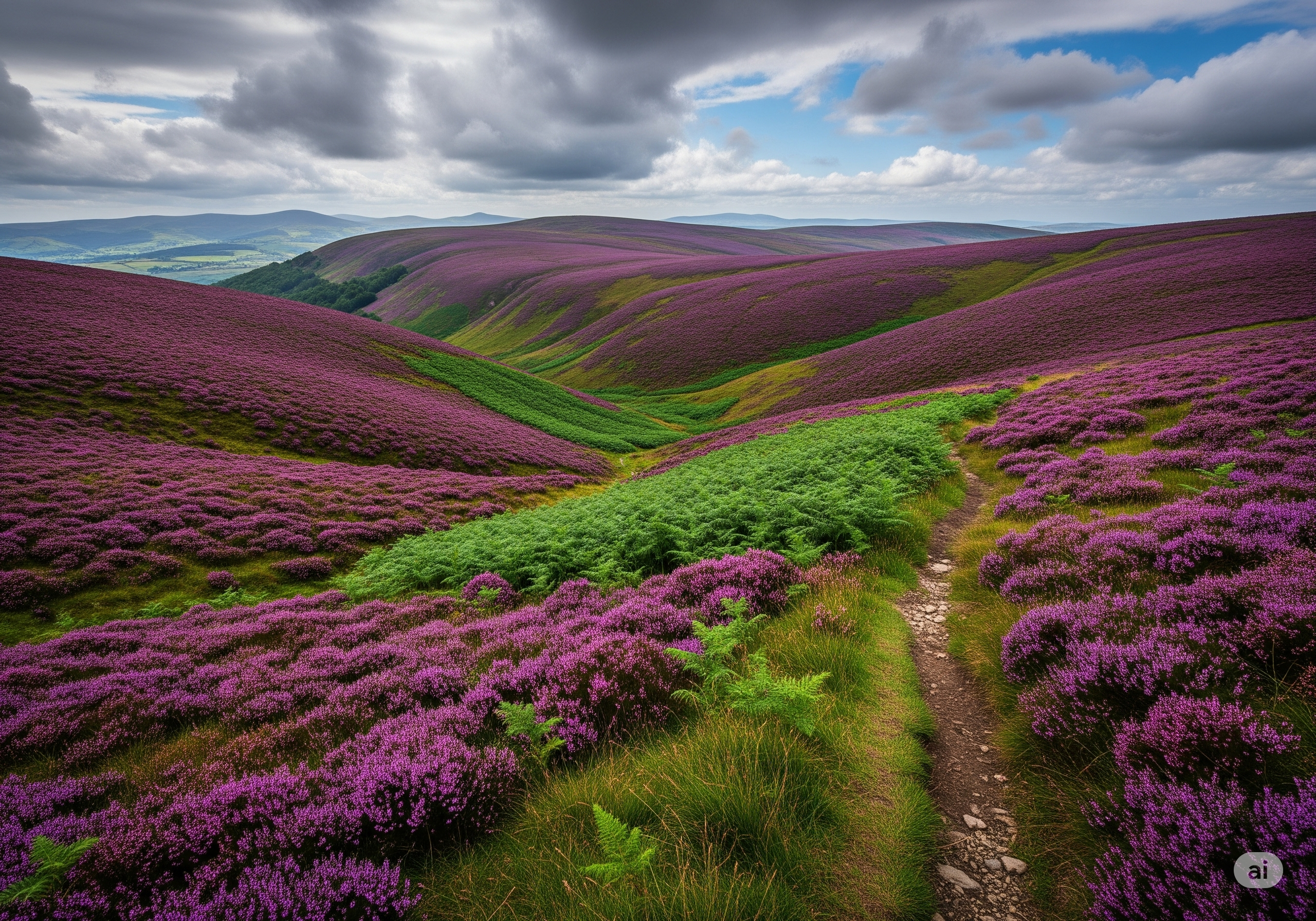
Heather is the color of wind over hills. In symbolism it represents good luck, admiration, and protective love, born of its habit of thriving where soils are thin and weather is blunt. Purple heather points to solitude chosen for strength—dignified independence with room for affection; pink conveys gentle admiration and romantic hope; white heather, especially in Scottish lore, is a potent charm of good fortune and safe return. In friendship, heather blesses the long walk and the shared thermos; in weddings, sprays of white heather tucked into bouquets wish the couple luck, protection, and a home hardy against storms. For anniversaries, its tenacity honors vows kept through rough seasons; for “Get Well,” it implies steady, quiet recovery and the comfort of soft landscapes. In memorial designs, heather’s low, spreading habit reads as a living blanket—care that continues. Regional names and ties abound: “ling” in older English usage, “bruyère” in French, “Erika” across German-speaking regions. Hybrids and garden selections create carpets from ivory to magenta, extending bloom into winter with Erica species so that luck and resilience feel year-round. If roses are declarations, heather is a promise murmured on a breeze: I’ll be here, whatever the weather.
History and Cultural Significance
Native to the moors and bogs of northern and western Europe, heather shaped pastoral economies and imaginations. Scots used it for thatch, bedding, brooms, and even ale flavoring; bees forage its late-summer nectar into robust, jelly-textured heather honey—an agricultural and cultural delicacy. Folklore names white heather as the tears of a tragic heroine or as the mark of land where no blood was spilled, both stories translating into luck and peace. Victorian travelers pressed heather sprigs into journals and sent them as talismans to loved ones; white sprigs in bridal wear telegraphed brave fortune. In literature and painting, heather signals wildness with welcome—Bronte moors, Scottish ballads, and Highland landscapes often painted with violet haze that implies both melancholy and endurance. Horticulturally, the heather family (Ericaceae) taught gardeners about soil: acid-loving, drought-tolerant, and happiest in lean conditions, it became a key player in “heath and heather” gardens of the early 20th century, a design movement that celebrated texture over showy blossoms. Modern cultivars change foliage color with the seasons—golden in spring, bronzy in winter—so that a heather bank reads like a slow-motion tapestry. Memorial parks and coastal restorations now use heathers to stabilize sandy soils while feeding pollinators, linking the plant to stewardship and community luck. Across cultures, heather has maintained a singular stance: modest, useful, beautiful, and enduring—qualities people still want in the blessings they give each other.