Wisteria
Wisteria sinensis (and Wisteria floribunda)
Meaning and Symbolism
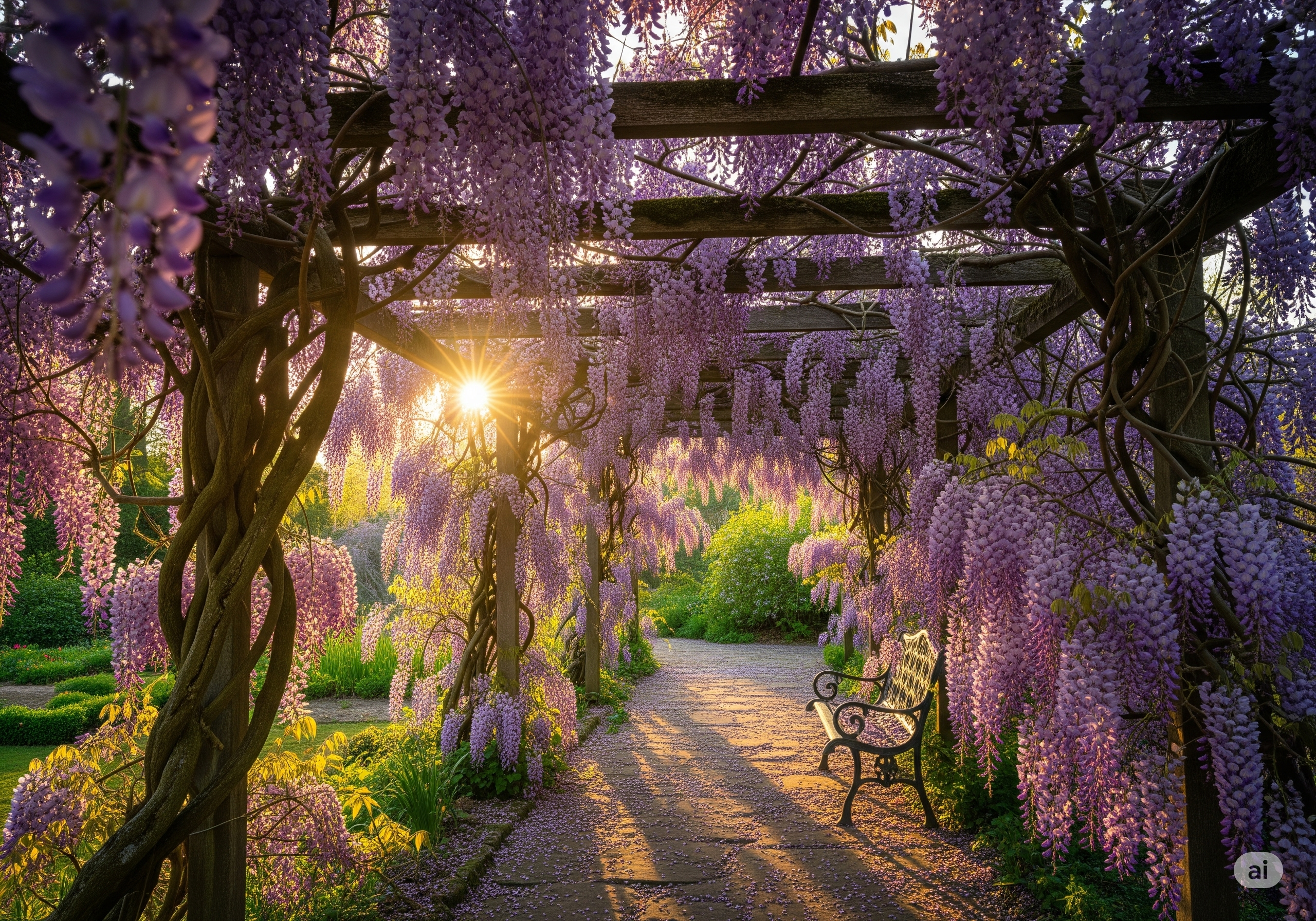
Wisteria is romance translated into architecture. Its pendulous racemes—ranging from pale lavender to royal purple and snow white—cascade like silk from beams and gateways, creating a sense of passage into enchantment. Symbolically, wisteria represents enduring love and the gracious welcome of a home that has known joy. Because vines take a few seasons to flower heavily, wisteria stands for patience: love ripened by time, friendship strengthened by shared years, marriages that bloom more beautifully after effort and care. The vine’s spiraling growth habit—clockwise in Chinese wisteria, counterclockwise in Japanese—adds a subtle metaphor for fate’s winding path bringing souls together. In weddings, wisteria conveys elegance and the blessing of longevity; in anniversaries, it celebrates history and promise intertwined. As a Friendship token, it says “my door and table are open to you.” For New Beginnings, a young plant is a vow to cultivate beauty through persistence. Its colors fine-tune the themes: lavender for refinement and calm affection, deeper purples for dignity and devotion, white for sincerity and renewal. Wisteria can also symbolize creativity—the way it drapes and frames transforms ordinary structures into poetic scenes, reminding us that love and art alike ask for patience and shaping.
History and Cultural Significance
Native to China, Japan, and Korea, wisteria entered Western horticulture in the early 19th century and quickly became a sensation for its theatrical bloom. In Japan, centuries-old wisteria are trained over vast trellises in parks like Ashikaga, where spring festivals celebrate shimmering tunnels of bloom; these displays link the plant to longevity, seasonal beauty, and communal joy. Chinese poetry references wisteria’s pendant flowers as metaphors for graceful women and elegant manners. In the West, grand homes trained wisteria over porticos, where it came to signify hospitality and cultivated taste. The genus honors Dr. Caspar Wistar (the spelling shift to “Wisteria” is a botanical quirk), and the species epithet floribunda tells the whole story—“abundantly flowering.” Artists from Impressionists to contemporary photographers have lavished attention on wisteria’s veils of color and dappled shade. In folklore, the vine’s strength was admired but also warned against: gardeners learned to site it on sturdy pergolas and keep pruning shears close. This tension—beauty requiring discipline—keeps wisteria culturally resonant as a symbol of relationships tended intentionally. Scent-wise, some wisterias offer a sweet, grapey perfume that perfumes courtyards during bloom. Modern cultivars broaden the palette to include pink (“Honbeni”), ultralong clusters (“Kyushaku”), and repeat bloomers, while grafted plants shorten the wait for flowers. Across gardens and festivals, wisteria teaches a shared lesson: lay strong beams, prune with love, and the years will hang with abundance.