Violet
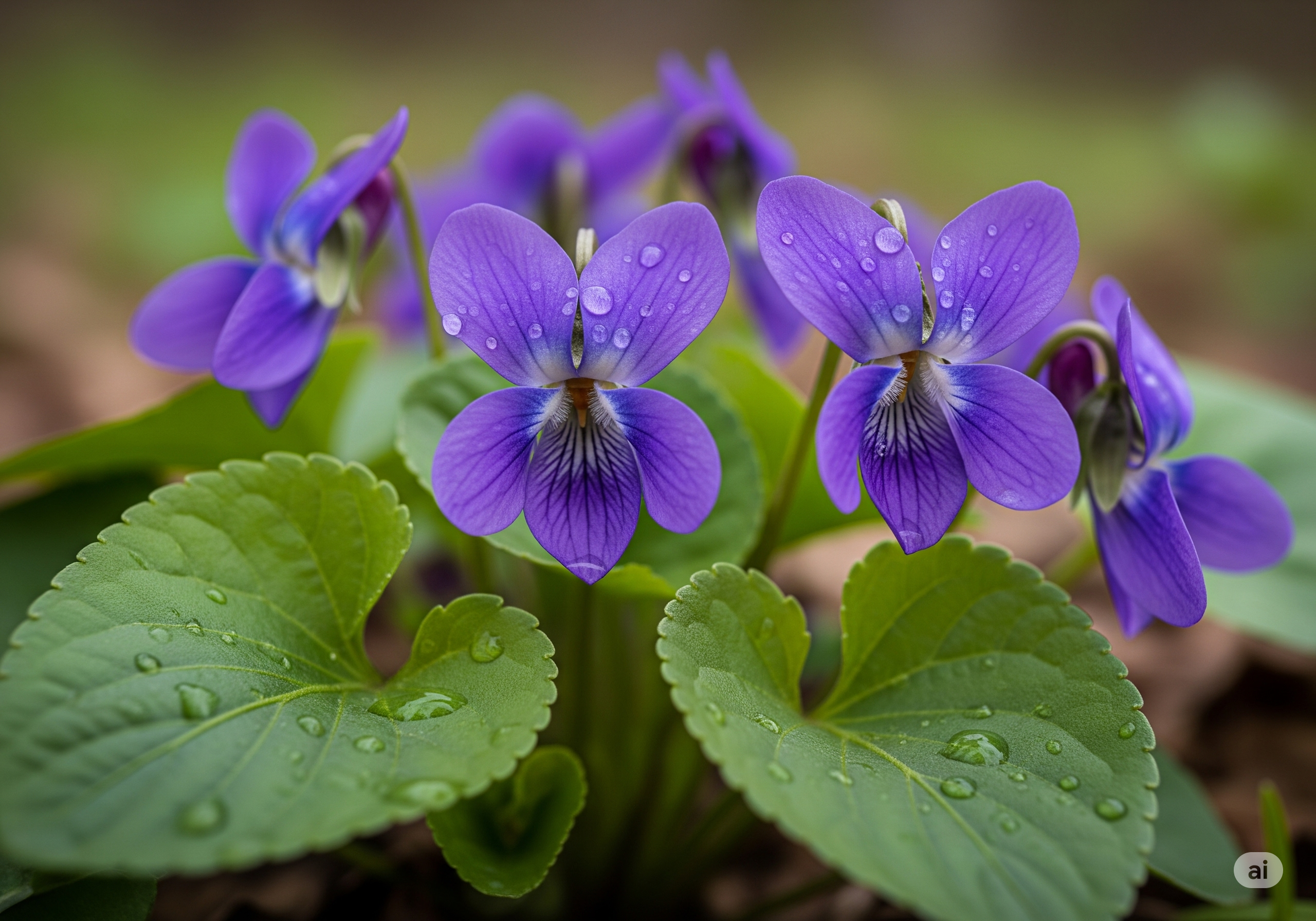
Viola odorata
Meaning and Symbolism
Violets speak softly but carry an enduring message. Their low habit and nodding flowers gave rise to the classic symbolism of modesty—beauty that does not advertise itself. In romance, violets pledge faithfulness: the kind of love that stays constant and kind even out of the spotlight. The heart-shaped leaves help the metaphor along, quietly framing the bloom. In friendship, violets promise loyalty and discretion; they keep a friend’s confidences the way the leaves shelter blossoms. For anniversaries, they honor devotion that has matured into gentle companionship. White violets add innocence and forgiveness to the palette, while purple carries dignity and deep affection; blue-leaning forms emphasize sincerity and spiritual calm. As “Get Well” flowers, violets suggest rest and self-compassion—the permission to recover slowly. In memorial contexts, a tuft of violets can symbolize remembrance without fanfare, a tribute to lives lived with grace. Violets also have a playful side: candied blossoms on cakes and confections nod to sweetness in both flavor and feeling. Above all, violets offer a countercultural lesson: not all love is loud; some of the truest affections thrive in quiet shade.
History and Cultural Significance
From ancient Greece to fin-de-siècle Paris, violets have charmed poets, cooks, and lovers. The Athenians associated violets with Ion, son of Apollo, and crowned poets with violet garlands. Romans flavored wines and syrups with violets, and medieval herbals praised their cooling, soothing properties. In Christian iconography, the violet symbolized humility, linked to the Virgin Mary. The Victorian era elevated violets to fashion: “violet sellers” were fixtures in European capitals, and perfumers distilled “violet leaf” and crafted ionone-based accords when true violet flower scent proved elusive to extract. Napoleon reportedly favored violets; Josephine’s gardens at Malmaison cultivated many species, further enshrining their romantic aura. In literature, violets mark tender turning points—Shakespeare’s Ophelia and Tennyson’s pastoral lines both deploy them for innocence and elegy. Culinary traditions endure: candied Parma violets once graced patisserie windows, and modern chefs still sugar blooms for tea cakes. Gardeners prize Viola odorata for early spring bloom and shade tolerance; it naturalizes gently, quilting woodland edges with color. Contemporary florists tuck violets into posies to add authenticity—living whispers among larger flowers. Across centuries, the violet has modeled a kind of elegance aligned with character rather than spectacle. Its cultural thread is steady: faithful love, modest beauty, and a perfume that lingers in memory more than in air.