Tuberose
Agave amica (syn. Polianthes tuberosa)
Meaning and Symbolism
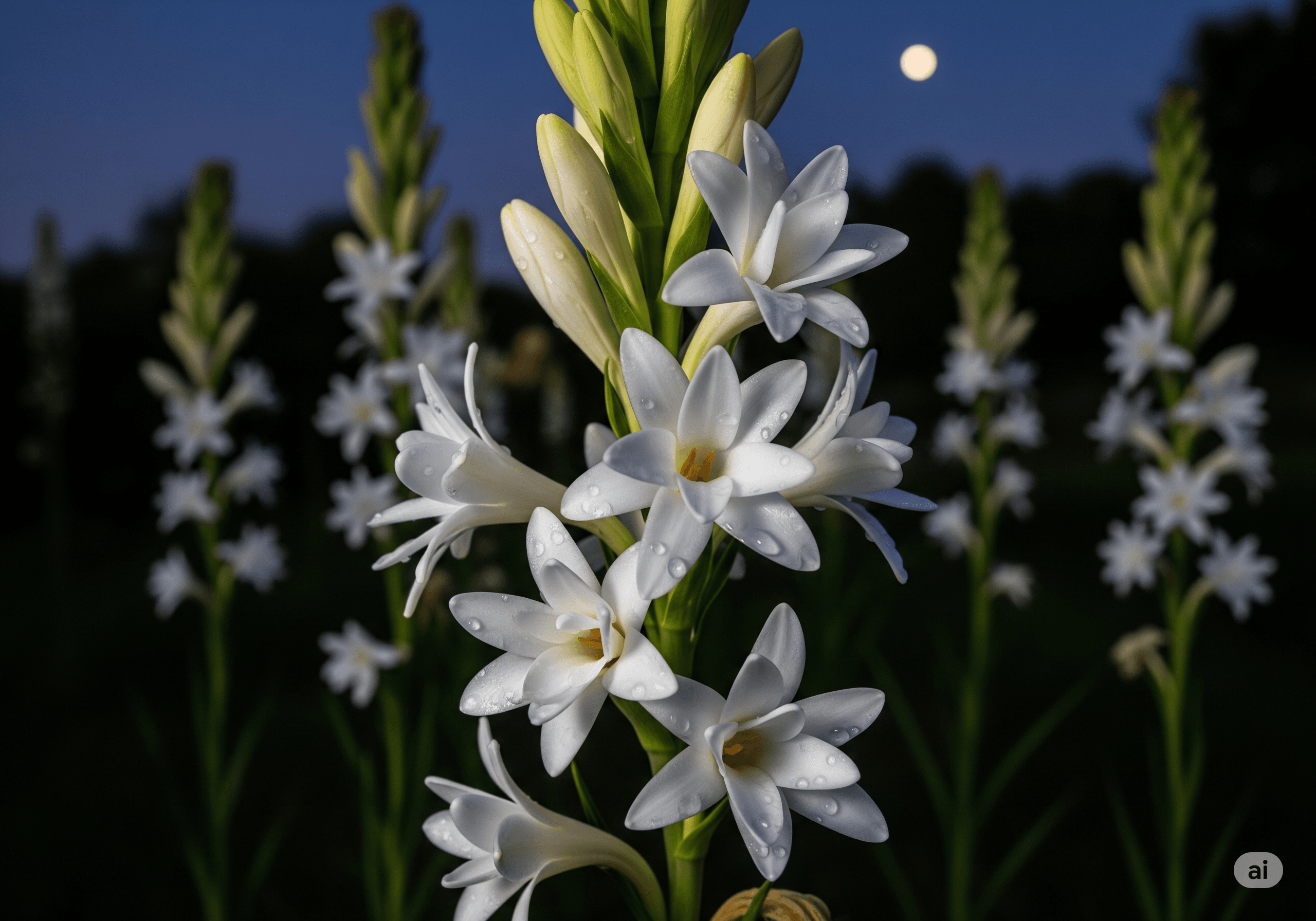
Tuberose is the night’s confidant. Its ivory stars open after dusk and release a fragrance both creamy and hypnotic—jasmine’s cousin in intensity, but with a velvety, almost coconut-vanilla warmth and a green, narcotic edge. Unsurprisingly, the flower’s symbolism leans into sensuality and the dangerous thrill of desire; Victorian lore even warned young ladies to avoid inhaling tuberose after dark, lest it awaken passions. Yet beneath the allure sits devotion: a single stem bears dozens of buds that unfurl in sequence, night after night, like vows repeated. In love language, tuberose promises ardor that endures beyond first light. For weddings, it speaks to sacred sensuality within commitment; for anniversaries, it celebrates intimacy that has grown richer with time. As a “Valentine’s Day” bloom, tuberose is unashamedly romantic—the flower for those who prefer candlelight to neon. Because it is white, it also carries the paradox of purity entwined with desire: a reminder that love can be both reverent and voluptuous. In funerary rites across parts of South Asia and Latin America, tuberose’s serene aroma honors the passage of the soul, recoding the fragrance as peace and remembrance. Thus the flower holds dualities gracefully: day and night, innocence and longing, celebration and farewell.
History and Cultural Significance
Native to Mexico, tuberose traveled to Europe via Spanish colonial routes in the 16th century and quickly captivated court gardens with its evening perfume. In India, where it is called rajnigandha (“fragrant at night”), tuberose became essential in bridal garlands and temple offerings, symbolizing auspicious love and divine beauty. Hawaiian and Polynesian lei traditions also embrace tuberose for its scent and staying power; a lei woven with tuberose communicates welcome, honor, and affection. Perfumery canonized the flower: from French classics to modern niche creations, tuberose is a pillar note—sometimes buttery and creamy, sometimes green and mentholic, always unforgettable. Its botanical classification recently shifted to Agave amica after genetic studies, a reminder that even icons evolve. Commercially, growers harvest in the cool morning to protect volatile oils; the blossoms are often extracted by solvent or enfleurage to capture their full spectrum. In visual culture, tuberose stands for nocturne romance: think moonlit ceremonies, white-on-white arrangements, languid summer nights. It’s also associated with the concept of “headspace” in perfumery—capturing an aroma directly from living blooms. Through centuries and continents, the tuberose has perfumed weddings, wakes, and festivals, stitching a fragrant thread through life’s thresholds. Its story is one of seduction tempered by solemnity: the same scent that crowns a bride may also accompany a farewell, both moments bathed in tender reverence.