Sweet Pea
Lathyrus odoratus
Meaning and Symbolism
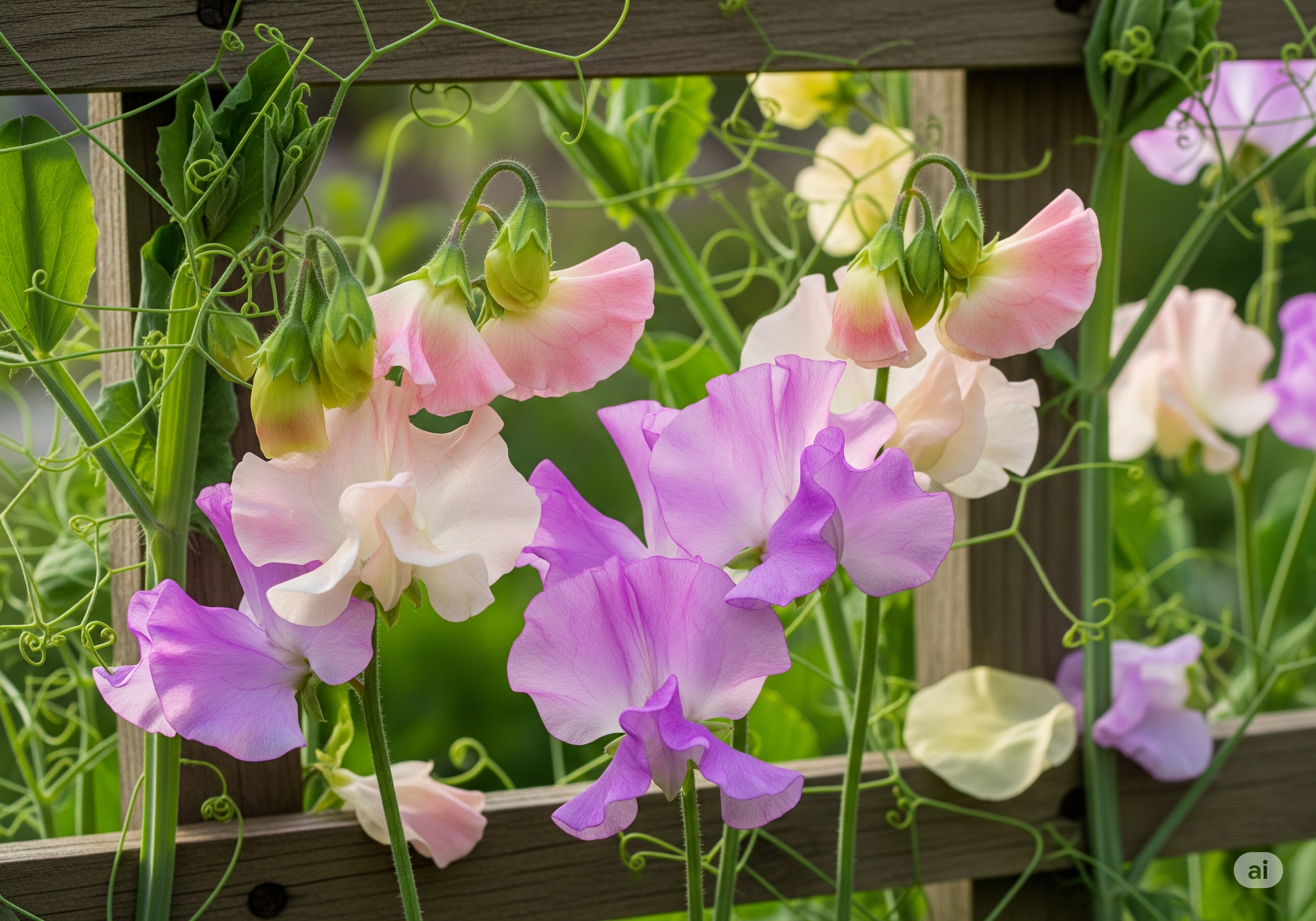
Sweet peas are little ambassadors of delight. Their fluttering, butterfly-like petals and honeyed perfume have long symbolized blissful pleasure—the simple, luminous joy of good company and beautiful moments. In the language of flowers, a bouquet of sweet peas says “thank you for a lovely time,” making them perfect after celebrations or visits. That sentiment naturally shades into parting: sweet peas also carry the meaning of a gentle farewell, not sorrowful or final, but grateful and gracious—“until we meet again.” Because they climb, curling tendrils toward light, sweet peas speak to aspiration and supportive love: the kind of affection that helps someone rise. Their feathery appearance reads as romantic without heaviness, so they’re favorite messengers for soft courtship and anniversaries that celebrate companionship as much as passion. In friendship, sweet peas honor conviviality and kindness; for birthdays, they toast the sweet pleasures ahead. As “Get Well” flowers, their airy presence brings comfort without overwhelming fragrance, a whisper of spring in any season. Their wide palette—from shell pink and pastel lilac to lipstick red, cream, salmon, and bicolor picotees—lets givers tune the message: pink for affectionate thanks, lavender for memory and charm, white for sincerity, red for spirited admiration, apricot and coral for playful optimism. Above all, sweet peas embody joy with good manners. They never shout; they murmur lovely things.
History and Cultural Significance
Native to Sicily and nearby Mediterranean islands, sweet peas were introduced to Britain in the late 1600s and quickly became cottage-garden darlings. The Victorians, intoxicated by their perfume, bred intensively for ruffles and color, establishing the “Grandiflora” class that still enchants gardeners. In the early 20th century, British and New Zealand breeders pushed bloom size farther with “Spencer” types, named after the Spencer family at Althorp; these longer-stemmed, glamorously frilled varieties revolutionized cut-flower work. Sweet peas fit the Victorian ideal of refined sentiment—decorous yet sincere—so they appear frequently in period illustrations, wedding posies, and thank-you nosegays. Their popularity also rode the rise of allotment and cottage gardening: they’re generous performers from a small plot, yielding jars of cut flowers for neighbors and friends, which reinforced their cultural link to gratitude and social grace. In Japan, where hanakotoba assigns meanings to flowers, sweet peas suggest parting with appreciation; the flower sometimes appears in spring graduations and farewells. In modern weddings, sweet peas bring movement and delicacy, weaving between larger blooms like a ribbon of fragrance. Their seasonality—strongest in late winter through spring under cool conditions—teaches anticipation and ephemerality, a theme many florists lean into when designing seasonal events. Contemporary breeders have restored overlooked hues (smoky mauves, “antique” salmon-copper tones) and developed heat-tolerant cultivars for warmer regions, broadening the flower’s global reach while preserving its core identity: ruffled elegance and a scent like sugared peas kissed by sunshine.