Snowdrop
Galanthus nivalis
Meaning and Symbolism
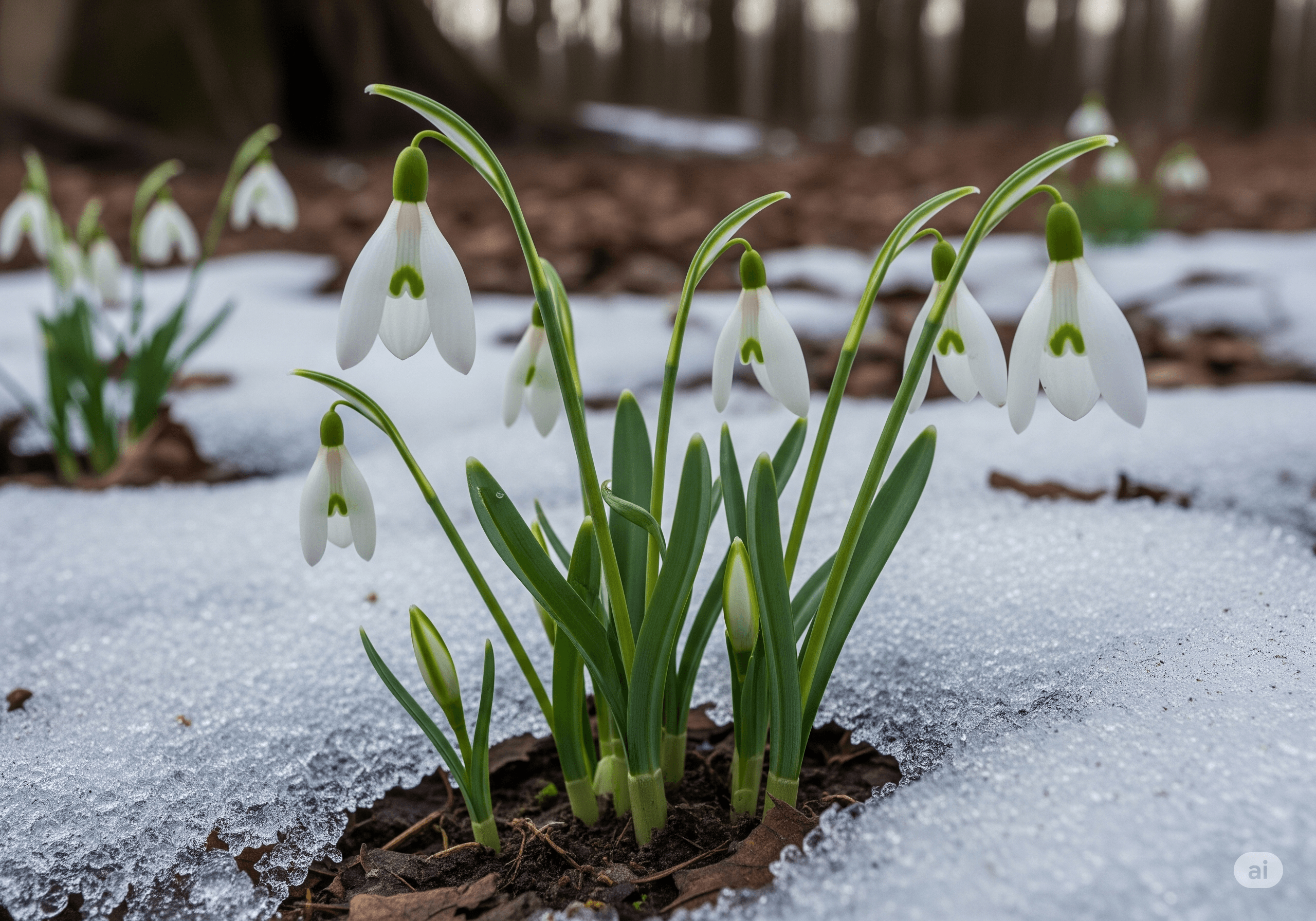
Snowdrops are winter’s soft rebuttal: tiny, nodding bells that insist on beginning again. They symbolize hope that survives the cold, consolation after loss, and purity that isn’t naïve—it has known dark and chooses light anyway. In floriography, a snowdrop offered to someone grieving says “I believe in your spring,” a gentle, unsentimental comfort. For New Beginnings, snowdrops assure that progress can be quiet and still be real. Their posture—heads bowed—has long suggested humility, but the steel inside the stem tells a second truth: humility can be strong. As a “Get Well” token, the flower encourages steady recovery: push through frost a little each day. For weddings, snowdrops signal a marriage founded on resilience and kindness; for anniversaries, they remember winters endured and springs shared. In friendship, they convey loyalty through lean seasons. Even their color palette speaks: white for clean starts, green for life reawakening. Together they read like a promise sealed by the season—subtle, steadfast, luminous at the edges. In sum, snowdrops are hope with a backbone: tender form, serious message.
History and Cultural Significance
Native to parts of Europe and Western Asia, snowdrops naturalized near monasteries and village greens, weaving themselves into folklore and calendars. Medieval herbalists noted their early bloom as a sign to plan fields; later, naturalists admired their antifreeze-like sap that allows cells to flex in cold. In Christian traditions, Candlemas (early February) became linked to “Candlemas bells,” snowdrops gathered to bless homes—a rite of purification and lengthening days. Literature cast them as emblems of quiet virtue; painters used them to punctuate snowy woods with hope. In the 19th century, “galanthophiles” (snowdrop collectors) traded bulbs and named cultivars with affectionate obsession, a culture that thrives today with winter garden festivals drawing crowds for subtle differences in petals and green markings. In Eastern Europe, snowdrops appear in spring martenitsa and Martenitsa-adjacent customs—tokens of health and the end of winter. Conservationists remind gardeners not to wild-collect, advocating reputable sources to protect native stands; thus, the flower has become a mascot for ethical enthusiasm. As urban parks adopt early-spring plantings, snowdrops now serve a civic role: proof that public spaces are alive year-round. In perfumery and art, “snowdrop” is shorthand for cool, clean beginnings. And in contemporary grief rituals, a single stem tucked beside a candle has become a way to mark the moment when sorrow softens enough to let light in. Across centuries the narrative is consistent: beginnings are small, but they are enough.