Stock
Matthiola incana
Meaning and Symbolism
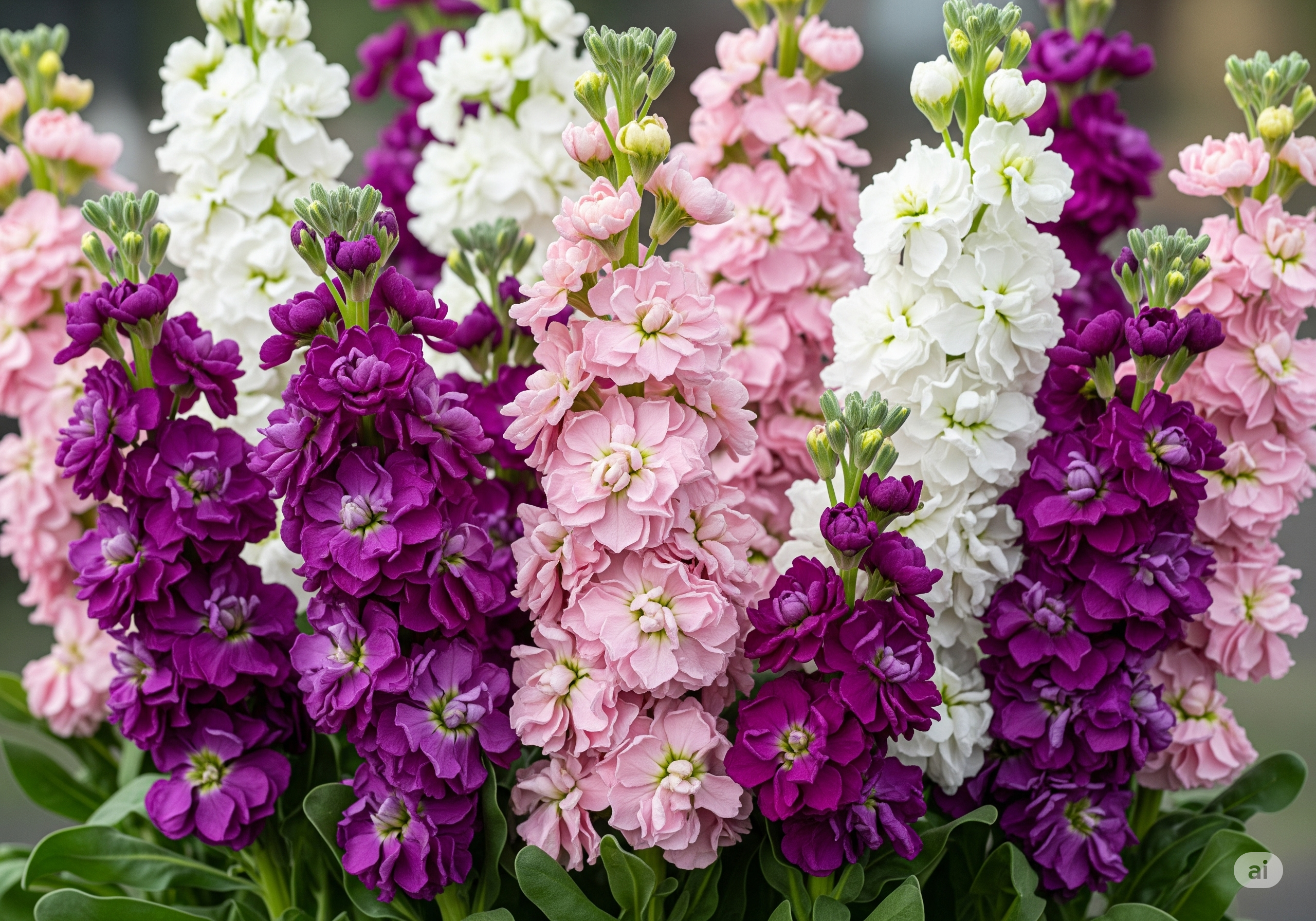
Stock flowers, with their dense, clove-scented spikes, have long symbolized lasting beauty, contentment, and a happy life. Their association with enduring affection makes them ideal for weddings, anniversaries, and any occasion celebrating commitment. In the language of flowers, stock expresses bonds that are steadfast and relationships that grow richer over time. White stock stands for purity and new beginnings; pink conveys admiration and romantic affection; purple represents dignity and deep sentiment; yellow radiates joy and optimism. Their fragrance—rich, spicy, and sweet—deepens their symbolism as flowers that appeal to multiple senses, suggesting love that engages the whole person, not just the eye. They’re also connected to a sense of luxury, as their full blooms and heady scent make them feel abundant and generous.
History and Cultural Significance
Native to the Mediterranean, Matthiola incana was named in honor of the 16th-century Italian physician and botanist Pietro Andrea Mattioli, who described the plant in his herbal works. Stock flowers were beloved in Elizabethan gardens for their fragrance and were often planted near doors and windows so their scent could drift indoors. In Victorian times, they became staples in formal flowerbeds and conservatories, associated with gentility and cultivated taste. They also gained popularity in Japan, where they are known as “Abarana” and are often included in winter and early spring arrangements due to their cool-weather tolerance. Commercial growers value stock for its long stems and range of colors, making it a florist’s favorite for both fresh and dried uses. In addition to their ornamental role, stocks are edible flowers, sometimes used to garnish salads or desserts for a touch of spice and color. Over centuries, their symbolic role has expanded beyond romance to include friendship, family affection, and gratitude for life’s comforts.