Statice
Limonium sinuatum
Meaning and Symbolism
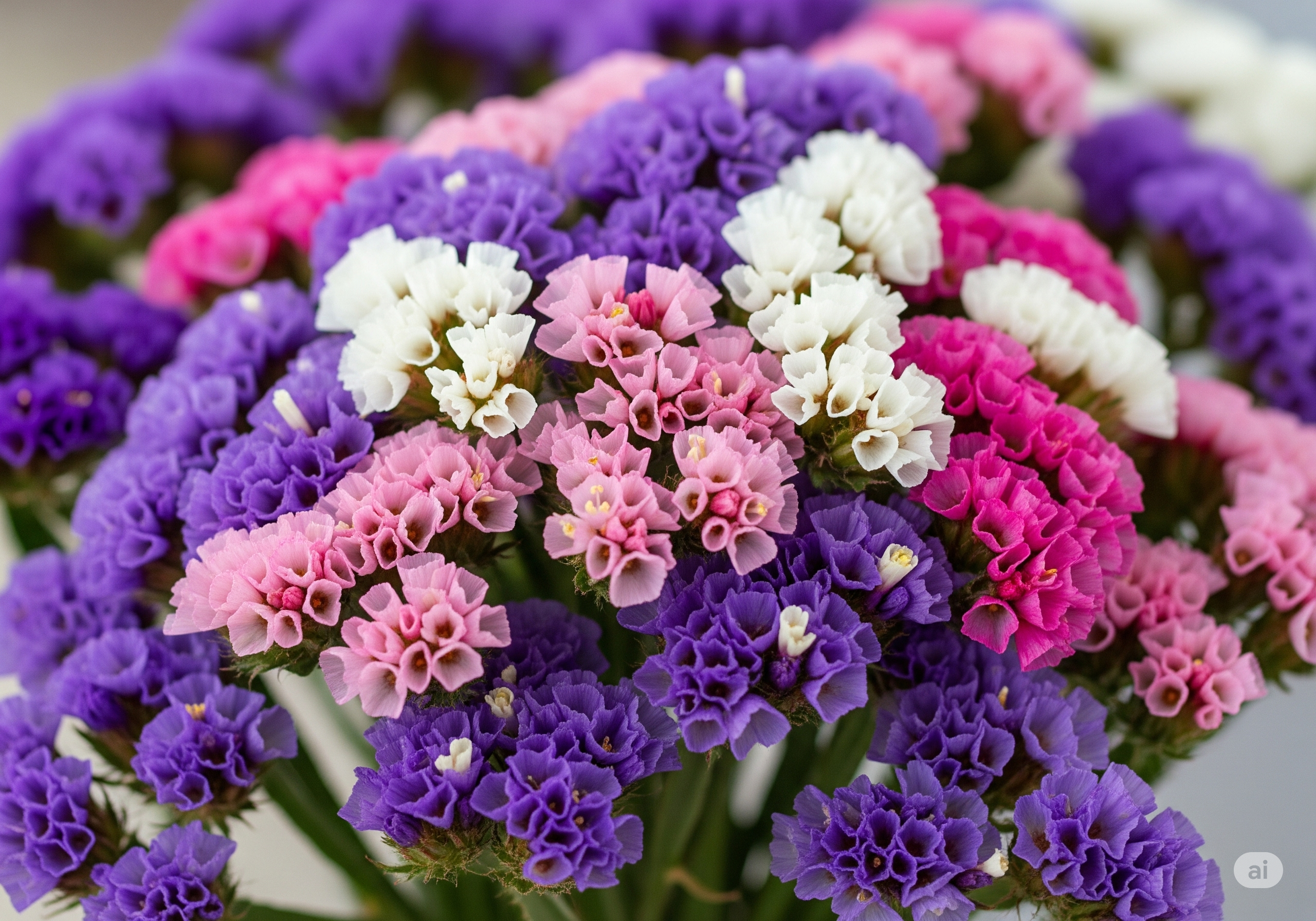
Statice, also called sea lavender, is valued for its papery blooms that retain color and shape long after drying. In the language of flowers, it stands for remembrance and lasting beauty, making it a staple in sympathy arrangements as well as celebratory bouquets. Its resilience in both life and after cutting makes it a symbol of success and persistence—qualities that carry emotional weight for graduations, anniversaries, and milestones. Purple statice represents dignity, respect, and admiration; white conveys purity and sympathy; pink expresses affection and fond remembrance. Its association with the sea (many species are coastal) also links it to travel, journeys, and safe return, making it a thoughtful gift for someone embarking on a voyage or moving far from home. Because it holds its form for years, statice also conveys the message: “My thoughts of you will not fade.”
History and Cultural Significance
Native to the Mediterranean, statice was used historically for medicinal purposes, including treatment of inflammation and wounds. Its Latin name *Limonium* references the plant’s tolerance for salty soil, often thriving where other flowers would fail. In the Victorian era, statice became a popular dried flower in “everlasting” wreaths and keepsakes, treasured for its ability to hold color indefinitely. Its durability and long vase life made it a favorite among florists for filler in fresh arrangements, particularly in the 20th century. In coastal cultures, statice has symbolic ties to endurance against adversity, much like the shore’s resistance to the sea’s constant battering. Modern floristry still prizes statice for its texture and variety of colors, both natural and dyed. It plays a major role in the dried flower market, from rustic farmhouse décor to minimalist modern displays. Its sustainable nature—requiring little water once established—has also made it a choice plant for eco-conscious gardens. Today, fields of statice are cultivated in places like California, Israel, and Spain, where the climate suits its Mediterranean origins.