Cosmos
Cosmos bipinnatus
Meaning and Symbolism
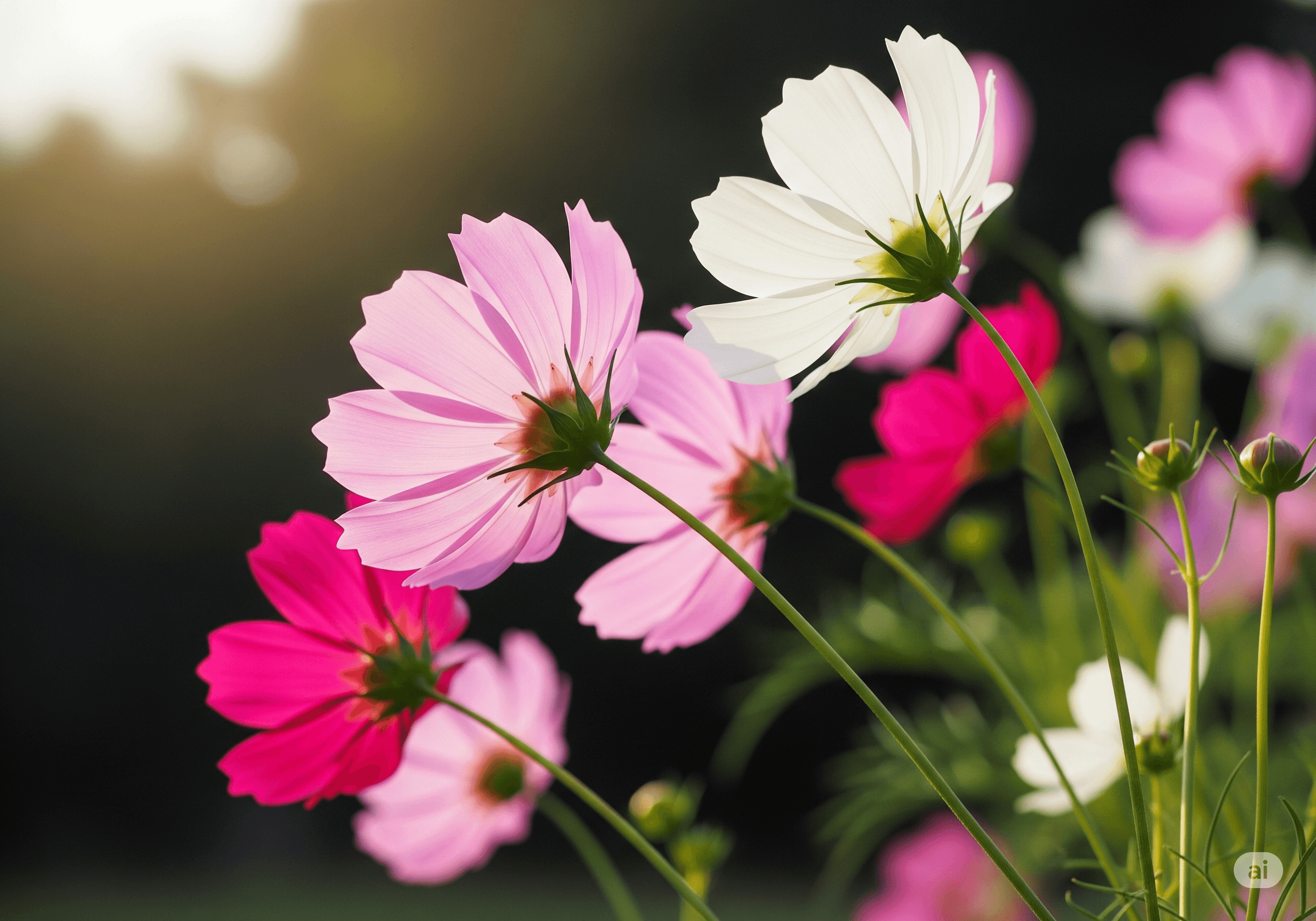
Cosmos flowers, with their fine feathery foliage and daisy-like blooms, embody the idea of balanced beauty and serenity. The name “cosmos” is derived from the Greek word *kosmos*, meaning order, harmony, or the universe—a fitting reflection of the flower’s evenly spaced petals and symmetrical charm. In the language of flowers, cosmos often represents peace, wholeness, and a harmonious life, making it a thoughtful gift for reconciliation, encouragement, or celebration of life’s balance. Their long, slender stems and lightweight blooms suggest a certain graceful resilience: they sway in the wind but rarely break, an apt metaphor for adaptability and endurance. Colors deepen their symbolism: pink cosmos conveys gentle affection and kindness; white expresses purity, peace, and truth; red and magenta symbolize deep love and passion; yellow or orange varieties offer warmth, joy, and optimism. Because cosmos flowers bloom in late summer into fall, they also speak to a maturity of beauty—the idea that life’s later stages can be just as vibrant as its early ones. In a romantic context, they can say “my love is peaceful yet strong,” while for friendship they convey gratitude for a steady, harmonious connection. For occasions like “Get Well” or “New Beginnings,” cosmos brings the message of calm reassurance: you are exactly where you need to be, and growth happens at its own gentle pace.
History and Cultural Significance
Native to Mexico, cosmos quickly spread to other parts of the Americas and then to Europe and Asia after being brought by Spanish explorers in the 16th century. They thrived in mission gardens and quickly escaped into wild landscapes, earning a place in cottage gardens for their self-seeding nature. In Victorian England, cosmos became a popular cut flower for its extended vase life and its suggestion of elegant simplicity, aligning with the period’s appreciation of nature’s order. In Japan, cosmos flowers are associated with autumn and are often featured in seasonal festivals like the Cosmos Festival in Showa Kinen Park, where entire fields turn into a sea of pastel blooms. In Mexico, they are part of traditional “Dia de los Muertos” decorations, symbolizing the balance between life and death. Cosmos is also notable in the world of environmental gardening—it thrives in poor soil, attracts pollinators, and requires minimal water, aligning with sustainable planting practices. Modern breeders have developed a range of cultivars, including double-petaled and chocolate-colored varieties like *Cosmos atrosanguineus*, which has a unique cocoa scent. Cosmos has also been featured in art and poetry as a motif for quiet joy and universal harmony. Their ease of growth and tolerance for neglect have made them a flower for everyone, from rural homesteads to urban balconies. Today, fields of cosmos are a common sight in fall tourist destinations across the world, a testament to their adaptability and global appeal.