Ranunculus
Ranunculus asiaticus
Meaning and Symbolism
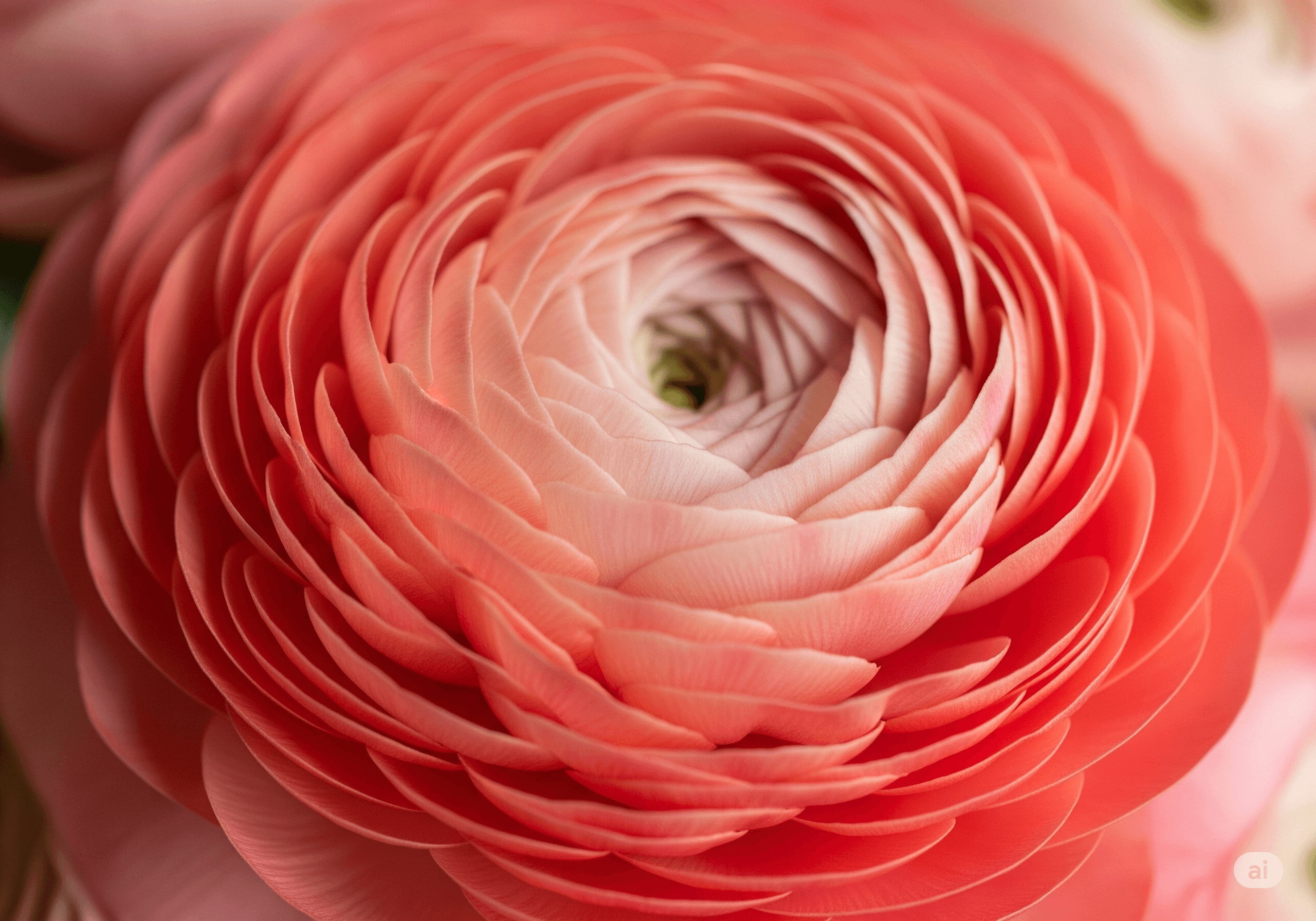
Ranunculus blooms look like someone whispered “more” to a rose—more petals, more swirl, more glow. In the language of flowers they proclaim, “You are radiant with charms,” an ode to magnetism that feels appreciative rather than possessive. Their geometry—fine, paper-thin petals layered in disciplined abundance—signals admiration for craft, patience, and the art of becoming. For Valentine’s Day or Anniversary, ranunculus frames love as delighted attention: I see the details, and I adore them. For Friendship and Birthday, it conveys enthusiastic appreciation and a wish that the year unfurl in beautiful layers. In Wedding work, the flower reads as contemporary romance: refined, luminous, and camera-loving without stealing the show. Colors fine-tune the compliment—blush for tenderness, coral for creative zest, butter yellow for cheer, white for sincere devotion, wine for depth. As a “Get Well” gesture, the bloom’s neat, steady spirals offer a subtle promise of order returning. In memorial settings, soft shades honor the intricacy of a life, its many layers held together by light. Above all, ranunculus symbolizes admiration that grows the more one looks—love as attention, friendship as ongoing discovery.
History and Cultural Significance
Originating around the eastern Mediterranean and western Asia, Ranunculus asiaticus reached European gardens through Ottoman channels, where court gardeners treasured “Turk’s cap” forms alongside tulips and anemones. The plant’s modern rise traces to Italian and Dutch breeders who stabilized incredible color ranges and long, strong stems for floristry. In the last two decades, ranunculus leapfrogged from niche to star as social media amplified its photogenic spirals; wedding aesthetics embraced it as a luxe alternative to peonies outside peony season. Historically, folk names linked ranunculus to little frogs (Latin “rana”), perhaps because many wild relatives grow near water; this amphibious echo adds an undercurrent of spring and quickening life to the flower’s story. Greenhouse growers perfected cool-season schedules, making ranunculus a late-winter through spring darling—a welcome note of refinement when gardens are just waking. Artists paint it to study light on curves; photographers use it to practice macro depth; paper-flower makers treat it as a masterclass in layering. Meanwhile, small farms have turned ranunculus into a signature crop for CSA bouquets, connecting communities to local color. In literature and love notes, the bloom often substitutes for “you take my breath away”—exuberant without cliché. It has also become a symbol of entrepreneurial craft: small petals, repeated with care, build something sumptuous—an allegory many creatives adopt. Thus the cultural life of ranunculus mirrors its form: devotion to detail results in radiance.