Scabiosa
Scabiosa atropurpurea
Meaning and Symbolism
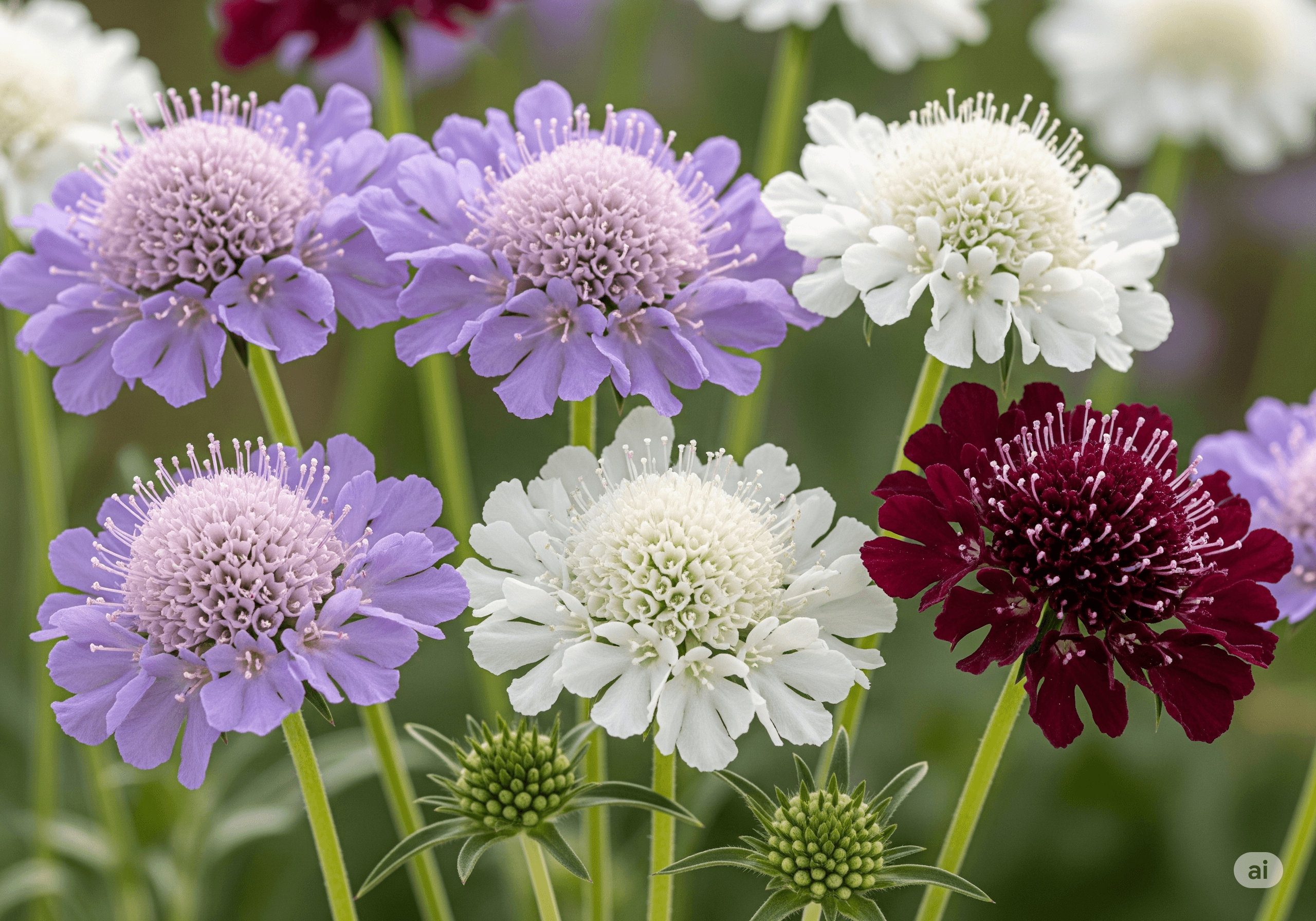
Scabiosa, often called “pincushion flower” for its domed center studded with tiny florets, carries a romantic and gentle symbolism. In the language of flowers, it represents pure love, peace, and remembrance. Its airy petals and intricate centers make it a favorite in both garden beds and bouquets, where it lends an ethereal, almost fairy-tale quality. White scabiosa conveys innocence and sincerity; lavender and light blue evoke serenity and trust; deep burgundy or purple varieties speak to passionate affection and enduring devotion. The flower’s long stems and airy form give it a sense of openness, suggesting emotional honesty and vulnerability. Because scabiosa continues blooming over a long season, it’s also associated with constancy and the sustained joy of companionship.
History and Cultural Significance
Native to Europe, Africa, and Asia, scabiosa has a botanical history intertwined with traditional medicine—the name “Scabiosa” derives from the Latin “scabies,” as the plant was once used to treat skin ailments. It was cultivated in medieval herb gardens as both a healing plant and an ornamental. By the Victorian era, breeders had developed varieties prized for their elegant form and soft colors, making them staples in romantic garden designs. In the cut-flower industry today, scabiosa is valued for its long vase life and versatility, pairing well with roses, dahlias, and wildflowers in arrangements. In modern symbolism, scabiosa’s gentle sway in the breeze has come to represent grace under pressure and the beauty of being in the present moment. They are often included in “Get Well” bouquets for their light, uplifting presence and in memorial work for their quiet dignity.