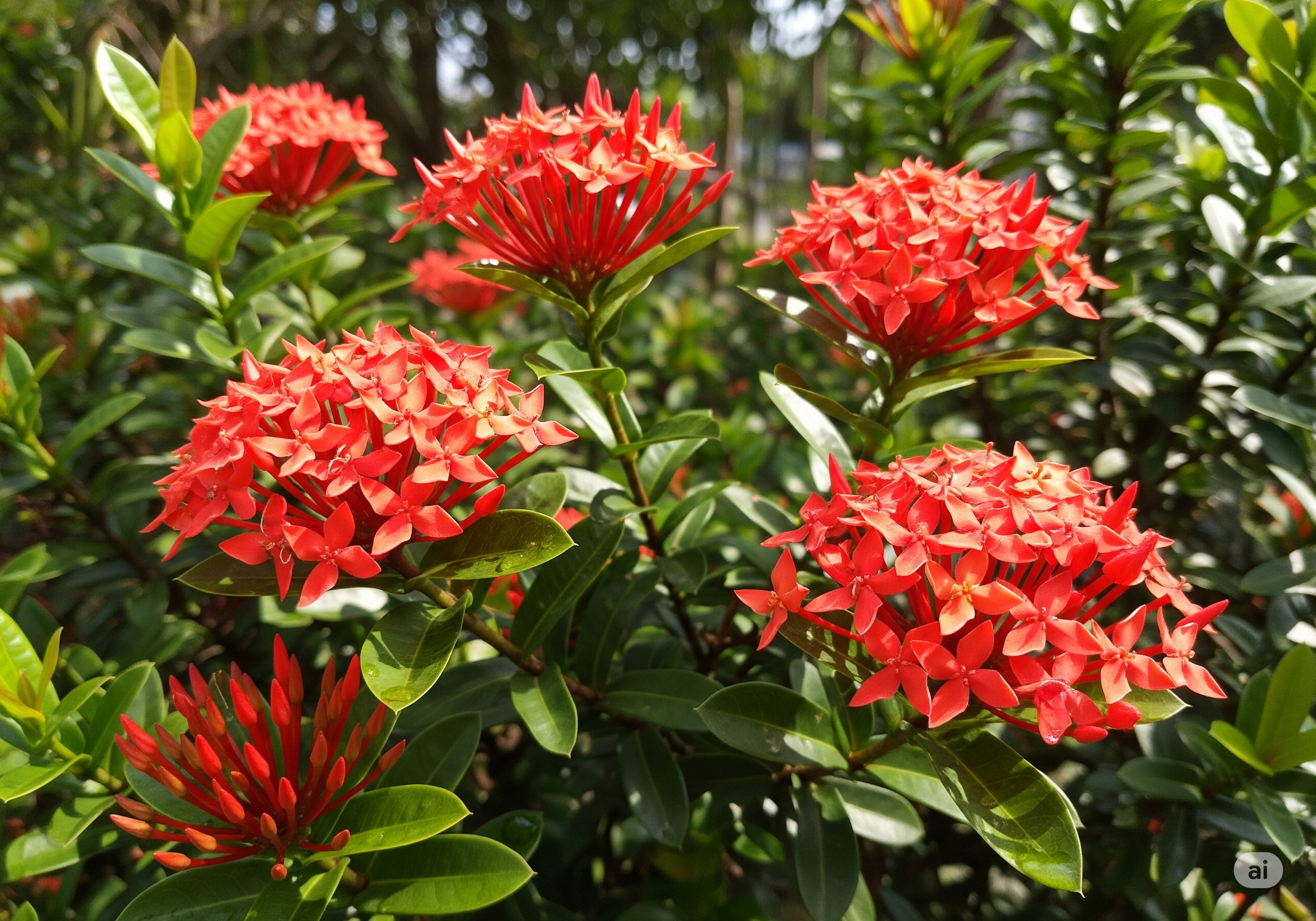
Ixora
Ixora coccinea
Meaning and Symbolism
Ixora’s dense clusters of tiny tubular flowers create a blaze of color in tropical gardens, symbolizing passion, friendship, and spiritual devotion. In Indian and Southeast Asian traditions, ixora is often associated with sacred rites and offerings, linking it to divine blessing and purity of intent. Red ixora embodies energy, courage, and romantic love; yellow symbolizes joy and optimism; pink conveys affection and harmony; white represents spiritual focus and peace. In friendship, ixora conveys warmth and loyalty; in romance, it suggests a love that is vibrant and all-encompassing. Because the plant blooms year-round in the right climate, it’s also seen as a sign of constancy and lasting connection.
History and Cultural Significance
Native to South and Southeast Asia, ixora has been cultivated for centuries in temple gardens and home landscapes. Its name is believed to derive from “Ikshvaku,” a mythological Hindu king, or from the Sanskrit “Ishvara” meaning “lord,” reinforcing its sacred associations. In Ayurvedic medicine, parts of the plant have been used for anti-inflammatory and healing purposes. Colonial botanical gardens spread ixora to tropical regions around the world, including the Caribbean and Pacific Islands, where it adapted easily to local conditions. In modern landscaping, ixora is prized for its year-round blooms, ease of maintenance, and ability to form bright hedges or container displays. It is also used in floral arrangements for festivals and weddings, where its vivid colors create celebratory energy.