Freesia
Freesia refracta
Meaning and Symbolism
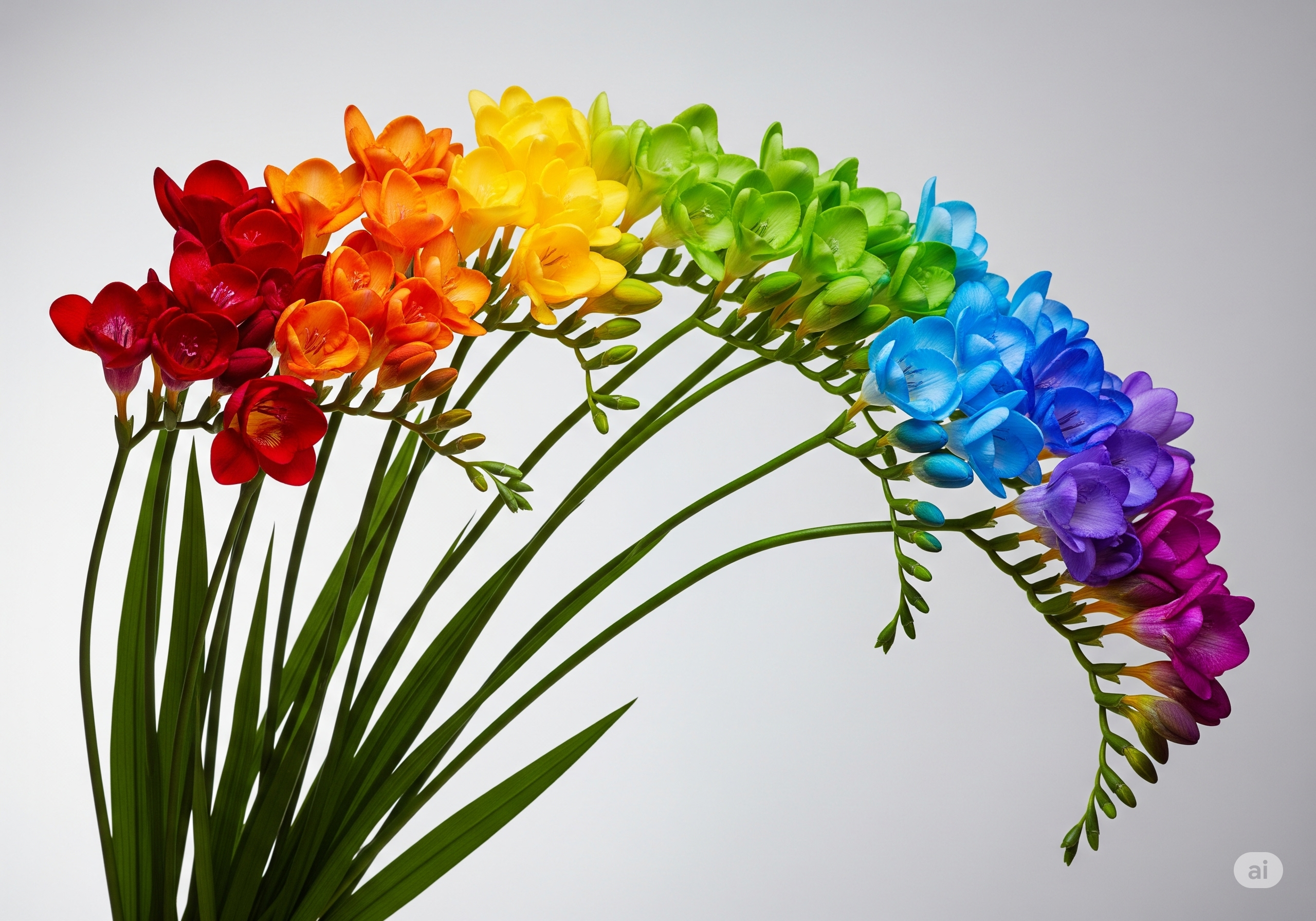
Freesia’s graceful, trumpet-shaped flowers and citrusy fragrance have made them symbols of friendship, trust, and innocence. Their delicate arching stems carry blooms that open in sequence, representing the gradual unfolding of a relationship or a journey. White freesias embody purity and sincerity; yellow expresses joy and optimism; pink signifies affection and thoughtfulness; red suggests passion tempered with respect; purple carries a sense of mystery and charm. Because they are among the most fragrant of cut flowers, freesias are often given to convey heartfelt messages, their scent lingering like a treasured memory. They are a classic choice for weddings and anniversaries, where they express fidelity and mutual respect. For “Get Well” arrangements, freesias bring lightness and encouragement, their bright colors lifting the spirit.
History and Cultural Significance
Native to South Africa, freesias were introduced to Europe in the 19th century and quickly became favorites in both gardens and the cut-flower market. They were named by botanist Christian Friedrich Ecklon in honor of his friend, Friedrich Freese, cementing their association with friendship. Victorian floriography embraced freesias for their gentle yet enduring symbolism, and they remain a staple in formal floral work today. In horticulture, breeders have developed a wide spectrum of colors and improved vase life, making freesias a versatile choice for florists. In perfumery, the distinctive fresh scent of freesia is a common note in spring and bridal fragrances. They are grown commercially in Europe, Japan, and the United States, with Dutch growers leading the global supply. The combination of beauty, fragrance, and meaning ensures freesias’ place in both romantic and platonic gifting traditions.