Queen Anne’s Lace
Daucus carota
Meaning and Symbolism
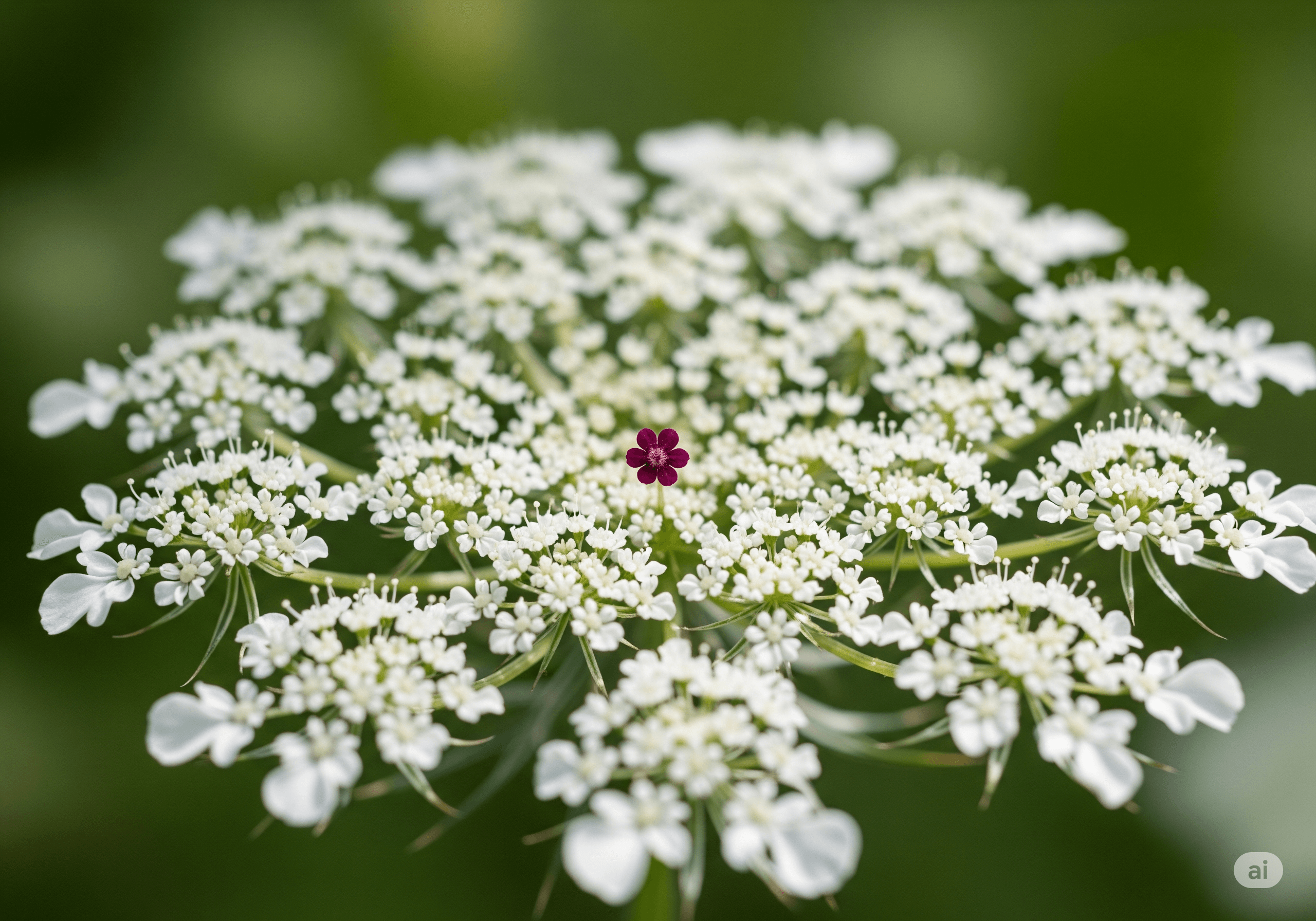
Queen Anne’s Lace, a wild carrot in bridal white, reads like a doily lifted to the sun. In floriography it symbolizes sanctuary—an invitation to safe harbor—and gentle protection, as the lacy umbels shelter tiny pollinators like a parasol. The central dark floret sometimes seen in the bloom is said to be a “pricked finger,” a legend that adds a note of sacrifice for beauty: care is costly, and thus sincere. As a gift, the flower speaks of tender guardianship—“you are looked after here”—making it lovely for Friendship, Get Well, or New Beginnings. Its architecture—many small florets forming a larger design—suggests community and interdependence; no single blossom makes the lace. In romance, Queen Anne’s Lace signals attentive love rather than spectacle, a preference for intricacy over grand gesture. As a memorial symbol, its airy white offers comfort without heaviness: grief held lightly, memories woven fine. For birthdays, it conveys appreciation for the recipient’s quiet strengths: observation, patience, and the art of making something beautiful from many small acts. In short, the flower’s message is refuge through gentleness and beauty woven from modest parts.
History and Cultural Significance
Native to Europe and naturalized widely, Queen Anne’s Lace followed settlers into meadows and roadsides, where it stitched itself into pastoral imagery across North America and beyond. The name likely honors Queen Anne of Great Britain, reputedly an expert lace-maker; folklore says she pricked her finger while crafting, and a droplet fell into the center of the floral lace. Herbal histories remember its root as the ancestor of the domesticated carrot; the wild form is slender, aromatic, and not for casual eating, reminding us that cultivation refines raw potential. Artists and photographers adore the way umbels catch evening light—an embroidery of shadows—and how dried seed heads curl into “bird’s nests,” reinforcing the theme of shelter. For wedding designers, it’s a go-to filler that reads as ether rather than filler: it blurs edges, softens palettes, and makes luxe roses or peonies feel breathable. In ecological conversations, the plant is both praised for nectar and watched for invasiveness depending on region; this duality—helpful and potentially pushy—has sharpened cultural awareness of balance in naturalized landscapes. In kitchen gardens, Queen Anne’s Lace attracts beneficial insects that help protect crops, literally enacting its symbolism of sanctuary by hosting allies. Even in urban bouquets, a stem or two changes the mood from formal to living meadow, tapping nostalgia for hedgerows and unhurried lanes. Across poetry, craft markets, and farm weddings, the flower has come to stand for the value of delicacy in a loud world: fine work, softly offered, can hold a surprising amount of life.