Oleander
Nerium oleander
Meaning and Symbolism
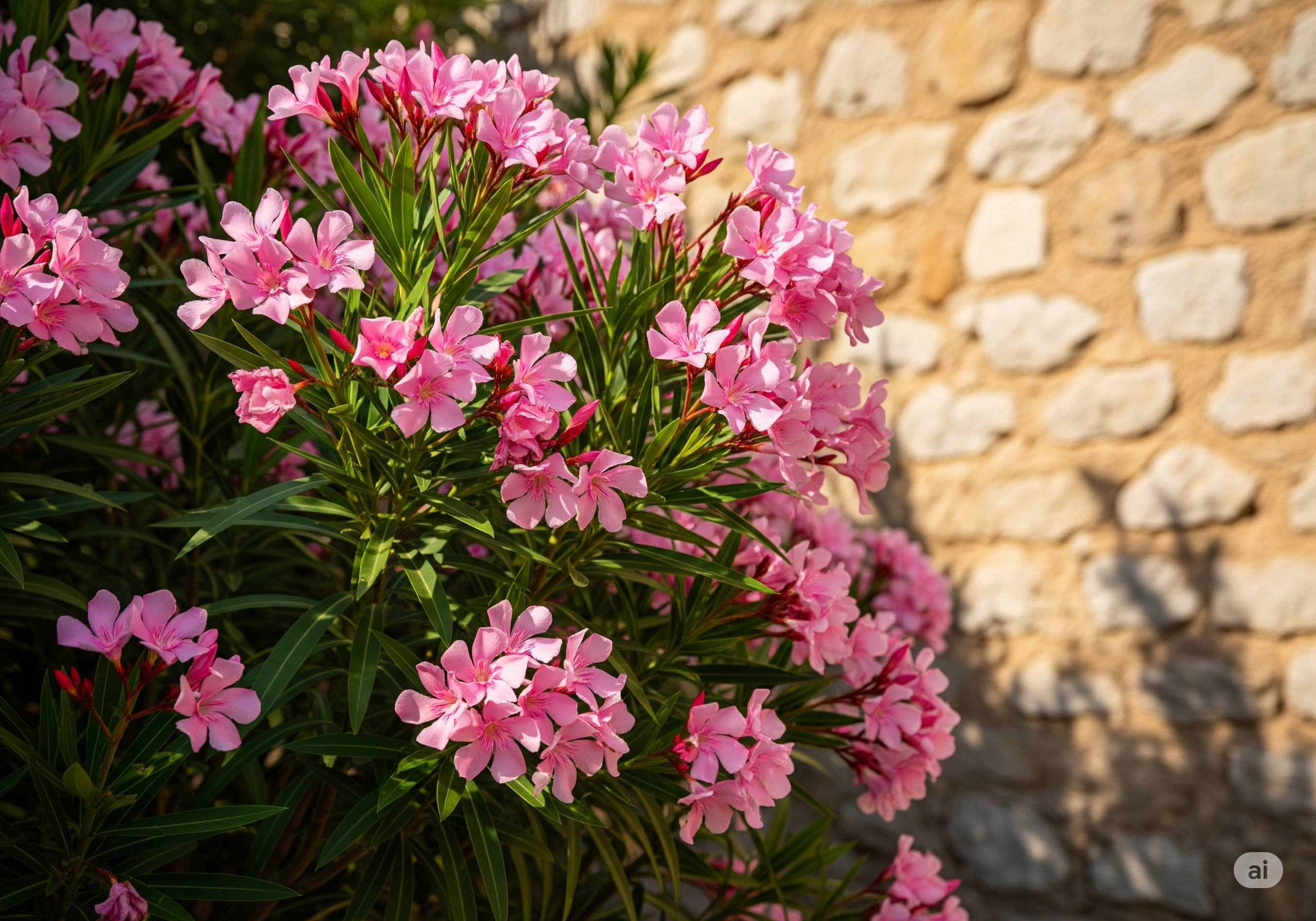
Oleander’s silken trumpets and glossy leaves project serene elegance, but the plant is famously poisonous, giving rise to a layered symbolism: beauty paired with warning, allure tempered by discernment. In floriography, oleander can mean “beware,” yet it also stands for steadfastness—the shrub endures heat, salt winds, and poor soils, blooming exuberantly where others fail. As a message for relationships, oleander encourages boundaries and mindful love: cherish beauty, respect danger. In friendship and family contexts, it’s a metaphor for resilience in harsh climates—literal or emotional. For “New Beginnings,” the shrub’s ability to root from cuttings and flourish along roadsides suggests renewal from scraps; for “Get Well,” it’s not appropriate as a literal plant in sensitive settings, but symbolically it affirms a guarded path to strength: recover with care, not haste. In memorial designs, pale oleander imagery can honor a complex life—radiant, tested, and worthy of respect. The palette helps fine-tune messages: white for purity under pressure, pink for affectionate restraint, red for passion under discipline, and soft peach for gracious diplomacy. Ultimately, oleander’s language is nuanced: admire the bloom, observe the limits—love as wise stewardship.
History and Cultural Significance
Native to Mediterranean and Asian regions, oleander has long lined caravan routes and seaside promenades, valued for wind tolerance and nonstop bloom. Ancient writers noted its medicinal experiments (now strictly cautioned against), while poets used it as a contrast—innocent-looking flowers masking power. In postwar urban planning, oleander became a highway staple in warm climates: a living barrier that shrugged off exhaust and drought, its pink clouds softening concrete landscapes. That civic role—hardy, attractive, uncomplaining—reinforced its cultural identity as the elegant survivor. Painters of the South of France and coastal Italy often tucked oleanders into backgrounds to signal place and season: summer, salt, and light bouncing off stucco. Gardeners traded cuttings, creating neighborhood hedges that bloom in synchronized waves, a communal calendar in petals. Safety awareness increased in modern times; educators now pair plant lore with clear guidance: avoid ingestion, keep trimmings away from livestock, and never burn oleander wood. Rather than diminish the plant, that respect has deepened its metaphorical weight in literature and film: irresistible beauty with serious consequences if mishandled. Contemporary breeders have focused on sterility in some cultivars to limit volunteer seedlings, and landscape architects site shrubs thoughtfully away from playgrounds. Used as a motif—embroidered on linens, painted on tiles—oleander signals Mediterranean ease, veranda evenings, and stories told under warm winds. Its endurance in art and streetscapes shows how culture embraces complexity: we keep what is lovely, and we learn to live with its conditions.