Poppy
Papaver
Meaning and Symbolism
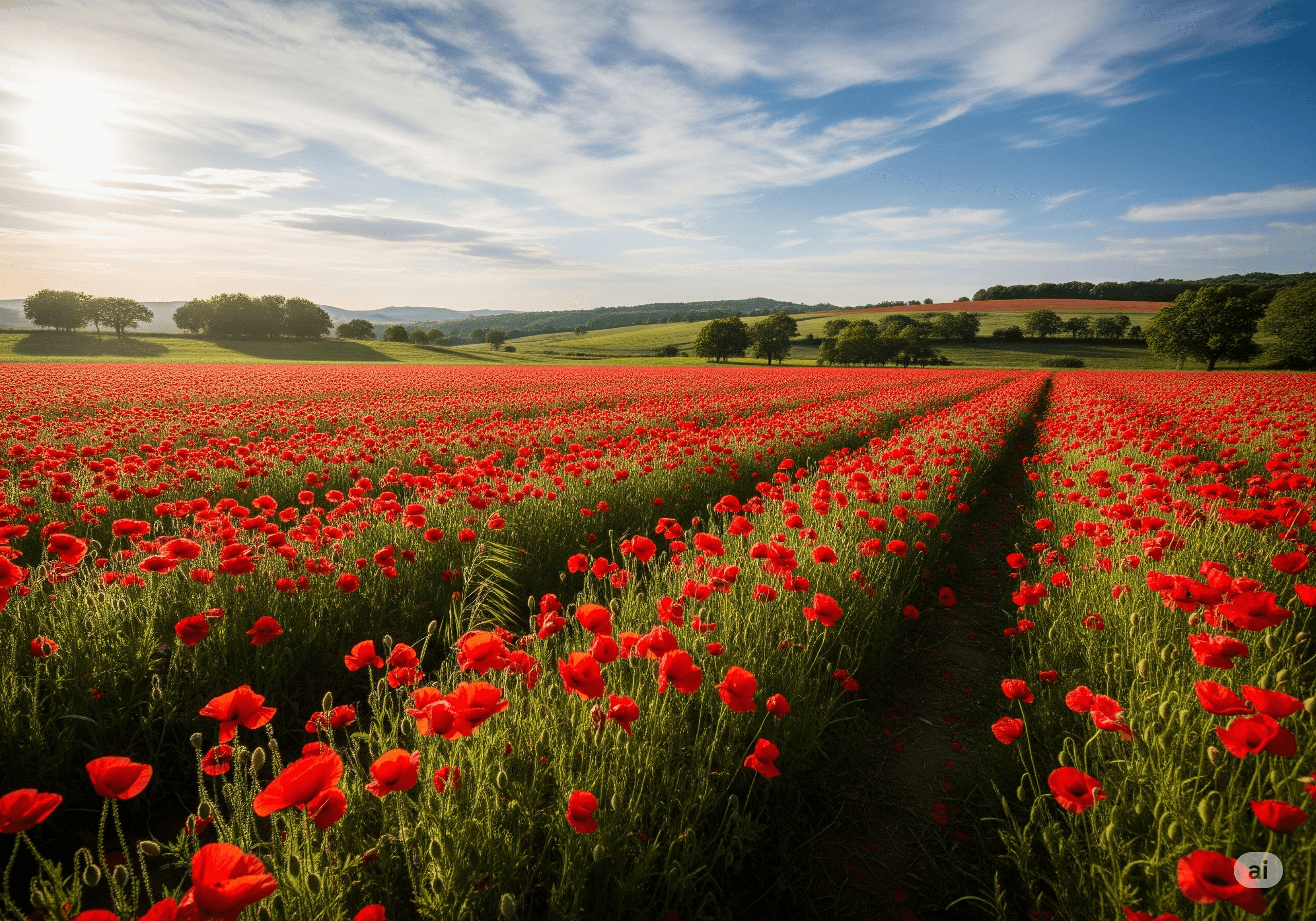
Poppies are often viewed through the lens of remembrance and consolation. The red poppy in particular has become a universal symbol of memory for fallen soldiers; since World War I it has been worn and displayed to honor those lost in war:contentReference[oaicite:69]{index=69}. This connection gives poppies a meaning of respect, sacrifice, and comfort in grief. In a broader sense, poppies represent peace and eternal rest – likely stemming from the opiate properties of the poppy that induce sleep, leading to associations with tranquility and the 'sleep' of death:contentReference[oaicite:70]{index=70}. Yet poppies have other facets too. In Victorian floriography, a poppy could symbolize imagination or consolation. White poppies, for example, symbolize peaceful rest and are sometimes used to remember civilian casualties of conflict or to express hope for peace. Because poppies spring up in disturbed earth (famously carpeting battlefields with their vivid blooms), they also carry a message of resilience and natural renewal. And interestingly, in modern times, the poppy has even found a place in romantic symbolism – as the August birth flower (shared with gladiolus), some interpret poppies as a symbol of fantastic extravagance or a lively imagination in those born that month.
History and Cultural Significance
The poppy’s history is deeply intertwined with humanity’s quest for relief and meaning. The opium poppy (Papaver somniferum) was cultivated in ancient Mesopotamia and Egypt; known as the 'Joy Plant' to Sumerians, it was used to produce opium for pain relief and ritual purposes thousands of years ago:contentReference[oaicite:71]{index=71}. Poppies were well known to ancient Greeks and Romans too – the Greeks linked the flower to Morpheus, god of dreams, because of its sleep-inducing qualities. Fast forward to the early 20th century: the red field poppy (Papaver rhoeas) gained renown after World War I when it blanketed the churned battlefields of Flanders. Inspired by the poem "In Flanders Fields" by Lieutenant Colonel John McCrae, the poppy was adopted in 1921 as the emblem of remembrance by the British and American Legions:contentReference[oaicite:72]{index=72}. Since then, wearing a red poppy in November (around Veterans Day/Remembrance Day) has become a steadfast tradition in many countries. Other cultures have their own poppy lore. In parts of Eastern Europe, red poppies symbolized the blood of warriors on battlefields long before WWI. Meanwhile, in China and Japan, poppies can represent rest, beauty, or success (though the opium connection also cast them in a cautionary light). On a different note, California’s state flower is the California poppy – a golden-orange cousin of the red poppy – which symbolizes the Golden State’s natural beauty and was once used medicinally by Native Californians as a mild sedative. Today, beyond memorial use, poppy seeds find their way into kitchens worldwide (from bagels to cakes), and derivatives of the opium poppy remain central in medicine as morphine and other painkillers:contentReference[oaicite:73]{index=73}. The poppy thus straddles a unique space: a symbol of sleep and death, and also of hope after devastation.