Daffodil
Narcissus
Meaning and Symbolism
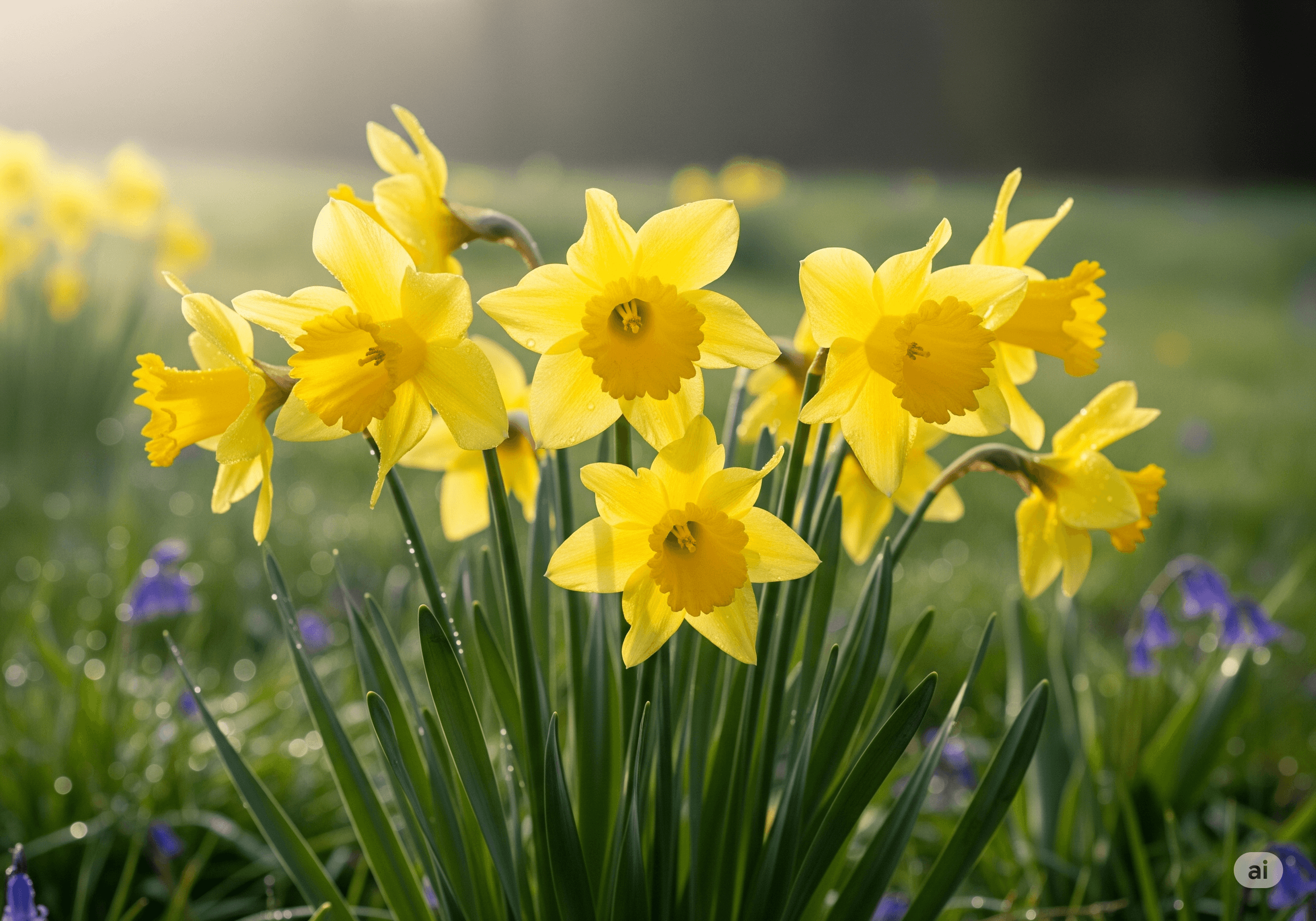
Daffodils are the quintessential symbol of new beginnings and rebirth. As some of the first flowers to bloom at winter’s end, their sunny yellow blossoms herald the arrival of spring and the promise of warmth and growth ahead:contentReference[oaicite:62]{index=62}. They are often associated with hope, making them popular in “get well” bouquets or as a general token of encouragement – their mere presence can uplift spirits with thoughts of renewal. The daffodil also symbolizes friendship and happiness; a common sentiment is that gifting a bunch of daffodils ensures good luck (whereas presenting a single daffodil could be seen as bad luck in folklore). In the language of flowers, daffodils carry the meaning of respect and chivalry as well. Interestingly, the flower’s botanical name “Narcissus” ties it to the Greek myth of the youth who fell in love with his own reflection, which sometimes leads people to say daffodils represent unrequited love or vanity. However, the prevailing modern symbolism of the daffodil is overwhelmingly positive – it’s a bright, cheerful emblem of resilience, optimism, and the cycles of life renewing anew each year.
History and Cultural Significance
Daffodils have been beloved for centuries, native to meadows and woods in parts of Europe (particularly the Iberian Peninsula) and North Africa. They were cultivated by the ancient Romans, who prized them for their beauty and possibly for supposed medicinal qualities. After the fall of Rome, daffodils went somewhat underappreciated in Europe until a resurgence of interest in the 17th and 18th centuries, when botanical explorers and gardeners began hybridizing them to create new varieties. In Wales, the daffodil became a national symbol and is worn every March 1st on St. David’s Day to celebrate Welsh heritage – blooming around that time, it coincides with the national festivities. (Interestingly, the Welsh name for daffodil, “Cennin Pedr” or “Peter’s Leek,” reflects an old confusion with leeks, another national emblem.) The daffodil has also taken on significance in modern times as a symbol of hope in the fight against cancer. Cancer societies in many countries (from the US and Canada to Australia and New Zealand) use the daffodil during fundraising campaigns each spring, signifying hope and renewal for patients and survivors:contentReference[oaicite:63]{index=63}:contentReference[oaicite:64]{index=64}. Another chapter in daffodil lore comes from Victorian England, where daffodils (or “lent lilies” as they were sometimes called) were associated with Easter and rebirth, often used to decorate churches during the Lent and Easter season. Daffodil bulbs have a hidden talent as well: they contain a compound called galantamine that is used in drugs to treat Alzheimer’s disease today:contentReference[oaicite:65]{index=65}. In fact, farmers in Wales cultivate special daffodils in high altitudes because the stress causes them to produce more of this medicinal compound:contentReference[oaicite:66]{index=66}. From cultural celebrations to cutting-edge medicine, the daffodil’s impact goes far beyond its cheerful appearance, rooting it deeply in human society.