Phlox
Phlox paniculata
Meaning and Symbolism
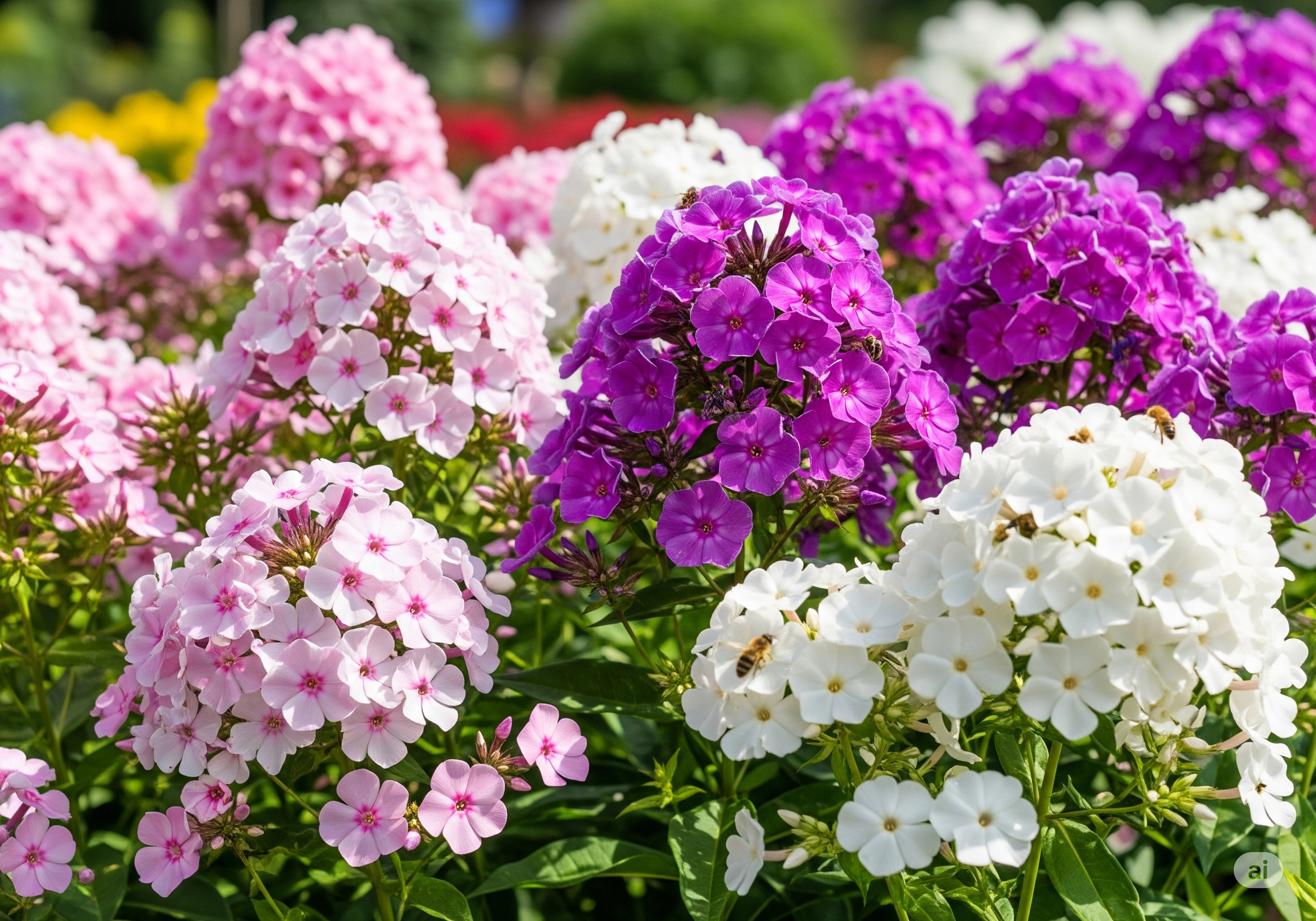
Phlox, with its abundant clusters of five-petaled blooms, is a symbol of harmony, partnership, and sweet dreams. In the language of flowers, it conveys the idea of unity in diversity—many small flowers forming a single, beautiful whole. Pink phlox speaks to affection and romantic warmth; white suggests purity and innocence; purple implies spiritual depth and dignity. Because phlox blooms from summer into fall, it’s associated with perseverance and the joy found in companionship that lasts through seasons. In romantic contexts, phlox can mean “our souls are in harmony,” while in friendship it signifies mutual support and trust.
History and Cultural Significance
Native to North America, phlox was first collected and documented by European botanists in the 18th century. Its name comes from the Greek word for “flame,” a nod to its vibrant colors. In colonial gardens, phlox was valued for its hardiness and fragrance, and it remains a staple in cottage and perennial borders. The Victorian language of flowers embraced phlox as a message of uniting bonds, making it popular in wedding bouquets and friendship posies. Modern breeders have expanded its color range and disease resistance, ensuring its place in contemporary gardens. In ecological terms, phlox supports butterflies, moths, and hummingbirds, making it a pollinator-friendly choice.