Penstemon
Penstemon digitalis
Meaning and Symbolism
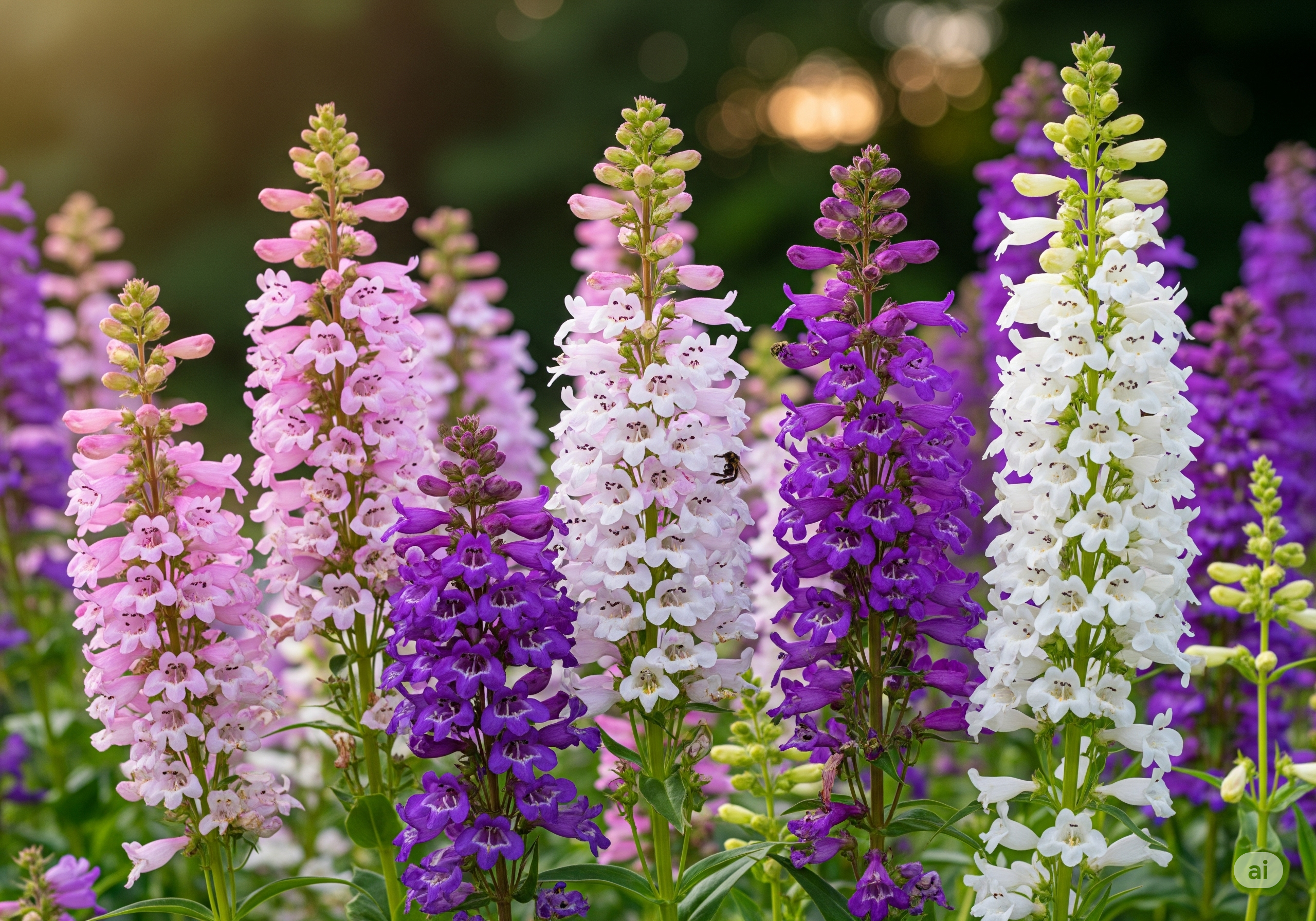
Penstemon, often called “beardtongue” for the tiny hairy staminode in its tubular flowers, symbolizes encouragement, adaptability, and endurance. In floriography, it represents the support we give others to grow into their best selves, as well as the flexibility to thrive under varied conditions. Purple penstemon suggests creativity and pride; pink conveys affection and compassion; blue varieties evoke calm and trust; white speaks of honesty and clarity. The plant’s vertical habit and long bloom time add to its symbolism of sustained effort and visible progress.
History and Cultural Significance
Native to North America, penstemon occupies habitats from alpine slopes to deserts, showcasing its adaptability. Indigenous peoples used certain species medicinally, including as a poultice for wounds. Botanist John Mitchell is credited with the first recorded description of the genus in the 18th century. Today, over 250 species are recognized, with horticultural hybrids expanding garden use. Penstemons are important to native pollinators, including specialist bees and hummingbirds, and they play a role in habitat restoration projects. Their drought tolerance and varied colors make them a natural fit for xeriscaping and wildflower gardens. In cultural terms, penstemons embody the rugged beauty of the American landscape and the resilience of communities that live close to the land.