Grevillea
Grevillea robusta
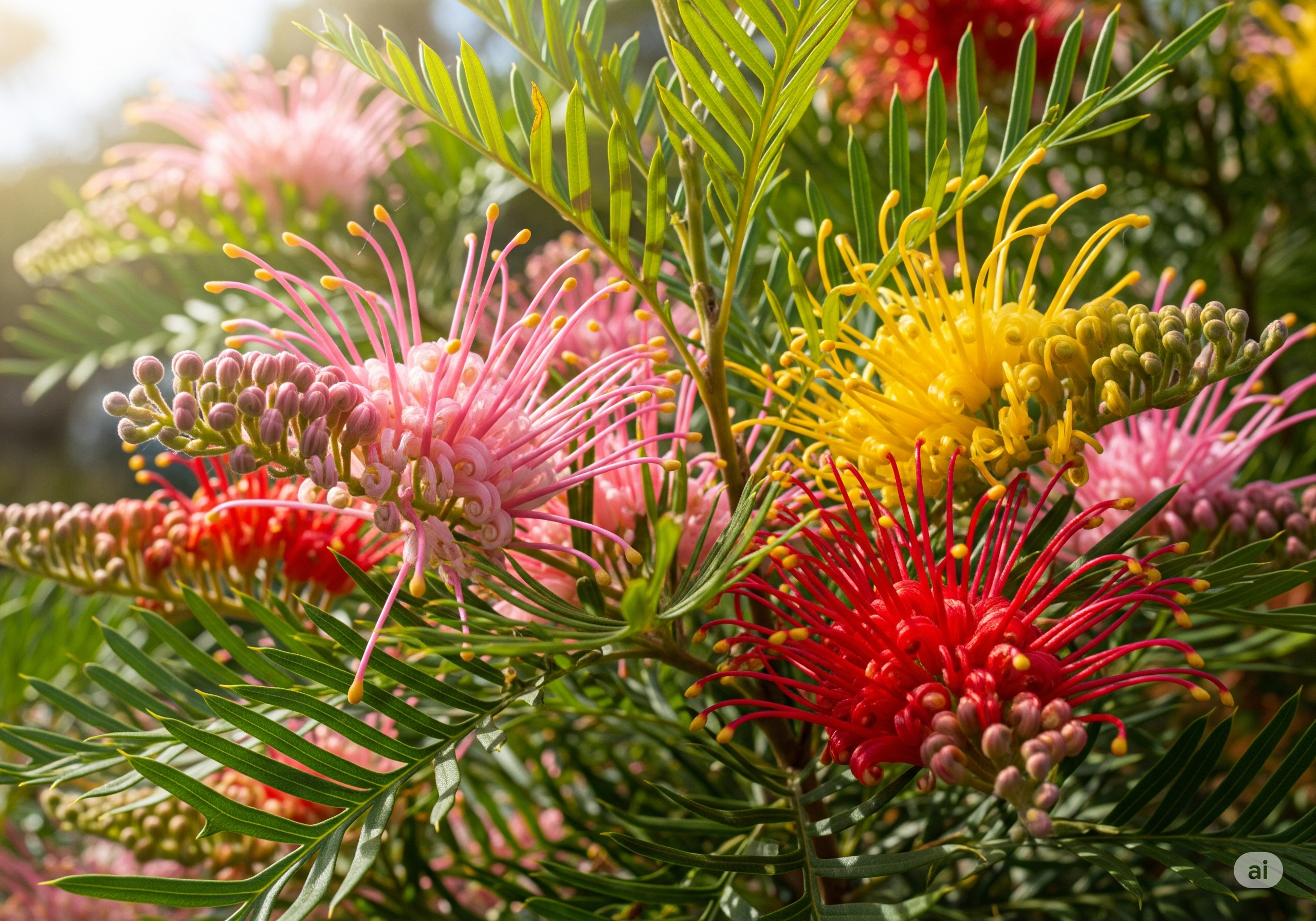
Meaning and Symbolism
Grevilleas, with their uniquely spidery flowers and fine, fern-like foliage, symbolize generosity, creativity, and resourcefulness. Their nectar-rich blooms feed birds and pollinators, reinforcing their association with hospitality and mutual benefit. Red grevilleas carry connotations of passion and vitality; yellow varieties speak to joy and friendship; pink blends affection with gentleness. In the language of flowers, grevillea can also represent resilience—the ability to adapt to challenging conditions and still thrive. Because they flower over long periods, sometimes year-round, they are linked to sustained effort and enduring bonds. Offering grevillea conveys the wish for relationships that are both giving and self-sustaining.
History and Cultural Significance
Native to Australia and parts of Papua New Guinea, grevilleas have long been valued by Aboriginal Australians, who traditionally harvested nectar by shaking the flowers into the mouth or into water to make a sweet drink. Named in honor of Charles Francis Greville, a founder of the Royal Horticultural Society, the genus includes over 350 species ranging from groundcovers to tall trees. Grevilleas were introduced to European horticulture in the 19th century and became emblematic of Australian native planting. They are ecological linchpins in their home range, providing year-round nectar for birds like honeyeaters and lorikeets. In modern landscaping, they are prized for their drought tolerance, low maintenance, and striking color displays. Culturally, they feature in Australian art, stamps, and botanical gardens, often as a symbol of environmental stewardship and connection to place.