Peony
Paeonia
Meaning and Symbolism
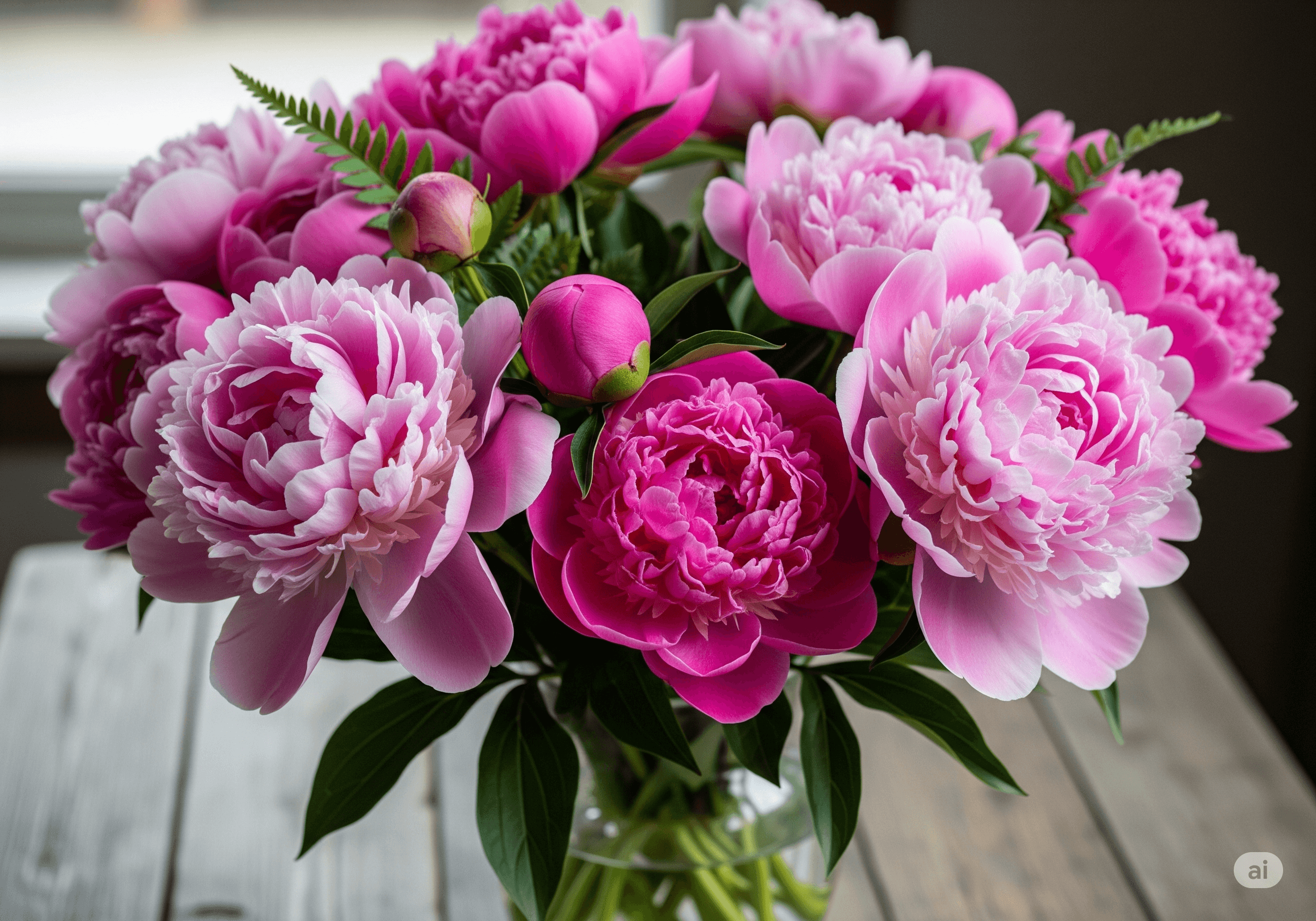
Peonies are lush, opulent flowers often associated with prosperity and romance. In Chinese culture they are revered as the “King of Flowers,” symbolizing wealth, honor, and high social status:contentReference[oaicite:10]{index=10}. Their extravagant layered petals also make them emblems of love and romance – peonies frequently appear in wedding bouquets as wishes for a happy marriage and enduring love:contentReference[oaicite:11]{index=11}. An old Greek myth lends the peony a meaning of bashfulness: a nymph named Paeonia was turned into a peony after blushing under Apollo’s gaze:contentReference[oaicite:12]{index=12}. This story gave rise to the idea of peonies representing modesty or shame in Victorian floriography. But overwhelmingly, peonies convey positive sentiments: they stand for good fortune, compassion, and a joyful life. They are even considered an omen of good luck and happy marriage, which is why the peony is celebrated as the traditional 12th wedding anniversary flower:contentReference[oaicite:13]{index=13}:contentReference[oaicite:14]{index=14}. Whether gifted as a token of affection or displayed for their sheer beauty, peonies carry an aura of grace, abundance, and heartfelt emotion.
History and Cultural Significance
With a history as rich as its fragrance, the peony has been cultivated for millennia. Peonies were grown in China as far back as 1000 B.C., originally for medicinal purposes – their roots and seeds were used to treat ailments ranging from headaches to childbirth pain:contentReference[oaicite:15]{index=15}. Over time, the Chinese began to prize peonies for their ornamental beauty as well. By the Tang Dynasty, tree peonies in particular were coveted by emperors and nobles, earning the flower its regal nickname and status. Peonies made their way to Japan by the 8th century, where they similarly came to symbolize honor, bravery, and good fortune:contentReference[oaicite:16]{index=16}:contentReference[oaicite:17]{index=17}. When peonies arrived in Europe in the early 1800s:contentReference[oaicite:18]{index=18}, they caused a sensation. Horticulturalists in France and England bred new varieties with ever more petals and colors, sparking a peony craze among Victorian gardeners. Throughout history, peonies have also featured in art and literature – from detailed Chinese silk paintings to the novels of the West – always as an icon of springtime splendor and romantic allure. Today, peony festivals are held in places like Luoyang, China (dubbed the Peony Capital), celebrating the flower’s cultural legacy. Beyond the garden, peonies have practical importance too: certain peony species were used in traditional medicine, and modern research continues to explore compounds from peony roots for their health benefits. The peony’s enduring popularity across continents and centuries cements its status as a global symbol of beauty, luck, and love.