Marigold
Tagetes erecta
Meaning and Symbolism
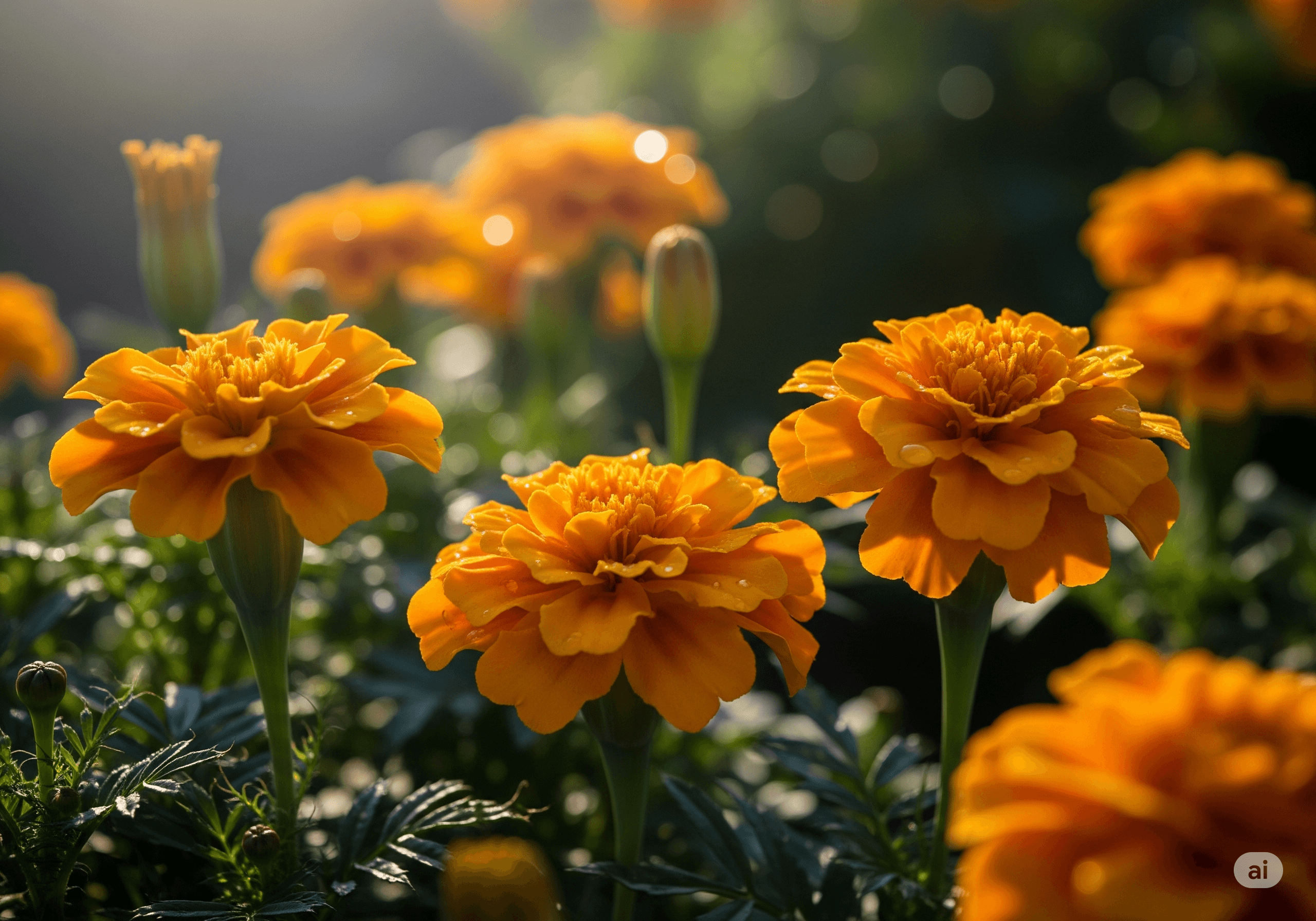
Marigolds are known for their bright, sun-like appearance and have a dual symbolism. On one hand, their golden color and hardy nature symbolize the warmth of the sun, creativity, and positive energy—hence marigolds are used in celebrations to invoke joy and good fortune:contentReference[oaicite:75]{index=75}. In Hindu culture, for example, marigolds (often in orange and yellow) represent the sun’s glow and are offered in weddings and festivals to bless a new union with prosperity and happiness:contentReference[oaicite:76]{index=76}. On the other hand, marigolds have been associated with grief and remembrance. In Victorian floriography they signified despair and grief over a lost love:contentReference[oaicite:77]{index=77}, and to this day in Mexico, bright orange marigolds (cempasúchil) are the iconic “flowers of the dead” used during Día de los Muertos to honor departed souls:contentReference[oaicite:78]{index=78}:contentReference[oaicite:79]{index=79}. This blend of meanings makes the marigold a symbol of the cycle of life: its petals represent the sun’s life-giving warmth as well as the sorrow of death and the hope of resurrection.
History and Cultural Significance
Marigolds are native to the Americas (particularly Mexico), where the Aztecs cultivated them for medicinal and ritual purposes centuries before European contact:contentReference[oaicite:80]{index=80}. The Aztecs called the flower *cempōhualxōchitl*, meaning “flower of twenty (plenty) blooms”:contentReference[oaicite:81]{index=81}, and used it in ceremonies and as a remedy. Spanish explorers brought marigold seeds to Europe in the 16th century – from Spain they spread throughout Europe and to Africa and Asia, leading to varieties nicknamed “African” and “French” marigolds:contentReference[oaicite:82]{index=82}:contentReference[oaicite:83]{index=83}. In India, marigolds became extremely popular; by the 19th century they were integrated into religious life as garlands for deities and decor for weddings, symbolizing auspiciousness and divine blessings:contentReference[oaicite:84]{index=84}. Marigolds also gained a role in folk medicine (for example, the antiseptic calendula, or pot marigold, in Europe). The marigold’s prominence in Día de los Muertos (Day of the Dead) in Mexico dates back to pre-Hispanic times and was later syncretized with Catholic All Saints Day:contentReference[oaicite:85]{index=85} – the flowers’ scent and vivid color are believed to guide spirits back to the living world:contentReference[oaicite:86]{index=86}. Today marigolds are grown worldwide, valued not only for tradition but for practicality: gardeners plant marigolds to repel pests (their roots release natural nematode repellents into the soil:contentReference[oaicite:87]{index=87}:contentReference[oaicite:88]{index=88}), and the petals of some marigold species are used as natural food coloring or dye due to their bright pigments.