Bluebell
Hyacinthoides non-scripta
Meaning and Symbolism
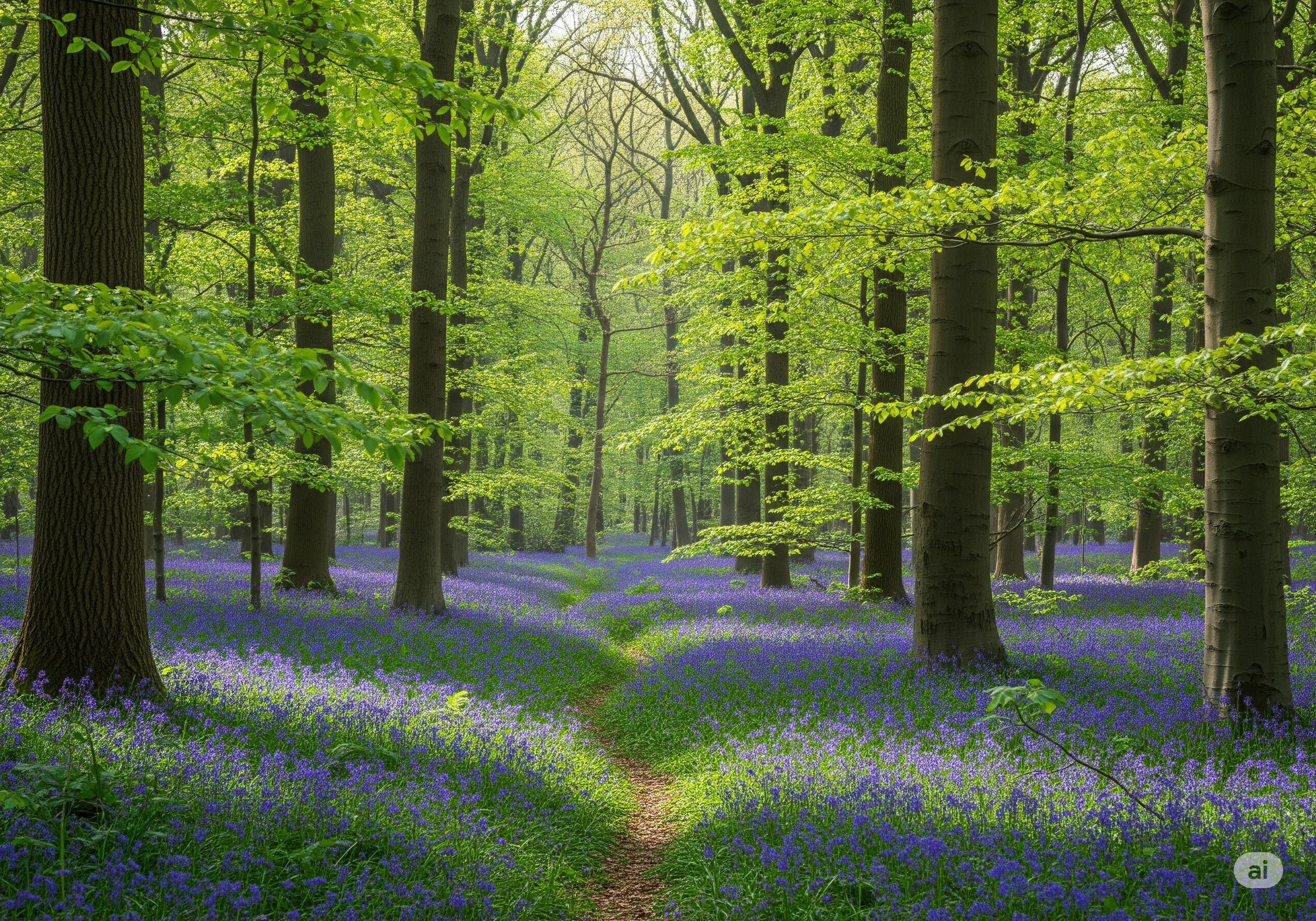
Bluebells are delicate bell-shaped wildflowers that carpet ancient woodlands in the spring, creating a dreamy sea of blue. They symbolize *humility* and *gratitude* – their heads nodding as if in modest thanks. In the language of flowers, bluebell can also mean “constant love” or loyalty, likely stemming from their perennial nature (they return reliably each year) and perhaps a bit from romantic poetry where they were associated with everlasting love in a tranquil, hidden forest. Bluebells have a mystical aura too: in British folklore, they’re sometimes called “fairy bells” – it was said that ringing a bluebell (intentionally or by walking through them) could summon fairies, or conversely, that one who wanders into a ring of bluebells might fall under fairy enchantment and be lost. Because of these tales, bluebells can also represent *enchanted love* or the spiritual realm of nature. Overall, giving someone bluebells might convey gratitude – “Thank you for your kindness” – as well as constancy: “My feelings for you are ever true.” The flower’s gentle color and presence in serene woods underscores its meaning of peace, humility, and heartfelt appreciation.
History and Cultural Significance
The common bluebell is native to western Europe, especially the British Isles where it can form spectacular blue carpets in woodland every April/May. In England, the bluebell is so cherished that it’s considered a symbol of the British woodland and is protected by law (it’s illegal to dig up wild bluebells). Culturally, bluebells have been woven into local legends: they were sometimes called “witch’s thimbles” and thought to be used in witches’ potions. Indeed, the bulb of a bluebell contains a starchy substance that in historical times was used as a glue – for instance, fletchers used it to attach feathers to arrows, and bookbinders to bind books. Because ingesting bluebells is poisonous, some folklore warned that picking bluebells would lead to misfortune. Yet, they have a positive image in literature: Romantic poets like Keats and Tennyson mention bluebells when evoking scenes of innocence and natural beauty. The Victorians, through floriography, gave bluebells the meanings of kindness and humility, aligning with the flower’s demure posture. In recent times, bluebells have become an emblem of spring conservation; people flock to see bluebell woods, and conservationists emphasize protecting these ancient wildflower colonies from invasive species (like the Spanish bluebell, a garden escapee). Every year, many share photographs of bluebell woods as a sign that spring has truly arrived. The combination of their visual splendor and rich folklore makes bluebells a beloved part of cultural heritage in their native regions.