Lilac
Syringa vulgaris
Meaning and Symbolism
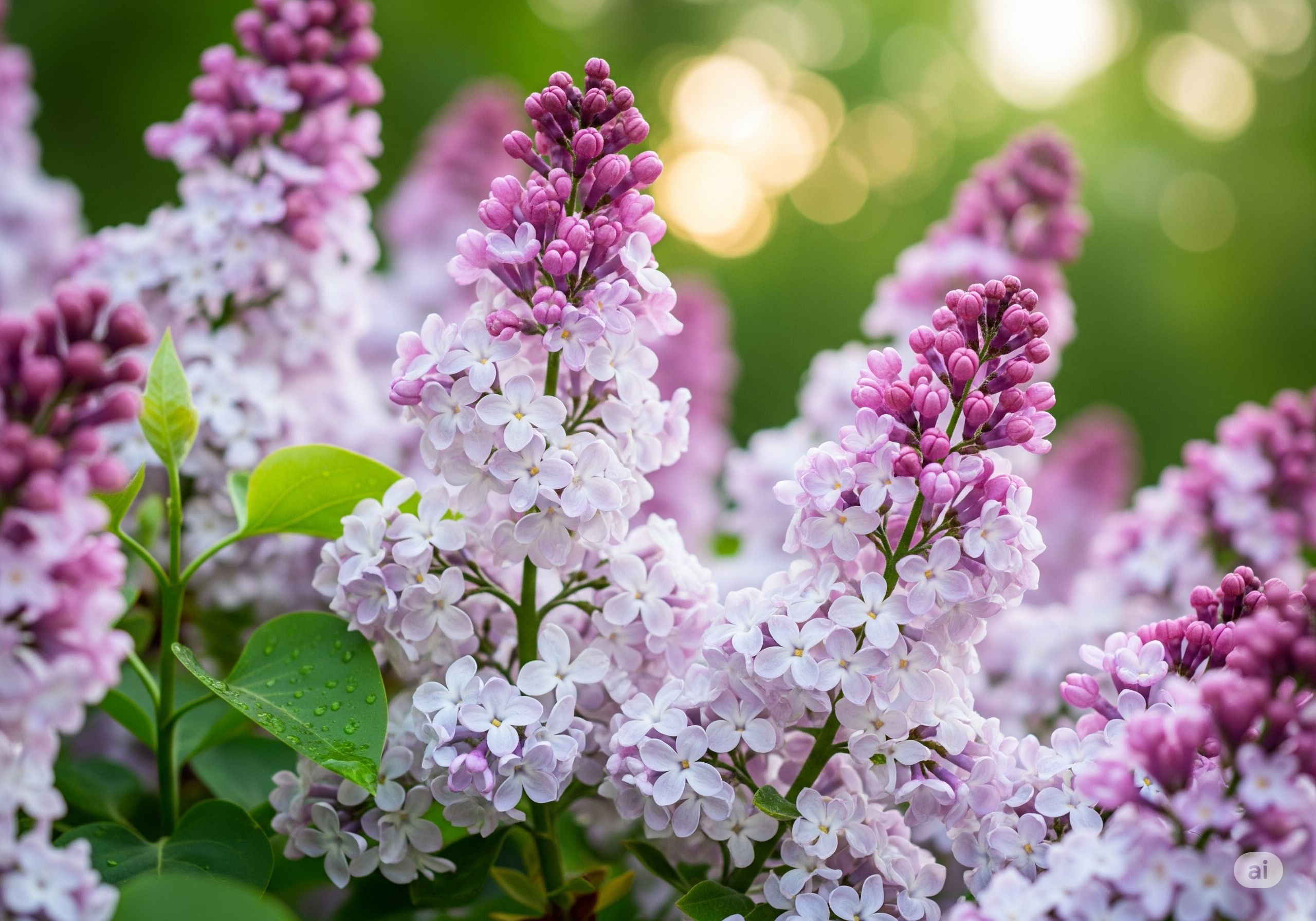
Lilac carries the unmistakable perfume of memories. In the language of flowers it often represents first love, the breathless, unguarded affection of youth, because lilacs are among the earliest shrubs to bloom in spring—just when the world seems to start over. Their timing links them to renewal, hope, and the courage to open one’s heart after winter, literal or emotional. Purple lilacs lean toward dignity and heartfelt attachment; pale lavender expresses tender admiration; white speaks of purity, blessings, and sincere intentions; and pink varieties hint at budding romance and affectionate nostalgia. A sprig in a friendship bouquet says, “you’re woven into my happiest seasons.” In a wedding setting, lilac can stand for vows that feel fresh even after years of knowing one another—love as a season that returns. For anniversaries, it honors a couple’s shared archive of scents and scenes. As a “Get Well” gesture, lilac’s freshness whispers that recovery will come in its season; for “Funeral,” the fragrance carries remembrance without heaviness, an evocation of a life in full bloom. Regional names reinforce its reach: “common lilac” in English gardens, “lilas” in French courtyards, “lila” across parts of Central and Eastern Europe. Hybrids broaden its vocabulary: double-flowered cultivars read as abundance of feeling, bicolors as nuanced affection, and late-blooming selections as patience rewarded. Above all, lilac symbolizes the way scent binds past and present—love remembered, love renewed.
History and Cultural Significance
Native to the Balkans, lilac traveled along Ottoman and Venetian trade routes into Western Europe by the 16th century, becoming a court and cottage favorite. From there it naturalized into village hedges and manor walks, merging elite and vernacular aesthetics—every household could have a living calendar of spring. The genus honors Syrinx (Syringa), the nymph of Greek myth who fled Pan and was transformed into hollow reeds—an origin story that artists have linked to lilac’s pithy stems and music of spring. In Russia and Ukraine, a lilac branch brushed over a student’s book was said to bestow wisdom or good grades; in New England and the Canadian Maritimes, lilac festivals still mark the exact week when towns smell like memory. By the late 1800s, French breeder Victor Lemoine and family released a flood of cultivars—doubles, bicolors, and refined shades—cementing “French lilacs” as the gold standard; his introductions (e.g., ‘Mme. Lemoine’, ‘Charles Joly’) remain classics. In the United States, Rochester and Mackinac Island became synonymous with lilac culture, hosting parades and competitions that turned bloom time into civic identity. In literature, Whitman’s elegy “When Lilacs Last in the Dooryard Bloom’d” linked the flower forever to remembrance in the American imagination, showing how its sweetness can hold sorrow gently. Horticulturally, advances in breeding delivered disease resistance and extended bloom—early, mid, and late varieties that stretch the season for weeks; reblooming lilacs now offer a smaller second show in autumn. Regional names reflect cultural layers too: “orgona” (Hungarian), “seren” (Welsh), “lilas commun” (French). Modern designers use lilac in spring weddings, pairing it with hellebores and tulips, or in memorial work for its aroma’s softening effect. Whether in a farmhouse jar or a formal aisle, lilac functions as a time machine and a blessing: it invites the past to sweeten the present while urging us to begin again.