Snapdragon
Antirrhinum majus
Meaning and Symbolism
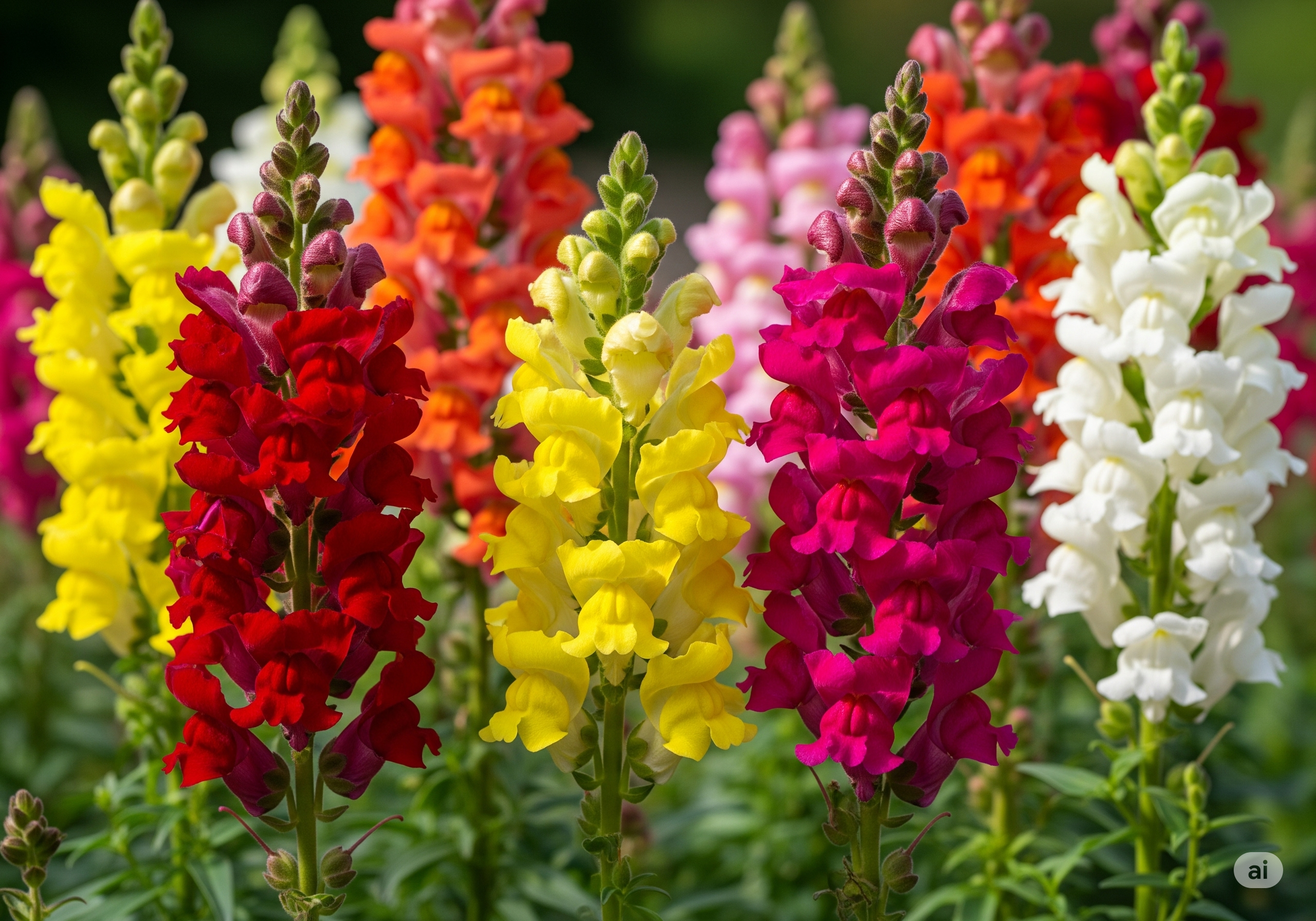
Snapdragon’s flower is theater: squeeze the sides and a little dragon “mouth” opens and shuts. That playful trick gave rise to layers of meaning. Historically the bloom signified both deception and graciousness—masks and manners—but modern interpretations lean toward resilience and witty strength. The plant tolerates cool springs, winds, and lean soils, standing upright in tight ranks; given as a gift, a snapdragon says, “you’ve got spine and style.” In friendship, it celebrates humor that helps us endure; in birthdays, it toasts colorful individuality. For “Get Well,” its vertical habit reads as a rallying posture, encouraging the recipient to stand tall again. In weddings, pastel snapdragons add elegant height and a note of playful honesty—love that allows for quirks. Colors refine the message: yellow for cheerful courage, pink for affectionate support, white for sincerity, red for ardent determination, apricot and coral for creative optimism. Regional names include “lion’s mouth” (French: gueule-de-loup; German: Löwenmaul), all pointing to its animated face. Dwarf “Madame Butterfly” or “Twinny” doubles symbolize abundant grace; towering “Rocket” types broadcast ambition. As a symbol, snapdragon blends lightness with grit—smiles as armor.
History and Cultural Significance
Native to Mediterranean cliffs and dry hillsides, Antirrhinum entered monastery and cottage gardens by the Middle Ages, valued as a bee plant and as a curious toy for children. Herbal lore ascribed protective powers: bunches over doorways guarded households from gossip or malice—an echo of the “mouth” closing to silence ill will. The Victorian era codified snapdragon’s two-sided meanings in floriography, often pairing it with ferns (sincerity) to temper the idea of disguise with the virtue of honesty. In the 20th century, breeders in the U.S., U.K., and Japan stabilized distinct sizes—from compact bedding lines to florist-grade spikes over 90 cm—with series like Rocket, Sonnet, Potomac, and Chantilly enhancing stem strength and vase life. Snapdragon’s genetic work even helped scientists study flower symmetry (zygomorphy), making it a model organism in plant developmental biology; this scientific role adds “intelligent design” to its cultural profile. In cut-flower culture, spring greenhouses and summer field rows produce continuous stems, and florists value how the spires animate arrangements, punctuating roses and ranunculus with vertical rhythm. Regionally, snapdragons feature in school graduations and town parades because they are reliably in bloom for late-spring ceremonies. Folklore persists in pockets: dried seedpods look like tiny skulls, fueling myths of dragon bones and reminding designers that even cheerful flowers can carry gothic charm. Across centuries, snapdragon’s throughline is consistent—spirited resilience dressed in color and a wink.