Kalanchoe
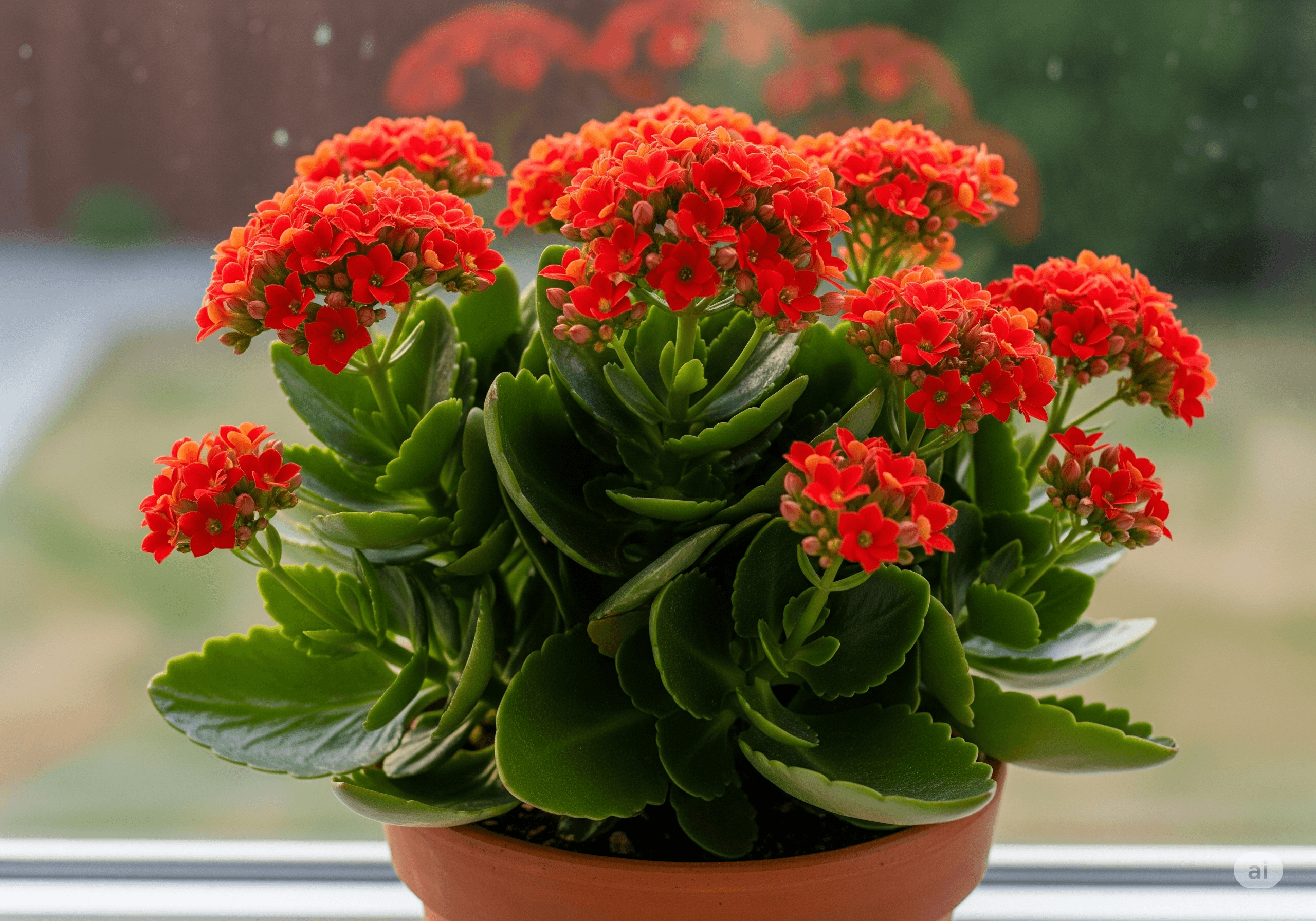
Kalanchoe blossfeldiana
Meaning and Symbolism
Kalanchoe carries the spirit of endurance in a compact, cheerful package. As a succulent, it stores water in its fleshy leaves and continues blooming even when conditions are less than ideal, which is why it’s widely interpreted as a symbol of persistence and practical wisdom—thriving by conserving what matters. Its long seasons of color make it a messenger of enduring affection and steady devotion rather than whirlwind romance; a kalanchoe gift says “my care doesn’t fade quickly.” In business settings, it is sometimes chosen as a token of prosperity and disciplined growth: each cluster of starry flowers suggests small, consistent wins adding up to a vibrant whole. Culturally, the plant’s ease of propagation—sprouts forming from leaf edges—has given it associations with abundance, family continuity, and blessings that multiply. For friendships, kalanchoe suggests reliability: it’s the dependable friend who shows up, even during a dry spell. For “Get Well,” the plant’s toughness sends a gentle nudge toward resilience and patient recovery. In romance, the meanings tilt toward warmth, loyalty, and the comfort of a relationship that can weather routine and stress. The glossy, light-catching leaves hint at optimism and clarity, while the palette—reds for passion and resolve, pinks for kindness, oranges for vitality, whites for sincerity, and yellows for cheerful confidence—lets the giver tune the message. Overall, kalanchoe’s symbolism blends love with good stewardship: nurture what you have, pace yourself, and watch durable beauty unfold over time.
History and Cultural Significance
Native to Madagascar and parts of Africa, Kalanchoe blossfeldiana became a global favorite in the 20th century after breeders in Germany and the Netherlands refined compact forms with saturated colors and impressive staying power. As a day-length–sensitive plant, it naturally flowers during shorter winter days—a seasonal trait that helped it earn the nickname “winter spark,” brightening windowsills when outdoor gardens are asleep. In feng shui–inspired decor, kalanchoe is sometimes placed to invite steady prosperity and the uplift of bright, healthy chi; its neat geometry and glossy leaves contribute to a “tidy vitality” aesthetic prized in small urban homes. Folklore attached to kalanchoe’s relatives (notably “mother of thousands”) capitalizes on the leaf-borne plantlets as emblems of protection and continuity; while B. blossfeldiana doesn’t carpet the ground with babies like those cousins, gardeners still swap cuttings with the same convivial spirit—passing on luck, health, and a living connection. As a low-demand houseplant, it intersected with postwar design movements that celebrated functional beauty: an object could be beautiful, modern, and unpretentious. That ethos persists—kalanchoe is ubiquitous in grocery florals and design-forward interiors alike because it performs, lasting weeks in bloom with minimal fuss. In hospital and workplace settings, it became a gentle ambassador for wellness: a durable, non-fragrant bloom that lightens a desk without overwhelming the senses. Meanwhile, hybridization has produced ruffled double forms (often marketed as “Calandiva”), miniatures for shelf styling, and large-headed cultivars for event work, expanding its cultural roles from everyday companion to chic accent. Although not traditionally tied to a single festival, its winter bloom period has woven it into New Year and late-December gift exchanges in many regions, where it conveys the hope of stable fortune in the months ahead. In sum, kalanchoe’s cultural story mirrors its look—compact, reliable, quietly joyful—making it a modern classic for symbolizing practical love and sustainable success.