Nasturtium
Tropaeolum majus
Meaning and Symbolism
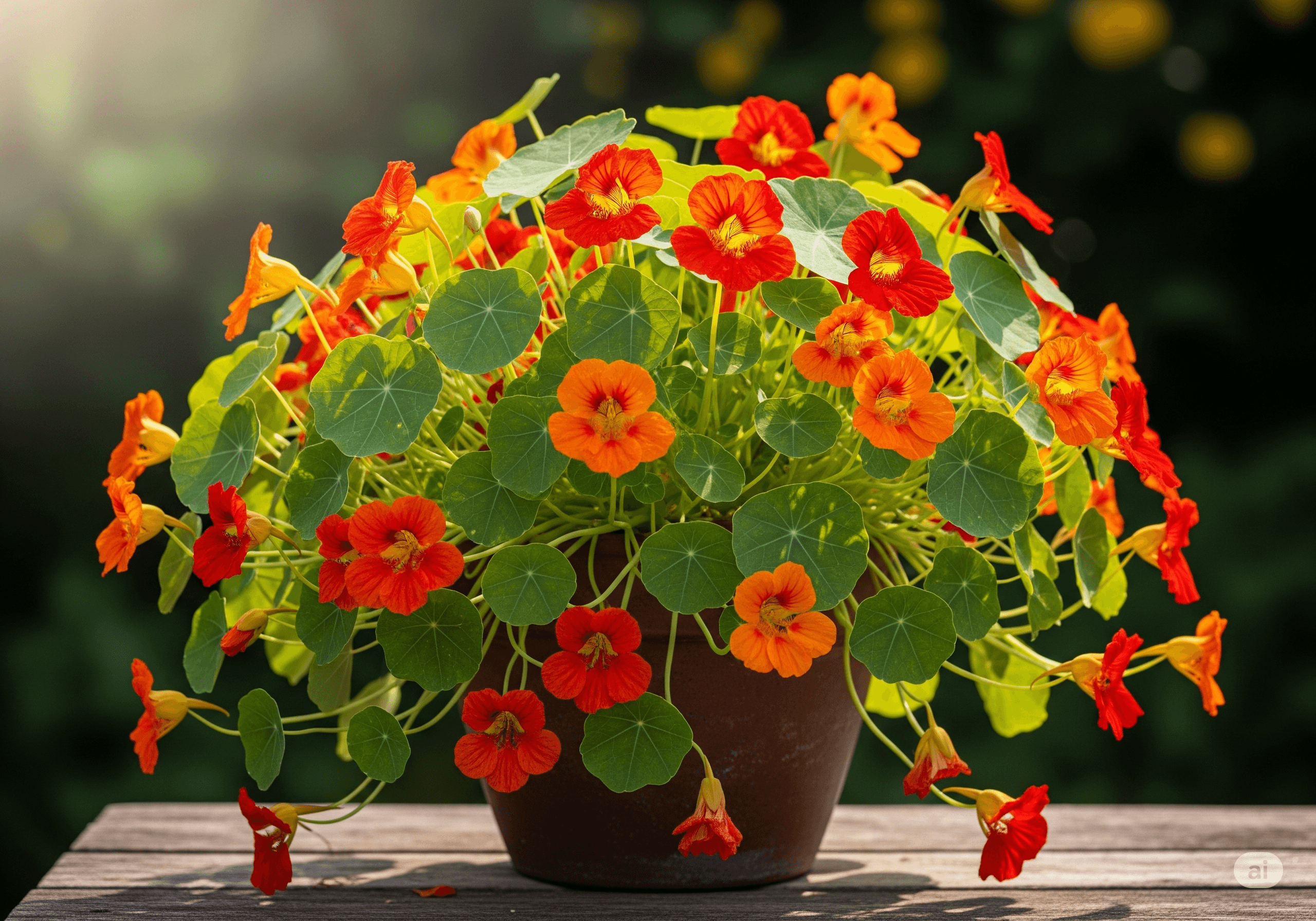
Nasturtium wears a playful face but carries a surprisingly martial past in floriography: its shield-like leaves and helmet-bright blooms inspired associations with victory, courage, and patriotic zeal. In the Victorian language of flowers, gifting nasturtiums could mean “conquest through lively spirit,” not aggression but boldness fueled by joy. Today those meanings soften into messages of confidence, creativity, and initiative—perfect for celebrating a new venture or cheering on a friend pursuing a daring idea. The edible nature of both leaves and flowers adds a layer of “honest sustenance,” symbolizing transparency and wholesome fun: you can literally taste the friendship. For romance, the bloom’s smoldering oranges and reds suggest adventurous love—spontaneous picnics, shared projects, laughter that tingles like the plant’s peppery bite. As a “Get Well” token, nasturtium’s vigor—spilling from baskets, colonizing walls, and reblooming after heat—whispers resilience and the body’s appetite for life. On “New Beginnings,” its self-seeding habit offers a parable: plant a few brave seeds and next season the garden answers with abundance. Even its trailing habit reads like generosity, reaching outward rather than standing stiff. In sum, nasturtium symbolizes buoyant courage, the kind that pairs bravery with humor and generosity with color.
History and Cultural Significance
Native to the Andes, nasturtiums travelled with Spanish explorers to Europe in the 16th century, where herbalists celebrated their edible, vitamin-rich leaves and striking hues. The genus name Tropaeolum references a “trophy” (tropaion) erected after battle; early botanists likened the peltate leaves to shields and the blooms to blood-bright helmets hanging on the post—an image that cemented the flower’s link to valor. In cottage gardens, nasturtiums became beloved for ease and thrift: they thrive in poor soil, rewarding frugality with superior bloom, a quiet moral about not overfeeding ambitions. During wartime kitchen-garden movements, nasturtium seedpods were pickled as “poor man’s capers,” adding briny sparkle to simple fare; this culinary footnote kept the plant at the table—literally and symbolically—as a companion to resilience. Designers prize the round leaves’ graphic geometry, echoed today in housewares and wallpaper; chefs sprinkle petals over salads, bridging edible gardening with plate art. In climates with mild winters, nasturtium naturalizes, self-sowing a tapestry of hot shades that mark seasonal rites in parks and schoolyards. Artists have used its color story—sunset oranges, lacquer reds, lemon and apricot pastels—to signal joie de vivre and approachable boldness. Meanwhile, seed catalogs continue to expand the palette with marbled leaves, deep mahoganies, and cream-veined throats, ensuring the flower’s relevance in both heritage beds and contemporary planters. Across cultures the plant’s mix of usefulness and merriment keeps it in circulation: a friend that brings both food and festival to the threshold. Its cultural arc—from Andean slopes to global balconies—mirrors the very courage it symbolizes: leap, adapt, brighten, repeat.