Jasmine
Jasminum
Meaning and Symbolism
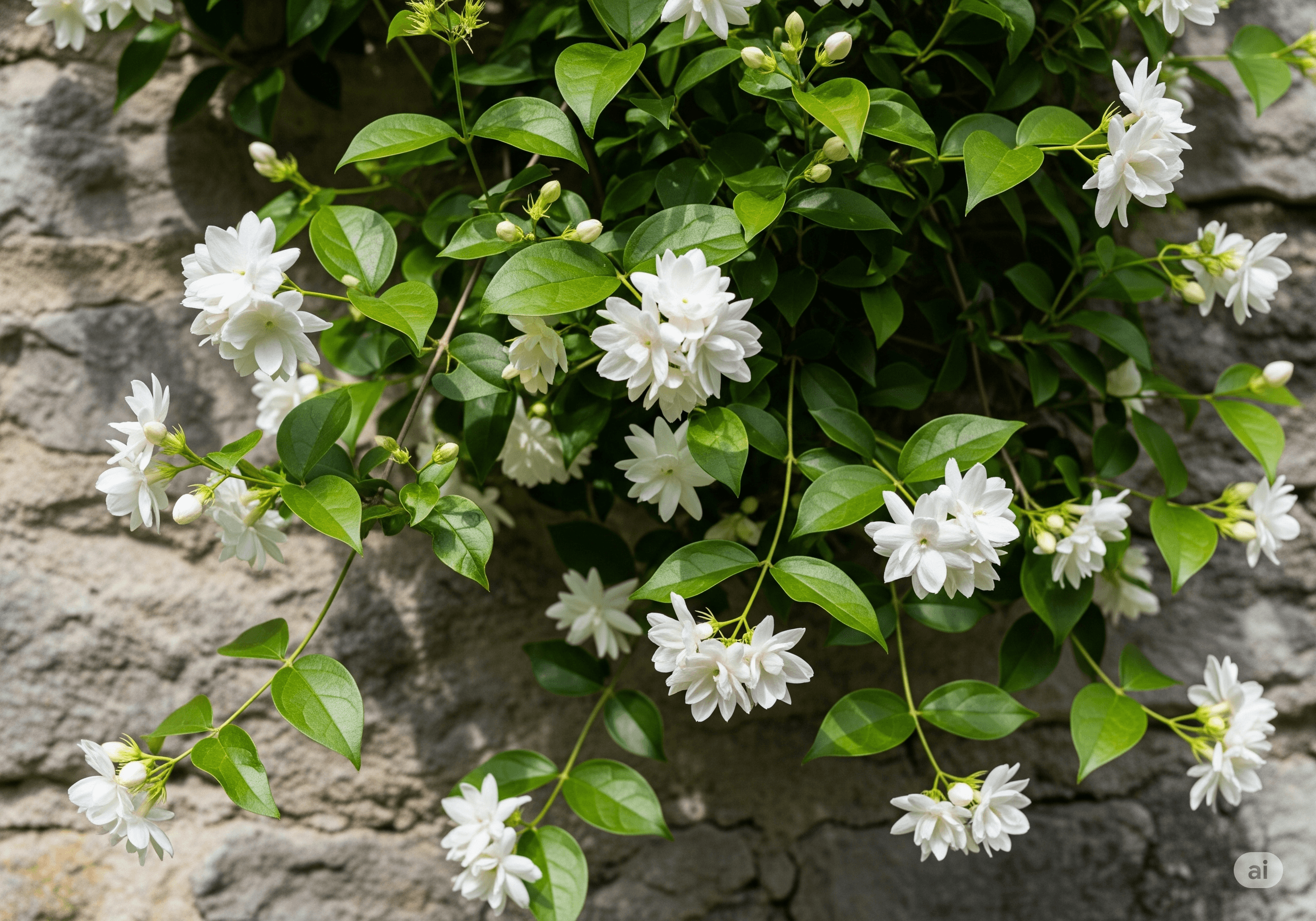
Jasmine’s tiny star-shaped blooms carry a powerful symbolism thanks to their exquisite fragrance. Above all, jasmine represents love and romance – its intoxicating scent has long been associated with sensuality, desire, and the sweetness of affection:contentReference[oaicite:30]{index=30}. It’s no surprise jasmine often appears in bridal wreaths and hair ornaments in South Asian weddings, symbolizing the promise of love and good fortune in marriage. At the same time, jasmine (especially white jasmine) stands for purity and grace:contentReference[oaicite:31]{index=31}:contentReference[oaicite:32]{index=32}. In many cultures, offering jasmine blossoms is a gesture of respect and honor. Spiritual symbolism is also woven into jasmine’s identity: in religious ceremonies from Hindu pujas to Buddhist offerings, jasmine’s uplifting aroma is thought to promote spiritual peace and enlightenment:contentReference[oaicite:33]{index=33}. In Thailand, jasmine is a symbol of motherhood and is given on Mother’s Day as a sign of gentle love:contentReference[oaicite:34]{index=34}. Despite its delicate appearance, jasmine’s meaning spans from the earthly realm of romance to the divine realm of spirituality, making it a truly cherished flower.
History and Cultural Significance
Jasmine has been cultivated for thousands of years, originating from the warm climates of the Himalayas and Middle East before spreading across Asia and eventually to Europe. It was highly valued in ancient kingdoms: Jasmine tea became a favorite in Imperial China, and by the medieval period, jasmine had found its way into Persian gardens and Moghul palaces. In the 16th century, Spanish explorers introduced jasmine to Europe, where it quickly gained popularity – Italian gardens, for instance, were perfumed with jasmine by the Renaissance era:contentReference[oaicite:35]{index=35}. One of the most famous cultural associations with jasmine is the city of Damascus, often nicknamed the “City of Jasmine” for its profusion of these flowers:contentReference[oaicite:36]{index=36}. Jasmine’s role in perfumery is legendary: it’s a key ingredient in many classic perfumes, sometimes called “Queen of the Night” because certain species release stronger scent after dusk. Its essential oil is precious – it can take over 8,000 hand-picked blossoms to produce just one gram of jasmine oil:contentReference[oaicite:37]{index=37}, contributing to its status as a luxurious fragrance. National symbols have also embraced jasmine. It is the national flower of the Philippines (known as sampaguita) and of Indonesia (melati putih), representing purity, devotion, and divine hope:contentReference[oaicite:38]{index=38}. In Tunisia, jasmine became a symbol of freedom and hope – even lending its name to the “Jasmine Revolution” during the Arab Spring. From East to West, jasmine has left an indelible mark as a flower that not only delights the senses but also bridges cultural divides with its universal message of love and serenity.