Anthurium
Anthurium andraeanum
Meaning and Symbolism
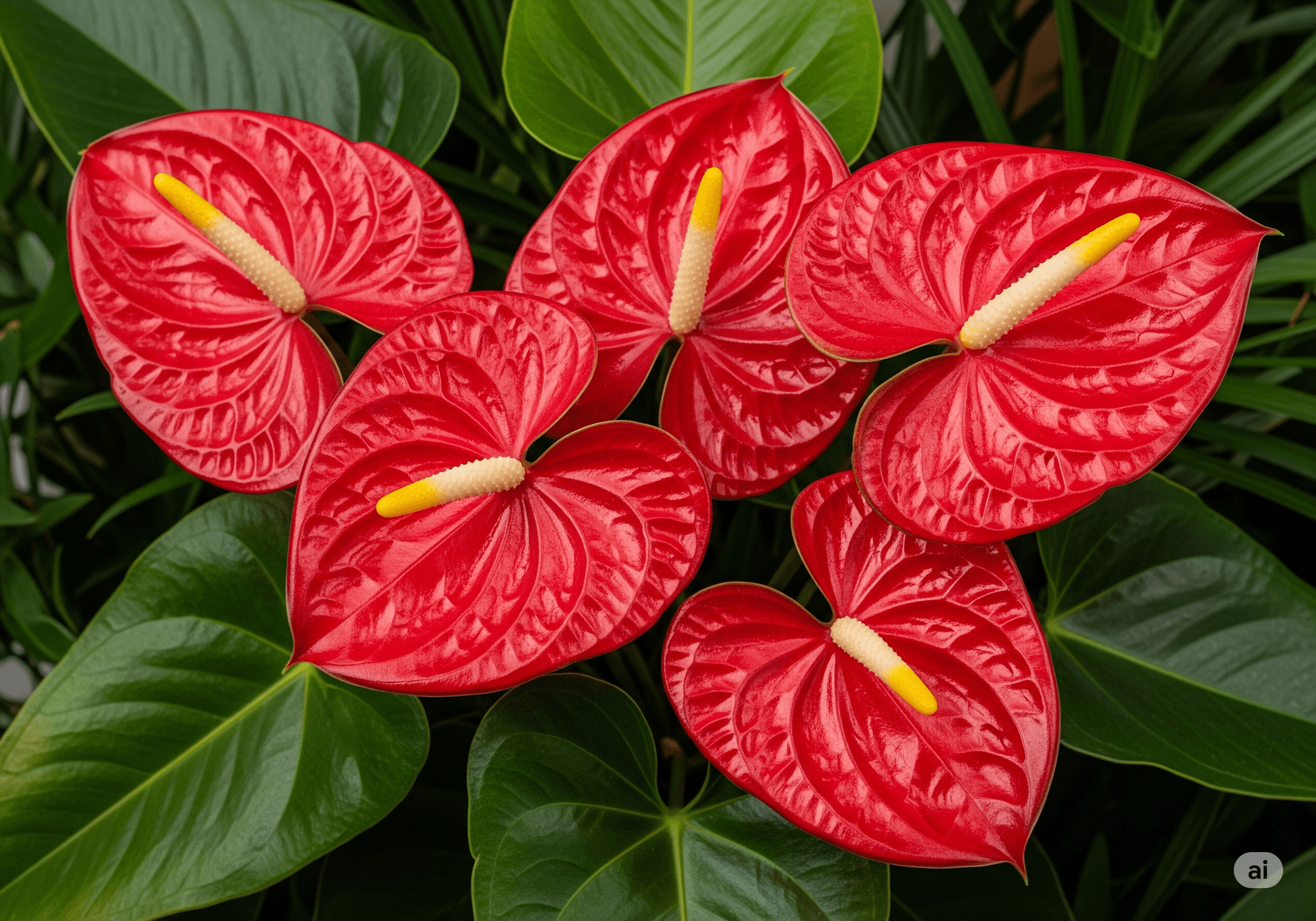
Anthuriums, with their glossy, heart-shaped spathes and prominent spadices, are instantly recognizable and full of symbolic weight. In the language of flowers, they stand for hospitality, passion, and abundance, thanks to their open, inviting form and vibrant colors. Red anthuriums communicate love and desire; pink expresses compassion and kindness; white stands for innocence and sincerity; green signifies growth and health. Their lasting blooms—often staying fresh for weeks—make them a message of enduring affection and steady prosperity. In Hawaiian culture, they are sometimes given as housewarming gifts to bless a home with warmth and welcome. Their exotic flair also makes them a favorite in arrangements meant to impress or convey bold emotion.
History and Cultural Significance
Native to Central and South America, anthuriums grow naturally in rainforests as epiphytes or ground plants. Indigenous peoples valued them for their ornamental appeal long before they reached European eyes in the 19th century. The plant’s genus name comes from the Greek “anthos” (flower) and “oura” (tail), referencing the distinctive spadix. In Hawaii, anthuriums became a significant crop in the mid-20th century, with new hybrid varieties fueling the tropical cut-flower industry. They are now a symbol of Hawaiian floral culture and are exported worldwide. In feng shui, anthuriums are considered to enhance relationships and invite prosperity when placed in the home’s relationship or wealth areas. Breeding programs in places like the Netherlands and Hawaii have expanded the available colors and improved vase life. Today, anthuriums are fixtures in tropical-themed weddings, luxury hotel lobbies, and exotic bouquets.