Iris
Iris
Meaning and Symbolism
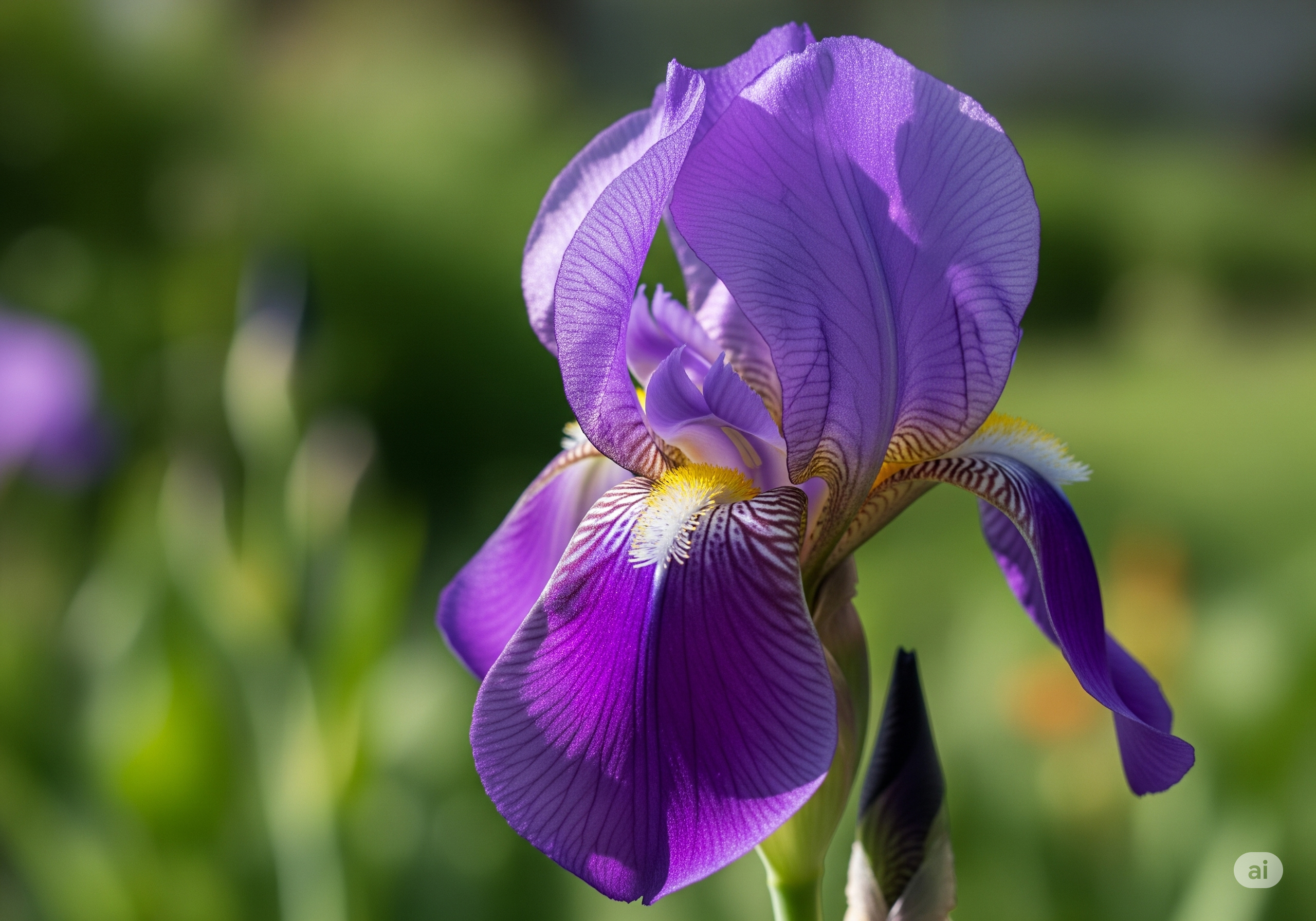
Named after the Greek goddess of the rainbow, the iris comes in a spectrum of colors and carries meanings just as vivid. Traditionally, the iris symbolizes faith, hope, and wisdom. Its three prominent petals have been said to represent valor, wisdom, and trust – virtues long associated with this flower. Purple irises, in particular, are linked to royalty and admiration:contentReference[oaicite:53]{index=53}, often used to honor respected figures. Blue irises convey hope and faith, making them uplifting blossoms for someone embarking on a new journey. White irises suggest purity and send messages of sympathy and friendship – in Victorian floriography, a white iris signified “friendship and goodwill” and they were commonly used in bouquets for friends. Irises are also connected to messages and communication. In Greek mythology, the goddess Iris was a messenger who guided souls to the afterlife; because of this, irises became symbols of remembrance and were planted on graves in ancient Greece so that Iris would help guide the departed to peace:contentReference[oaicite:54]{index=54}:contentReference[oaicite:55]{index=55}. Overall, whether expressing support to a friend (as a bouquet of blue or yellow irises might) or honoring someone’s memory (with white or purple irises), this flower eloquently conveys heartfelt sentiments.
History and Cultural Significance
The iris has a rich history intertwined with mythology and royalty. Irises grew abundantly in the Mediterranean and Near East; they were cultivated in ancient Egypt and depicted in artworks as far back as 1500 B.C. The flower’s connection to royalty was cemented in medieval France: a stylized iris, the fleur-de-lis, became the emblem of French kings, symbolizing heraldic purity and power. Even today, the fleur-de-lis remains a symbol of monarchy and is associated with the iris flower. One fascinating tradition originates in Greece: it was customary to plant purple irises on the graves of women, so that the goddess Iris would see them and guide the souls to the Elysian Fields:contentReference[oaicite:56]{index=56}:contentReference[oaicite:57]{index=57}. This practice underlined the iris’s role as a bridge between earthly life and the divine. Irises spread across Europe in the Middle Ages; by the 19th century, hundreds of hybrids were developed. Vincent van Gogh famously painted irises in 1889, capturing their beauty in one of his celebrated works. Irises also found a home in Asia. In Japan, the Hanashōbu (Japanese iris) is featured in gardens and poems, and there is even an Iris Festival (Kodomo no Hi) where baths are drawn with iris leaves to ward off evil. Beyond symbolism, iris plants have practical uses: the rhizomes of some species (orris root from Iris pallida and Iris germanica) have been used in perfumery for centuries as a fixative with a violet-like scent:contentReference[oaicite:58]{index=58}. Orris root is also a key ingredient in certain gins and liqueurs, reflecting the plant’s culinary footprint. From the banks of the Nile to the gardens of Kyoto, the iris has traveled widely, leaving a trail of myth, art, and fragrant legacy.