Water Lily
Nymphaea spp.
Meaning and Symbolism
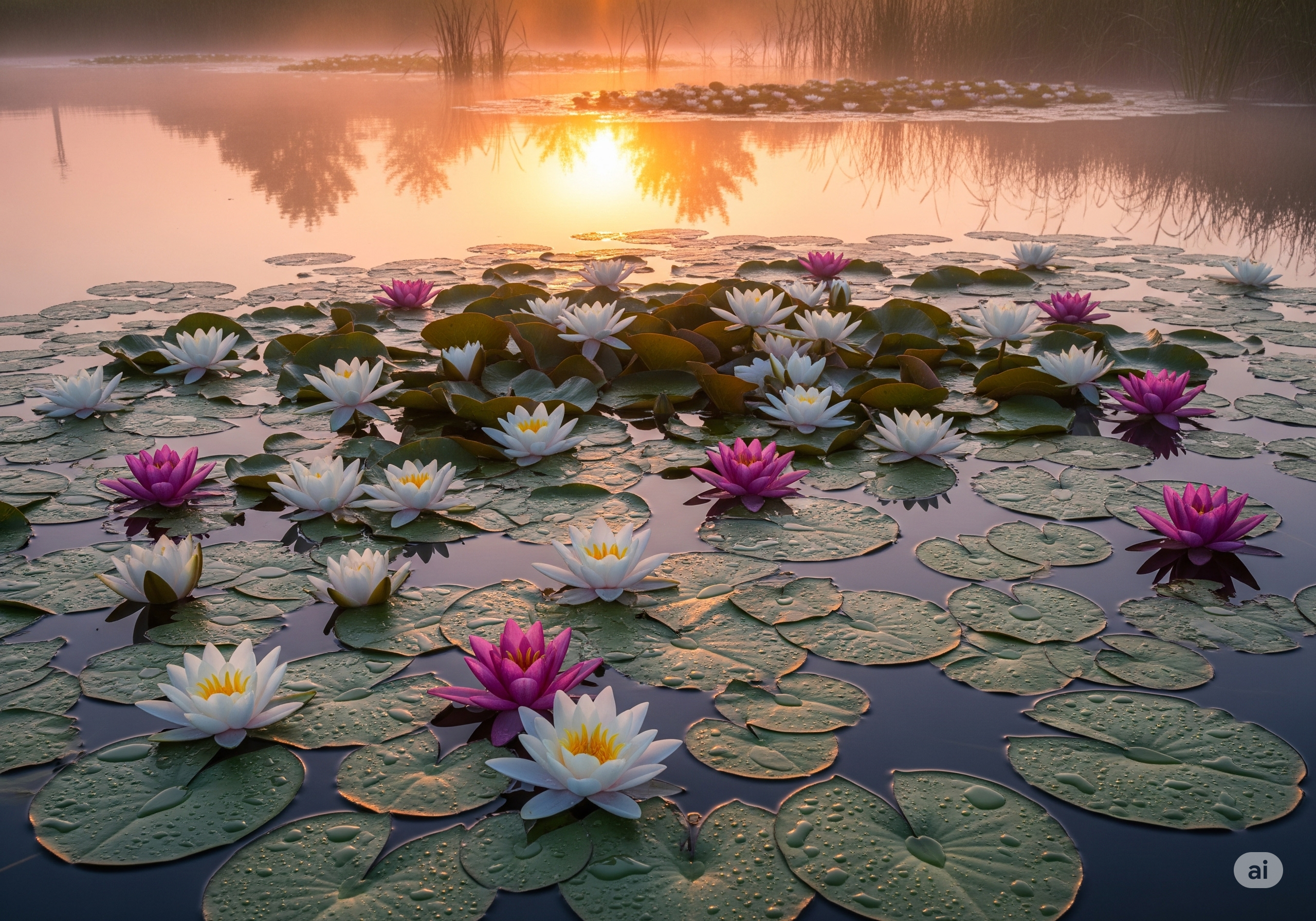
Water lilies rise clean from shadowed water, opening with light. That daily ritual has made them emblems of purity and spiritual awakening across cultures—a quiet insistence that clarity is possible even from murk. Distinct from the lotus (Nelumbo), Nymphaea’s floating leaves and starry flowers convey serenity and contemplation; gifting a water lily image or motif says, “may your mind be calm and clear.” In relationships, they symbolize deep peace and trust—love that rests rather than grasps. For weddings, white and blush water lilies speak of sacred vows unruffled by surface ripples; for anniversaries, they mark the stillness two people can share after years of weather. As a “Get Well” sign, they suggest healing by rest and breath; as a memorial symbol, they promise safe passage and a soul at peace. Color adds nuance: white for purity and grace, pink for affectionate devotion, yellow for joyful insight, blue (in select species) for wisdom and introspection. Regional names—“nenúfar” (Spanish), “nénuphar” (French), “shapla” (Bengali)—show their universal imprint. Hybrids bred for hardy ponds or tropical displays widen the expressive palette: stellate forms feel celestial, cup forms intimate; night-bloomers imply mystery and watchful love. Above all, water lily’s message is equilibrium: still water, open heart.
History and Cultural Significance
From ancient Egypt’s blue water lily (Nymphaea caerulea) adorning tombs and ritual objects to Claude Monet’s epochal Giverny series, water lilies sit at the crossroads of religion, art, and horticulture. Egyptians associated the flower with the sun’s rebirth; blossoms opening at dawn symbolized creation and divine order. In South Asia and Southeast Asia, ponds around temples host hardy and tropical Nymphaea species, where devotees float candles among leaves during festivals—a living mandala of light. Medieval herbals recorded medicinal and culinary experiments, while Renaissance painters used lilies as symbols of chastity and contemplation. In the 19th century, hybridizers like Joseph Bory Latour-Marliac (France) developed hardy hybrids with varied colors, enabling Monet’s famous pink and yellow pools and forever altering Western garden design. Modern public gardens treat water-lily ponds as sanctuaries, pairing them with benches and quiet signage, embedding the plant in civic notions of rest. Giant relatives (Victoria amazonica) steal headlines for dinner-plate leaves, but Nymphaea’s smaller blossoms do the emotional heavy lifting—weddings on boardwalks, scattering of ashes by reflective pools, meditation classes at dawn. Contemporary breeding has produced compact patio-pond varieties and vivid tropicals with starburst stamens, extending the plant’s reach to balconies. In short, water lily threads spiritual, artistic, and everyday life: a daily opening that teaches attention and a nightly closing that dignifies rest.