Cherry Blossom
Prunus serrulata
Meaning and Symbolism
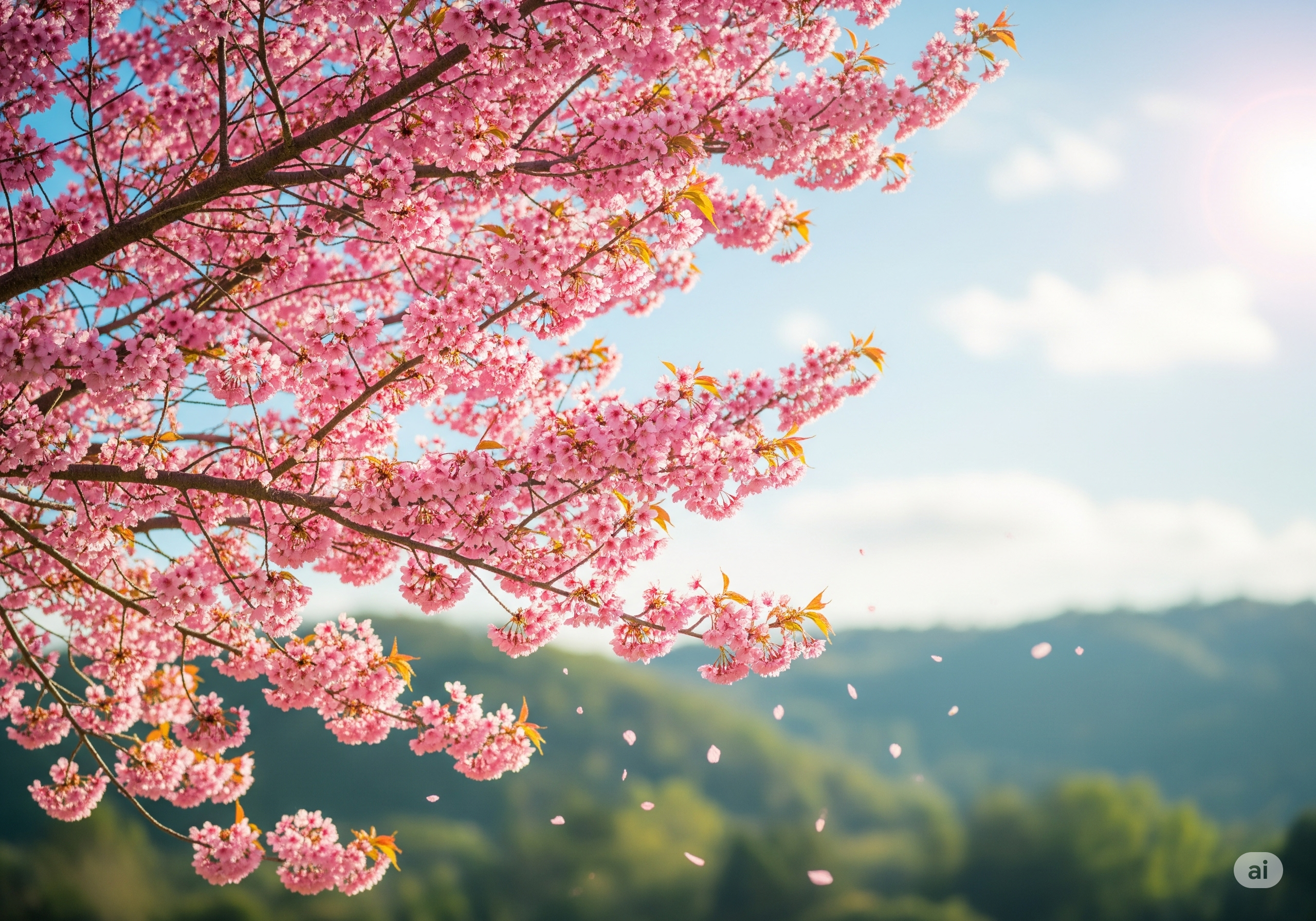
Cherry blossoms (sakura) are cherished around the world as symbols of the fleeting nature of life and the renewal of spring. Their breathtaking yet short-lived blooms remind us that beauty is temporary and to be treasured in the moment – a concept the Japanese call “mono no aware,” an awareness of impermanence. Because they burst forth at the start of spring, cherry blossoms also signify rebirth, hope, and new beginnings. They blanket the world in delicate pink and white, heralding fresh starts and the optimism of a new season. There’s a strong association with fellowship and renewal; friends and family gather under cherry blossom trees for hanami (flower-viewing) parties, celebrating togetherness and the simple joy of nature. This practice imbues cherry blossoms with meanings of friendship and community. Beyond these, cherry blossoms can symbolize the purity of youth and innocence (their pale blooms against clear spring skies evoke a sense of gentle wonder). In Chinese culture, cherry blossoms sometimes represent feminine beauty and love, emphasizing grace and attractiveness. However, the most universal meaning of cherry blossoms remains that of transience – encouraging people to live in the present and appreciate the sublime moments that life grants, as they, like the blossoms, will eventually drift away like petals in the wind.
History and Cultural Significance
Cherry blossoms have been celebrated in Japan for over a thousand years. The tradition of hanami (flower viewing) dates back to at least the 9th century, when it was practiced by the imperial court and aristocracy. Poems and paintings from classical Japanese literature are filled with references to sakura as a metaphor for life’s evanescence and the virtues of humility and bravery (samurai ethos likened a warrior’s life to cherry blossoms: splendid yet short). In modern Japan, cherry blossom season is a nationwide event – forecasts predict the bloom down to the day for each region, and festivals abound beneath the trees. Cherry blossoms also play a diplomatic role. In 1912, Japan gifted 3,000 cherry blossom trees to the United States as a gesture of friendship; these trees were planted in Washington, D.C. and still attract millions of visitors during their bloom each spring:contentReference[oaicite:84]{index=84}. Similarly, cherry trees have been shared with many countries to foster goodwill. Washington D.C.’s National Cherry Blossom Festival commemorates this gift and has become an annual celebration of cross-cultural friendship. In China, native cherry blossom species have been appreciated in gardens for centuries as well, and in Korea, cherry blossom festivals mark spring’s arrival in various cities. Interestingly, during World War II, cherry blossoms in Japan were used as a nationalist symbol, painted on the sides of planes and referenced in propaganda (to die like a scattering cherry petal was considered an honorable end). Today, outside of their historical and political contexts, cherry blossoms remain one of the world’s most beloved natural phenomena. They encourage mindfulness and communal joy, proving that a flower’s cultural resonance can be as profound as any human-made art.