Protea
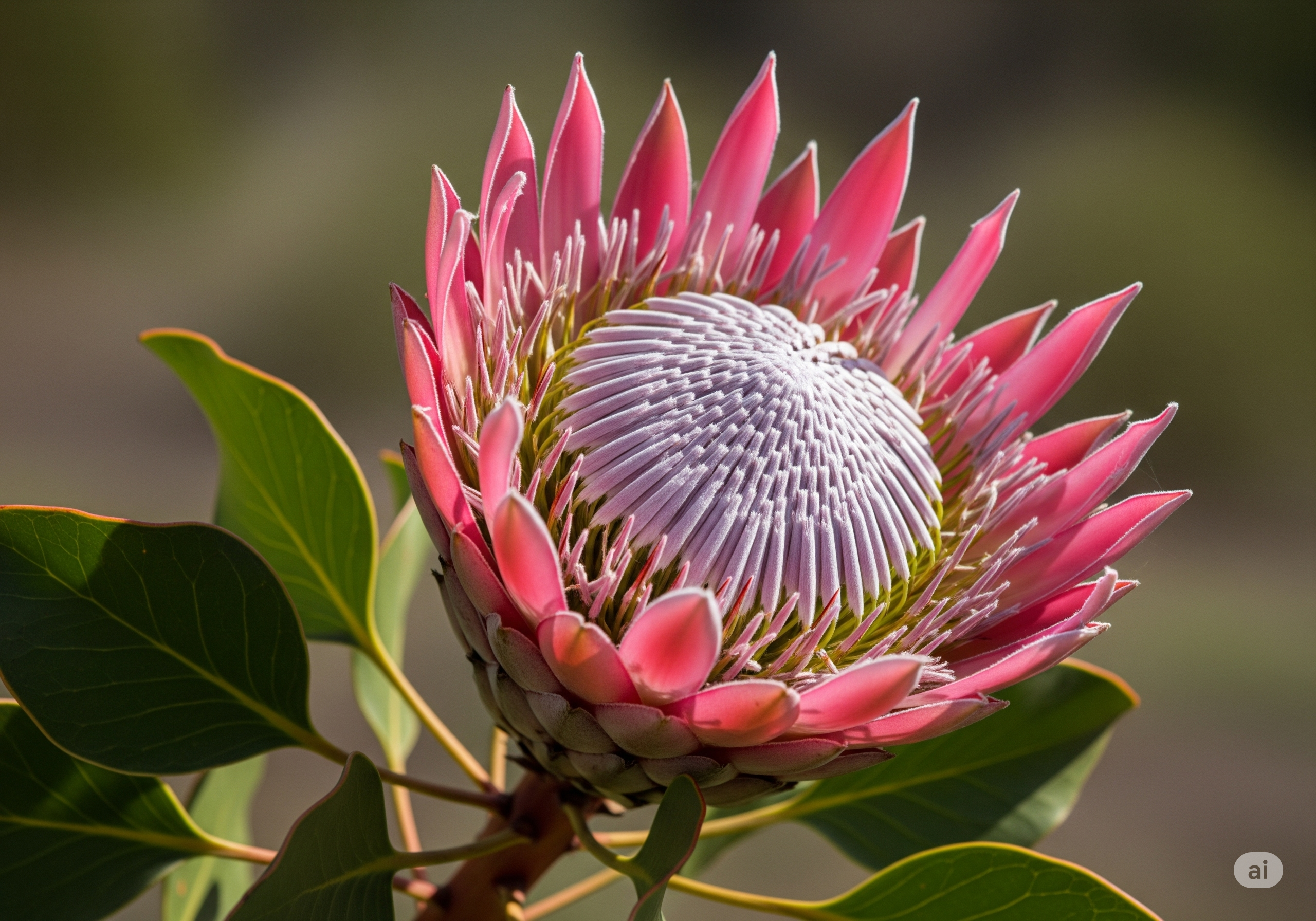
Protea cynaroides
Meaning and Symbolism
Protea flowers are rich in symbolism primarily tied to transformation and diversity. Named after Proteus, the shape-shifting Greek sea god, the protea stands for adaptability and evolution – it comes in so many forms and colors that it became an emblem of change and courage in the face of challenges:contentReference[oaicite:87]{index=87}. It also symbolizes strength and daring. With its striking, architectural bloom (the King Protea has a massive crown-like head of petals), it exudes a sense of boldness and courage, as if encouraging one to embrace uniqueness proudly. In the language of flowers, protea can mean “courage” and “transformation” due to these qualities. They are often included in arrangements to convey a message of perseverance or to celebrate a significant, transformative achievement (like a career milestone or personal growth). Because proteas are ancient flowers that survived continental drifts and harsh climates, they further represent resilience and survival. In South Africa, where proteas originate and the King Protea is the national flower, they hold additional meaning – they’re a symbol of the country’s unity and the beauty of diversity (fitting for a nation known as the 'Rainbow Nation'). A protea bouquet might be given to honor someone’s diverse talents or their ability to thrive through change. Overall, the protea’s extraordinary appearance and mythological naming make it a powerful symbol of transformation and strength through diversity.
History and Cultural Significance
Proteas have an ancient lineage going back nearly 300 million years, making them one of the oldest groups of flowering plants. They are primarily found in the Southern Hemisphere, with South Africa and Australia being hotspots (in Australia, close relatives like banksias share the family Proteaceae). The King Protea (Protea cynaroides) is native to the fynbos region of South Africa and was adopted as South Africa’s national flower. It appears on their coins, passports, and even the national cricket team is nicknamed “the Proteas,” symbolizing national pride and unity. The genus was named “Protea” in 1735 by Carl Linnaeus, inspired by the myth of Proteus for the plant’s variety of forms:contentReference[oaicite:88]{index=88}. Europeans were fascinated by proteas during the Age of Exploration – by the 18th century, specimens were brought to Europe, though cultivating them in different climates proved challenging until greenhouse practices improved. Proteas also hold ecological importance. They are adapted to survive wildfires common in their native habitats; some protea species have fire-resistant cones that only release seeds after a fire, ensuring regeneration. This adaptability further cements their symbolism of resilience. In floral design, proteas have surged in popularity in recent years worldwide. Florists prize them for their dramatic look and long vase life. King Protea, with its massive pink and white bloom, has become a trendy choice in bridal bouquets for modern, bold statements – reflecting a bride’s individuality and strength. On a cultural note, different protea species had traditional uses: indigenous peoples of South Africa used the nectar as a sugar source, and some protea extracts were used medicinally. Today, beyond their symbolic uses, proteas serve as a reminder of Earth’s ancient heritage and the beauty that emerges when one embraces many forms – truly a flower that stands for transformation and courage through diversity.