Carnation
Dianthus caryophyllus
Meaning and Symbolism
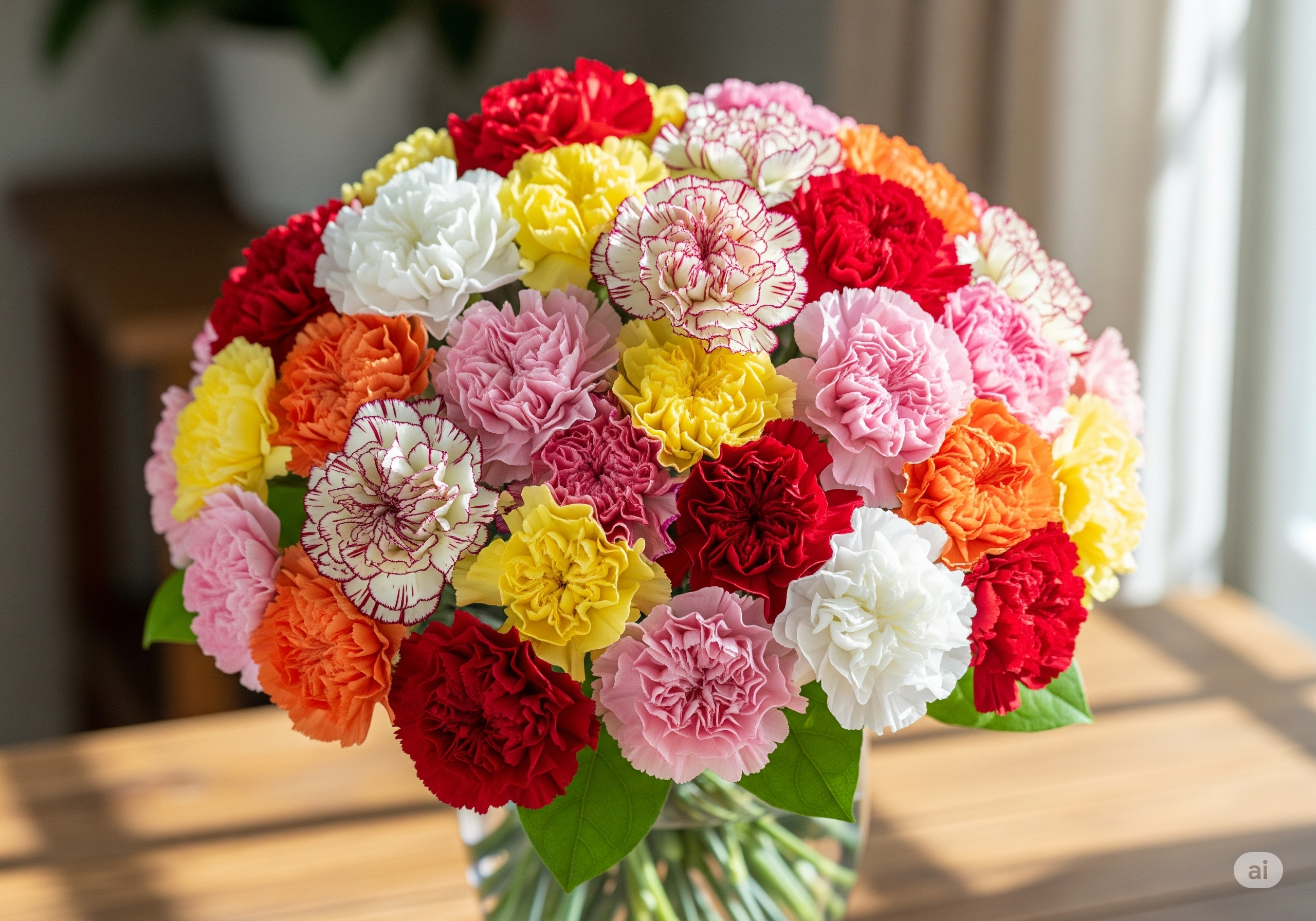
Carnations are rich in symbolism and have been cherished for their layered meanings. In general, carnations convey love and fascination – their scientific name *Dianthus* means “flower of the gods,” reflecting their esteemed status since ancient times. Each color carries a specific message: pink carnations signify a mother’s undying love (legend says they first sprang from the Virgin Mary’s tears, hence their association with maternal love and why they’re the official flower of Mother’s Day). Red carnations convey deep romantic love and admiration (light red for admiration, dark red for deep love and affection). White carnations symbolize pure love and good luck. However, not all connotations are positive – yellow carnations can mean disappointment or rejection in floriography, and purple can imply capriciousness or changeability. Striped carnations historically meant refusal (“I cannot be with you”). Overall, carnations are often used to express heartfelt feelings, from the joy of celebration to the sorrow of remembrance, depending on their hue, making them one of the most message-laden flowers.
History and Cultural Significance
Carnations have a long history dating back to ancient Greece and Rome, where they were used in ceremonial crowns and art. The name 'carnation' likely comes from 'coronation' or 'corone' (flower garlands). They’ve been cultivated for over two millennia. Christian legend credits the first pink carnations to Mary’s tears when Jesus carried the cross, cementing pink carnation as a symbol of a mother’s eternal love. In the early 20th century, Anna Jarvis, the founder of Mother’s Day in the US, chose the white carnation as the emblem of the day, because it was her mother’s favorite flower (and she felt white symbolized the purity of a mother’s love). Red and pink later became popular Mother’s Day carnation colors as well (red to honor living mothers, white to honor the deceased, by certain customs). Carnations also played roles in political history: in the late 18th century, French revolutionaries wore green carnations as a subtle sign, and Oscar Wilde famously wore a green carnation on his lapel, giving that color carnation a connection to art and secret expressions (later associated with the queer community in code). The “carnation revolution” in 1974 Portugal saw people placing red carnations in soldiers’ rifle barrels to symbolize a bloodless coup and hope, which is why the red carnation became a Portuguese national symbol of freedom. In modern times, carnations remain one of the most popular and affordable flowers worldwide – they’re the birth flower of January and the 1st wedding anniversary flower. Their frilly petals have also made them a favorite for dyeing into novelty colors (like blue or rainbow) for fun expressions. Through every era, the carnation’s ability to convey precise sentiments through its colors has kept it at the forefront of symbolic flowers.