Calla Lily
Zantedeschia aethiopica
Meaning and Symbolism
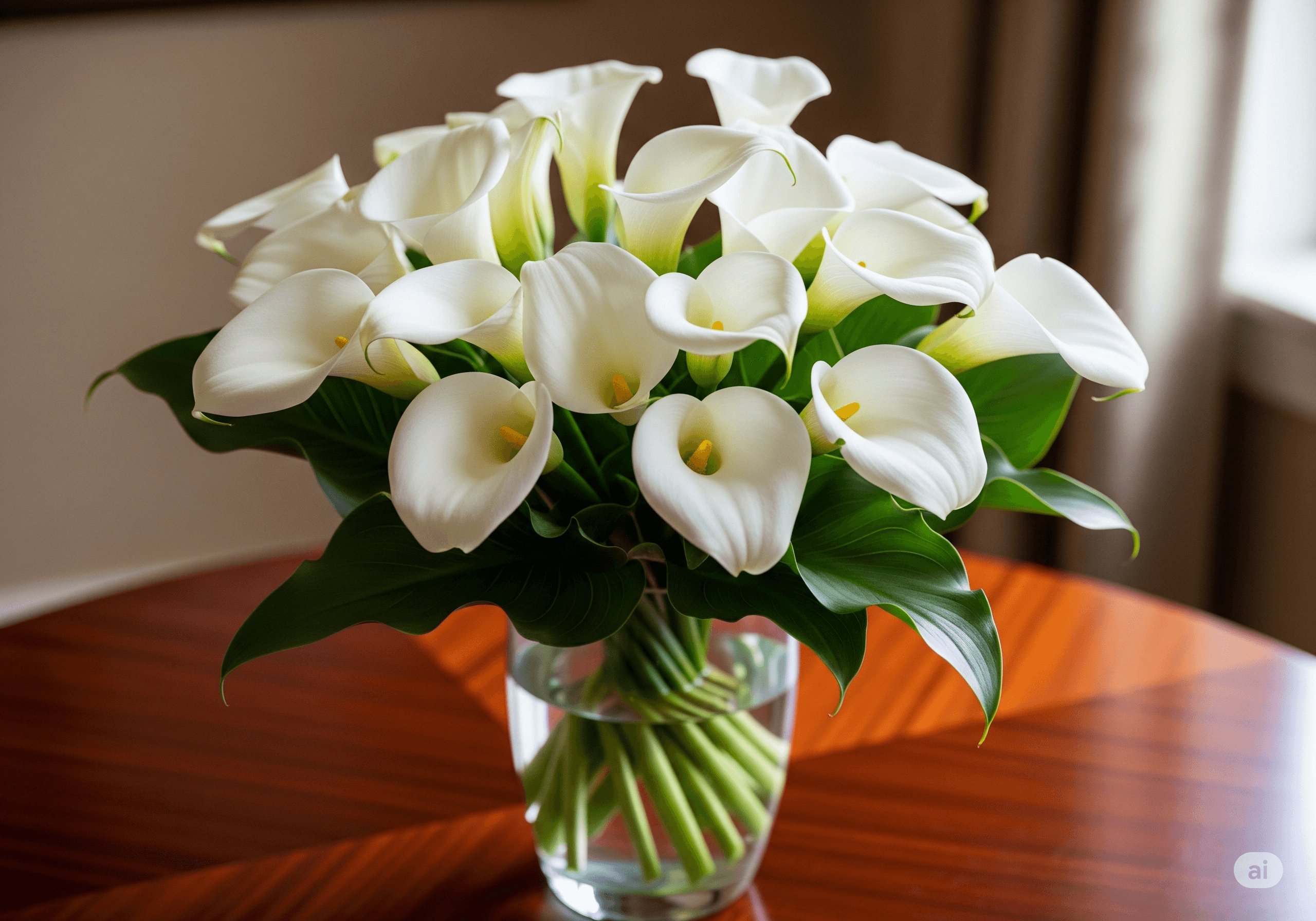
Calla lilies are famed for their pristine, sculptural blooms and carry a variety of profound meanings. Foremost, the white calla lily symbolizes purity, faith, and rebirth – which is why it’s commonly seen at both weddings (representing the purity of love) and funerals (signifying the soul’s rebirth and innocence restored). Pink and purple calla varieties extend the meaning to include gratitude and passion, respectively. The calla lily’s trumpet-like shape has also made it a symbol of triumph and magnificence (it’s as if each bloom heralds a celebration). There’s a strong association with holiness and faithfulness; in Christian iconography, the calla is linked to the Virgin Mary and Easter due to its pure white flower and golden spadix (often interpreted as divine light). In essence, calla lilies speak of regal elegance and the deeper beauty of purity and truth. When given, they can mean “you are splendid” or convey the idea of wishing someone the bliss of marital happiness or resurrection of hope.
History and Cultural Significance
Despite its common name, the calla lily isn’t a true lily – it comes from southern Africa, and its botanical name Zantedeschia honors Italian botanist Giovanni Zantedeschi. It was introduced to Europe in the 17th century and soon became a staple of Victorian bouquets, especially for formal and religious occasions. Its elegant look captured the Art Deco and Art Nouveau periods; you often see calla lily motifs in designs from the 1920s symbolizing sophisticated beauty. The calla lily’s cultural resonance is perhaps strongest in its role in funerary arrangements (particularly the white calla): for example, in Ireland and other parts of the UK, calla lilies are traditional funeral flowers signifying the restoration of innocence after death. Conversely, they have a joyous role in weddings worldwide, thanks to their association with magnificent beauty and the blessings of youth. In ancient Roman and Greek cultures, similar arum flowers were associated with celebrations of the winter solstice, tying them to themes of renewal. A fascinating mythic link: some say the calla lily sprang from the spilled milk of the Greek goddess Hera – and when Zeus’s wife pushed the nursing infant Hercules away, the drops that fell to earth grew into calla lilies, giving them divine origin in myth. Artists through the ages, from Diego Rivera to Georgia O’Keeffe, have chosen the calla lily as a subject to evoke sensual purity and the continuity of life. Today, calla lilies are also tied to major life events: they’re often the flower of 6th wedding anniversaries and are commonly used in Easter celebrations, continuing their dual role in symbolizing both purity and the victory of life over death.