Azalea
Rhododendron (Azalea)
Meaning and Symbolism
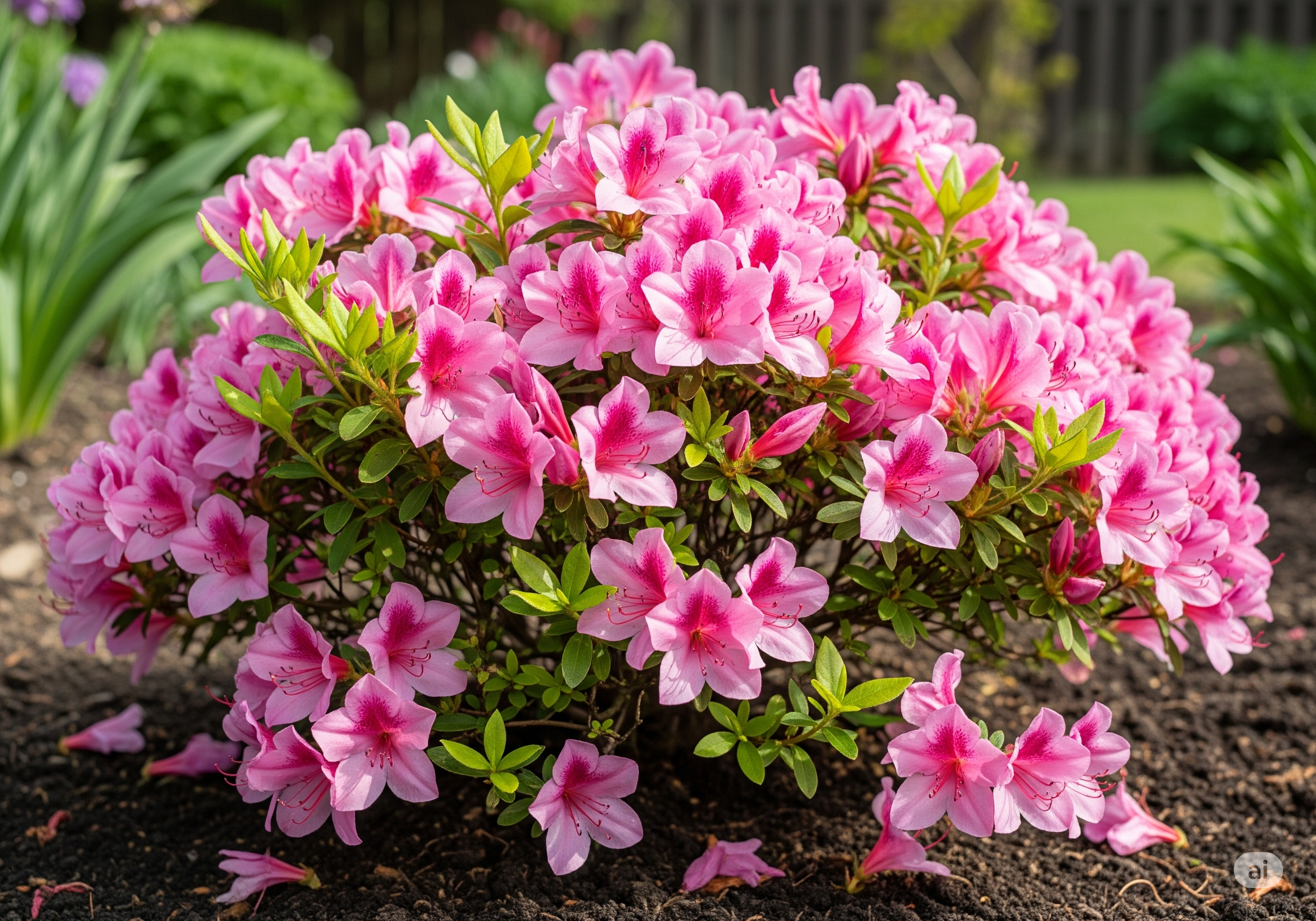
Azalea, a type of rhododendron, is rich in meaning across cultures. Universally, it symbolizes delicate passion and temperance. In Victorian floriography, azaleas meant “take care of yourself for me” or “fragile passion,” often given as an elegant way to say, “Be careful, your love is cherished but do not harm yourself.” This nuance came because azaleas are beautiful yet their leaves can be toxic – a gentle warning wrapped in beauty. In Eastern cultures, particularly in China, azaleas are known as the 'thinking of home bush', symbolizing womanhood and the longing for family or home. They also represent abundance and elegance, since their vivid blossoms cover shrubs generously each spring. Overall, the azalea stands as a symbol of femininity, softness, and caring love, with an undercurrent of caution or prudence (don’t let fervor or beauty go to one’s head).
History and Cultural Significance
Azaleas have been cultivated in Asia for thousands of years. In Chinese poetry, they are the subject of admiration and called 'xiang shu' – the thought of home tree – often linked to feelings of longing and love. They became popular in Japan as well, where azalea festivals (Tsutsuji Matsuri) celebrate their blooming, and the flowers can symbolize joy and family devotion. Azaleas were introduced to Western gardeners in the 18th century, and by the 19th century, greenhouse growers in England and Belgium had produced many hybrids, elevating them as prized ornamentals in conservatories and estates. Gifting a potted azalea in Victorian times was common to convey complicated sentiments: both the beauty of love and the importance of temperance. In the American South, azaleas gained iconic status (e.g., Georgia’s state wildflower) and are associated with Southern hospitality and femininity. Despite their gentle appearance, wild azaleas are hardy; they often grow on rocky, unforgiving terrain – in folklore, this resilience is linked to the idea of love persevering through difficult conditions. They are also part of some cautionary tales: ancient legend in the Caucasus mountains spoke of 'mad honey' made from azalea nectar that could intoxicate (hence the “take care” message). Culturally, whether in Eastern art, Western gardens, or literary metaphor, the azalea remains a beloved emblem of passionate yet prudent love.