Astilbe
Astilbe
Meaning and Symbolism
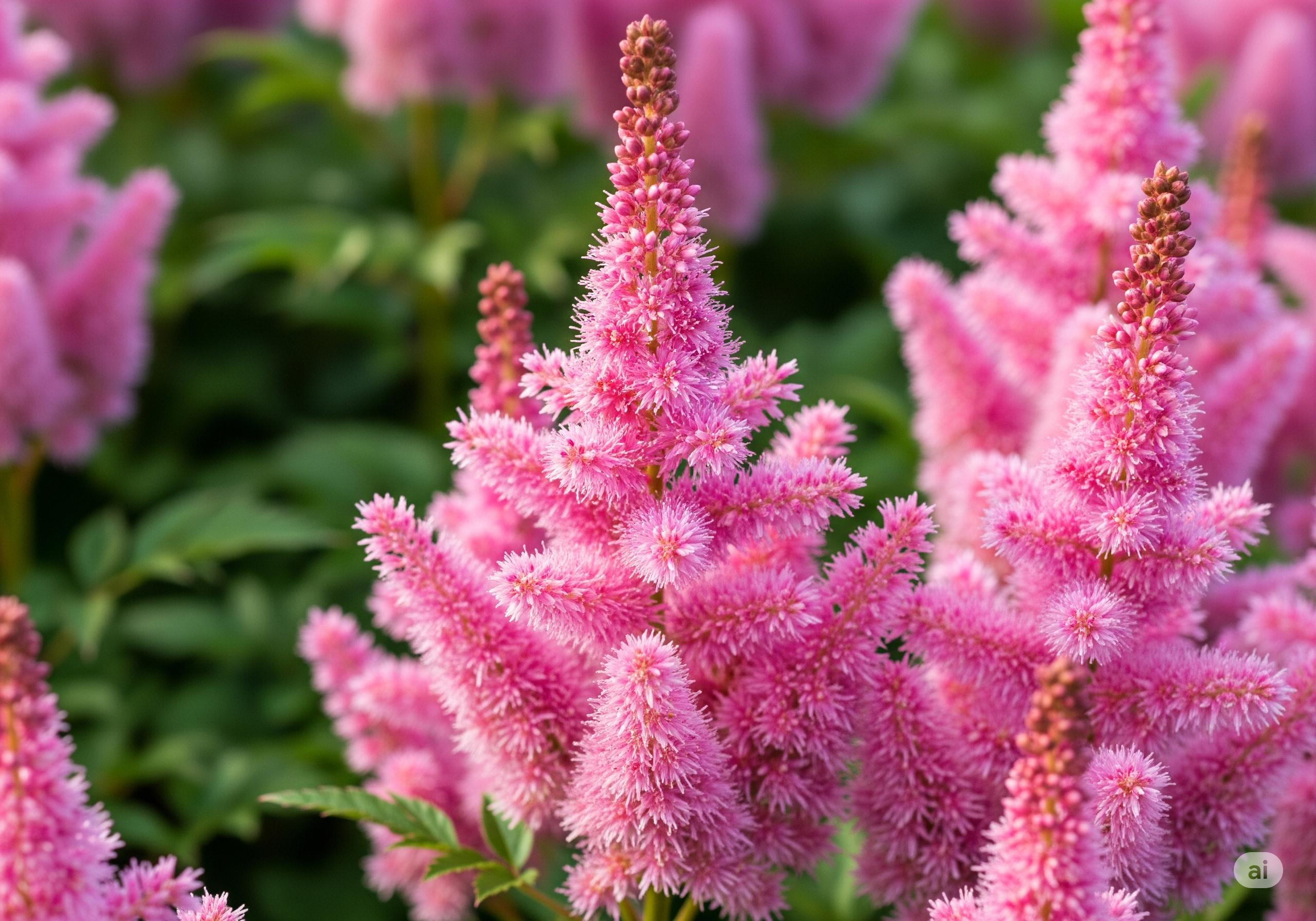
Astilbe, with its feathery plumes of flowers, is often associated with patience and dedication. In the language of flowers it conveys the message “I’ll still be waiting” – a gentle pun on its name that underscores loyalty and steadfastness. These elegant blooms last a long time both in the garden and as cut flowers, reinforcing their symbolism of enduring persistence. Their soft, plume-like appearance also gives an air of calm and serenity, hence being linked to patience. Astilbe is sometimes given in contexts where one wants to express 'I will continue to be here for you' or to thank someone for their steadfast support. The plant’s robust nature (thriving in shade and moist areas where others might not) further symbolizes unwavering strength and the quiet dedication of someone who doesn’t seek the spotlight but provides constant beauty and support.
History and Cultural Significance
Native to the mountain woodlands and ravines of Asia and North America, astilbes became popular ornamental plants in the late 19th and early 20th centuries. They were prized in shade gardens for their ability to bloom in lower light, adding softness and color under trees. The genus name “Astilbe” was coined by botanist Carl Ludwig Blume in the 1820s, literally meaning 'without brightness' – a nod to the subtle, soft sheen of its leaves compared to shinier foliage of some other plants. Despite that modest botanical name, astilbes gained admiration at horticultural exhibitions, symbolizing robust beauty in humble conditions. In Japanese and Chinese gardens, astilbe’s presence along water features and shaded paths came to represent tranquility and the patient passage of time (since they often grow where life moves slowly – by still waters or forest floors). Today, astilbe is a floral mainstay for wedding bouquets and arrangements requiring texture, carrying with it the sentiment of long-lasting devotion (fitting for a marriage) and a promise of faithful presence.