Aster
Aster
Meaning and Symbolism
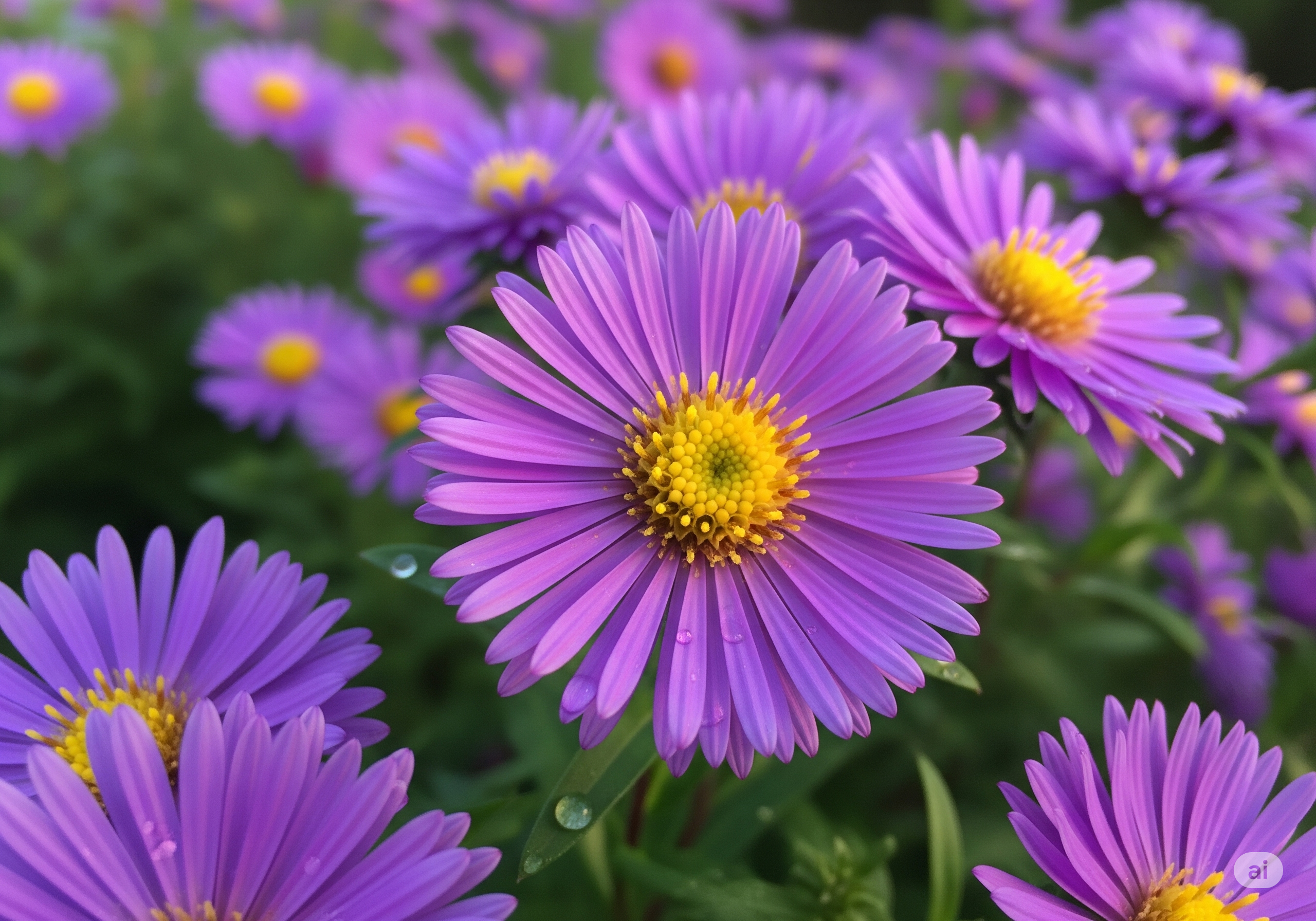
Asters are often considered a talisman of love and wisdom. With their star-shaped blooms (the name “aster” comes from the Greek word for star), they have long been symbols of enchantment and patience. Each color of aster can convey subtle differences: purple asters are associated with wisdom and royalty, pink with sensitivity and love, and white with innocence. In general, gifting an aster says “I value your friendship and trust” or “I hold you in high regard.” Because asters bloom in late summer and fall, brightening gardens as other flowers fade, they also represent a love or memory that endures. In Victorian floriography, the aster signified daintiness and an afterthought – perhaps because of their later blooming season – but more enduring interpretations emphasize faith and an undying love. Today, as September’s birth flower, asters commonly represent heartfelt emotions, blessings, and the affection that comes with long-term admiration.
History and Cultural Significance
Native to North America and Eurasia, asters have been cherished for centuries. In ancient Greek mythology, asters were said to have arisen from stardust when the Virgo goddess Astraea cried upon seeing few stars in the night sky – thus, where her tears fell, asters grew. This myth cemented their connection to the stars and the divine. Asters were also sacred to some early civilizations: the French placed asters on the graves of soldiers to symbolize the wish that things had turned out differently (hence aster’s association with remembrance). Early herbalists used asters medicinally for their anti-inflammatory properties, and indigenous peoples in North America utilized aster roots in traditional remedies. By the Victorian era, asters became cottage garden favorites in Europe – appreciated not only for their bright late-season colors but also as symbols in romantic poetry and art (often signifying elegant simplicity or love born out of patience). Today, the aster continues to be culturally significant: it’s the birth flower of September, often given for 20th wedding anniversaries as a token of devoted love and good fortune ahead.