Hellebore
Helleborus orientalis
Meaning and Symbolism
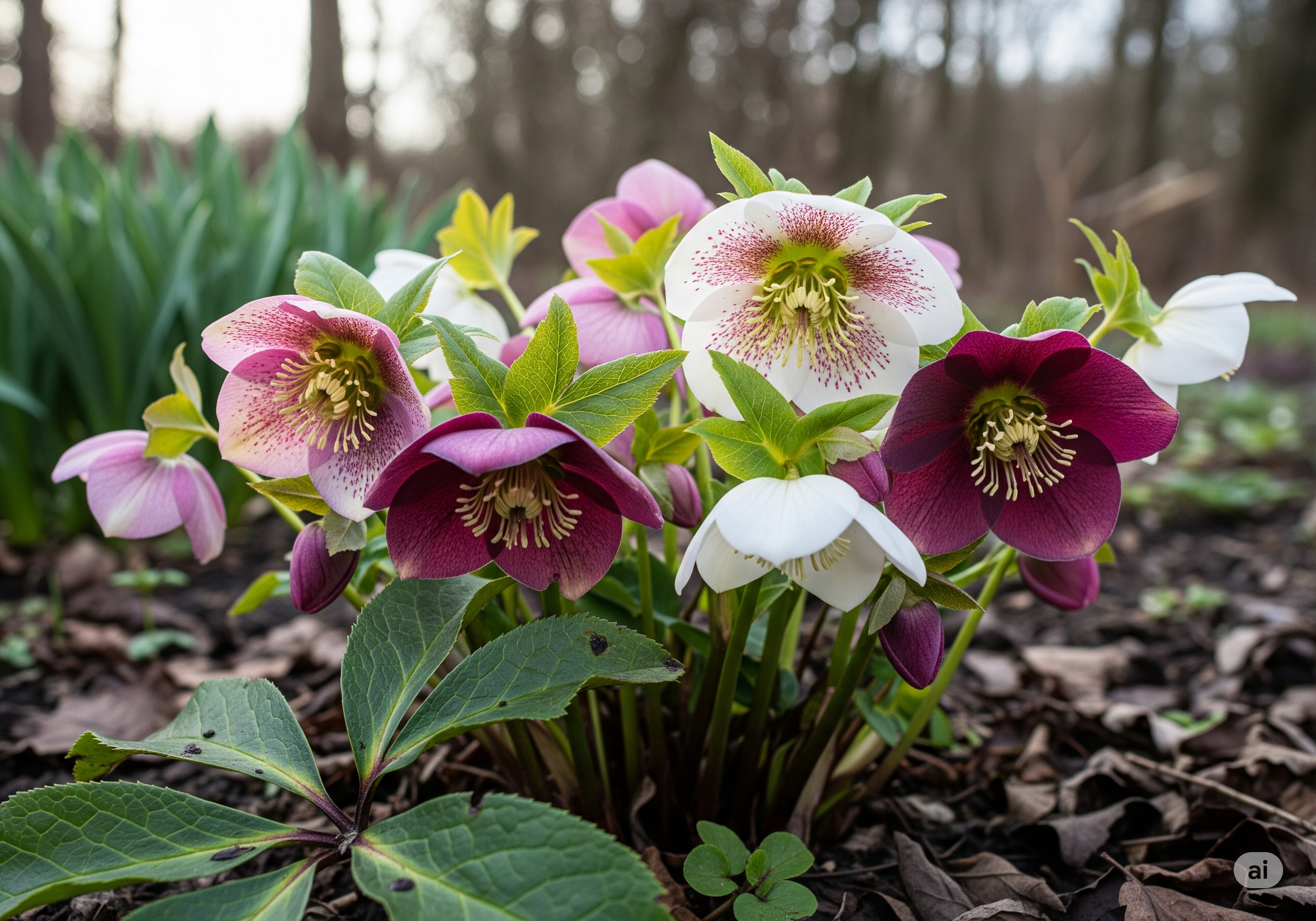
Hellebores, often called “Lenten roses,” flower when much of the garden still sleeps, emerging in late winter or early spring with nodding blooms in muted shades—cream, green, plum, and dusky pink. This defiance of cold makes them a symbol of perseverance, renewal, and quiet strength. In the language of flowers, hellebores are sometimes linked to serenity and protection, a guardian presence in the stillness before spring. Because their petals are actually sepals that persist long after pollination, they also symbolize endurance and lasting beauty. White and pale varieties convey peace, hope, and new beginnings; deep purples suggest mystery and depth of feeling; green blooms speak to nature’s resilience and balance. The flower’s gentle, downward-facing posture has led to associations with humility and contemplation. In a romantic or friendship context, hellebore can signify steady care through difficult seasons, the kind of loyalty that blooms in adversity. In memorial arrangements, they offer a message of rest and eternal protection.
History and Cultural Significance
Native to parts of Europe and Asia, hellebores have a storied history that mixes beauty with danger—their roots contain toxic compounds and were used in ancient medicine and folklore, sometimes with lethal consequences. In Greek mythology, hellebores were said to have cured the madness of King Proetus’s daughters, linking them to healing in both physical and emotional senses. In the Middle Ages, powdered hellebore was used to ward off evil spirits or as part of rituals to protect livestock and homes. Garden cultivation began in earnest in the 18th and 19th centuries, especially in England, where breeders selected for larger, more colorful blooms. Today, hellebores are prized as shade-tolerant perennials, often planted under deciduous trees where they brighten the late-winter garden. Modern hybrids (*Helleborus × hybridus*) offer a vast palette, including speckled, double, and picotee forms. They have also become a symbol in sustainable gardening: their early blooms provide nectar for pollinators emerging from winter dormancy. Despite their toxicity to humans and animals, hellebores’ evergreen foliage and early flowers make them a treasured mainstay in temperate gardens.