Alstroemeria
Alstroemeria aurea
Meaning and Symbolism
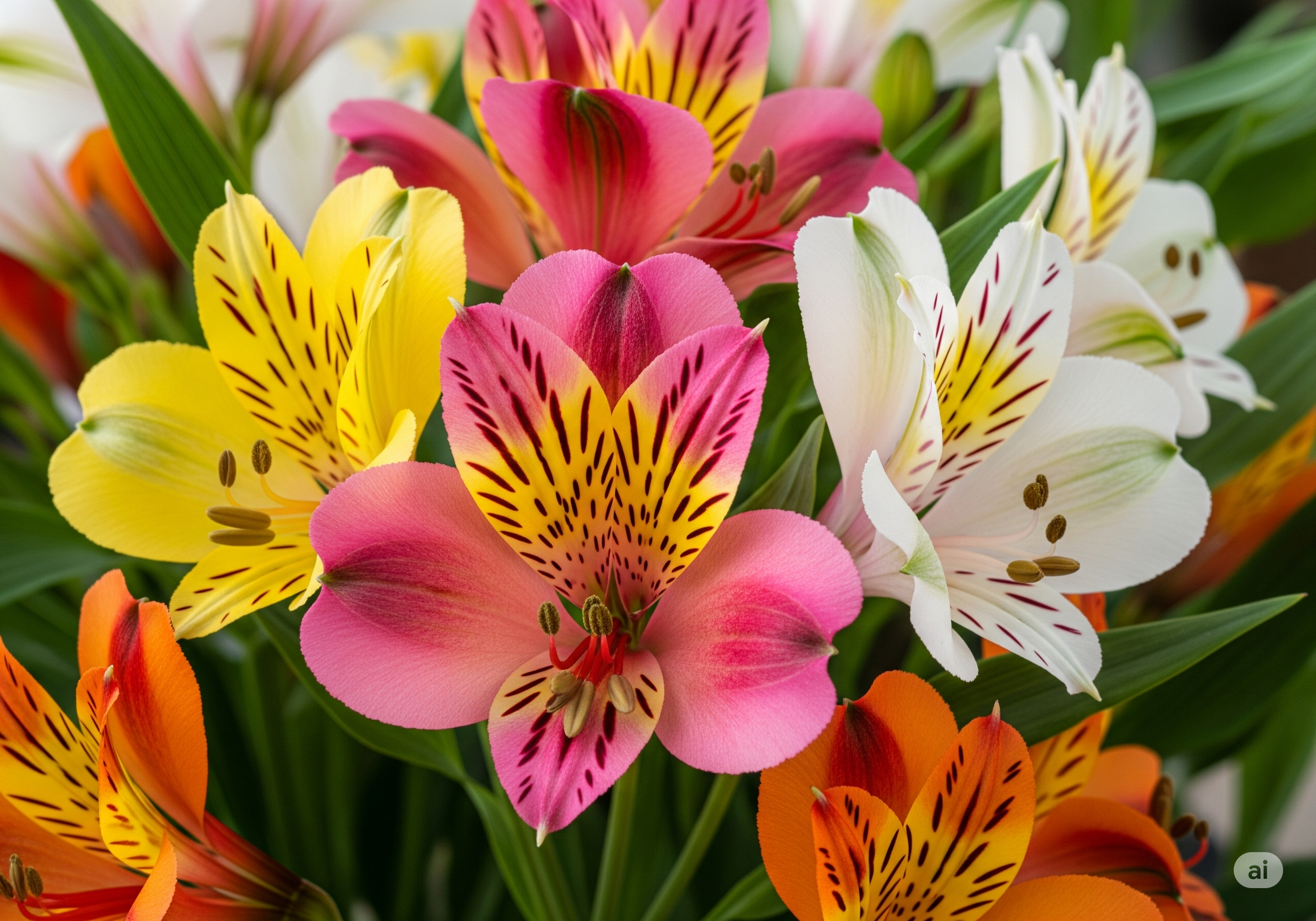
Alstroemeria, commonly known as the Peruvian lily, symbolizes fortune in friendship and devotion. Each blossom has six petals often in two distinct sets of three – a pattern that is sometimes said to represent the bond of friendship, with twists and turns symbolizing the growth of trust. Because they come in a rainbow of colors, alstroemerias also carry meanings by hue: yellow for happiness, white for purity, and pink for affection. Generally, this flower conveys mutual support and prosperity; it’s considered a token of enduring friendship and loyalty. In Victorian floriography, giving Alstroemeria meant ‘wealth’ or ‘aspiring’ due to its exotic, abundant blooms, and today it remains a popular flower to signify encouragement and devoted companionship.
History and Cultural Significance
Native to South America (especially Peru, Brazil, and Chile), Alstroemeria was named after the Swedish baron Clas Alströmer, who collected the seeds during the 18th century. In its native Andes region, the wild lily grows in mountain climates. Once introduced to Europe in the 1800s, it quickly became prized in Victorian greenhouses for its bright colors and longevity as a cut flower. Florists worldwide embraced it as a symbol of friendship and following one’s aspirations – a fitting history since it traveled from remote mountains to global popularity. Its resilience (many species can survive cold Andean nights) and long vase life have also made it a symbol of strength and supportive love. Nowadays, Alstroemeria is a staple in bouquets celebrating friendships, graduations, and new ventures, due to its message of mutual prosperity and loyalty.