Blue Puya
Puya alpestris
Meaning and Symbolism
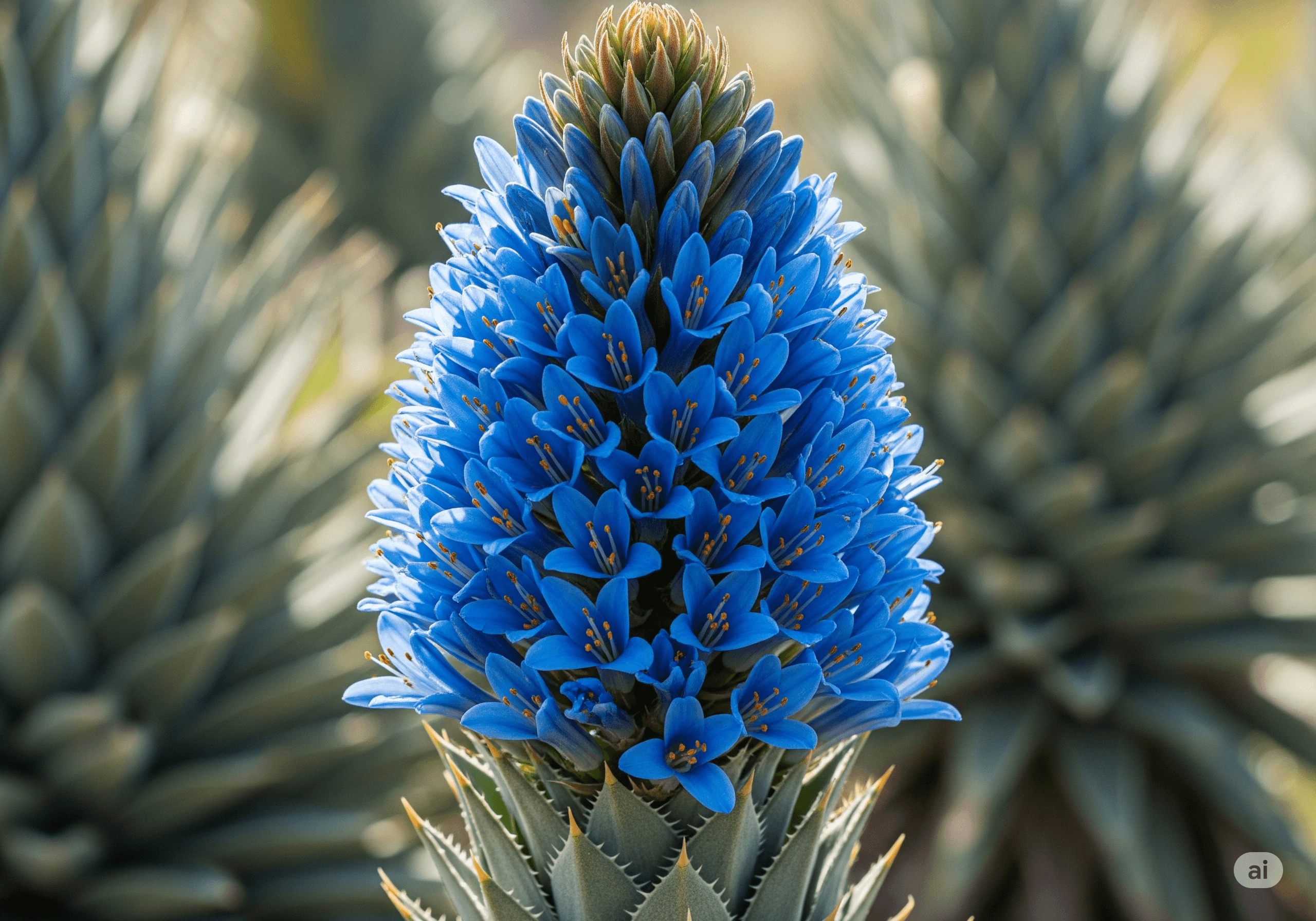
The Blue Puya is an extraordinary flower, famous for its surreal electric blue hue. Symbolically, it represents loyalty, friendship, and peace. Because of its striking color – a calming yet intense blue – it has come to denote a sense of deep trust and harmony. Some also interpret the Blue Puya as a symbol of the unexpected wonders of nature and the idea of discovery, given that seeing one in bloom is a rare event. In the language of flowers, gifting a Blue Puya (were it feasible, as it’s so rare) would imply “your friendship means the world to me” and a wish for calm, peaceful times ahead. Its sharp spines and dramatic form hint at the notion of loyalty and protection, as if saying “I will stand by you staunchly, like this hardy plant in a harsh landscape.”
History and Cultural Significance
Native to the high Andes of Chile, Puya alpestris is a plant well adapted to tough conditions, often growing on rocky slopes. Its almost otherworldly blue-green petals surrounding bright orange pollen structures have captured the imagination of botanists and plant enthusiasts worldwide. While it was known to indigenous peoples in its habitat, the Blue Puya gained broader fame after its introduction to European gardens in the 19th and 20th centuries, where it became a prized greenhouse oddity. The plant’s rarity and unusual carnivorous twist – some related Puya species trap insects or even small animals with their spines (earning them the name 'sheep-eating plant' in legend) – added to its mystique. In modern times, the Blue Puya has been featured in art installations and botanical garden showcases as a symbol of Chile’s unique flora. Culturally, while it may not have deep folklore due to its remote habitat, the Blue Puya’s recent rise to prominence in horticulture has attached to it themes of conservation (since it’s a treasure of biodiversity) and the awe of nature’s extremes. People who see it blooming often describe it as a 'once-in-a-lifetime' experience – underscoring its symbolism of something precious and loyal (just as it loyally blooms after many years) and the tranquility of its blue coloring.