Nigella
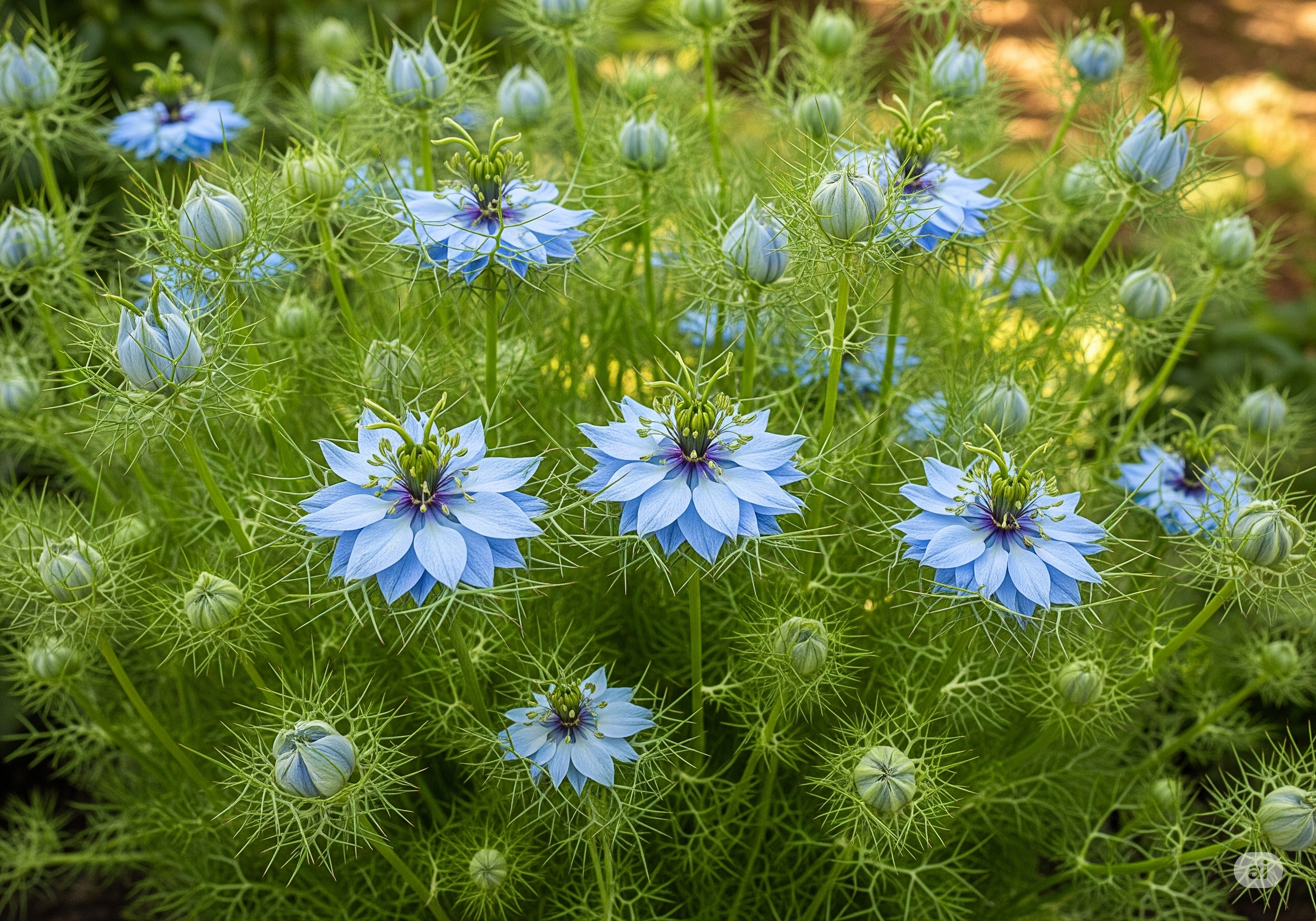
Nigella damascena
Meaning and Symbolism
Nigella, also known as “love-in-a-mist,” gains its romantic name from the fine, fern-like bracts that encircle its star-shaped blooms. In floriography, it represents bonds of love, the complexity of relationships, and the beauty found in life’s mysteries. Blue nigella symbolizes harmony and trust; white varieties represent purity and sincerity; pink or lavender forms carry themes of gentle romance and admiration. Because the flowers are followed by inflated, ornamental seed pods, nigella is also linked to the continuity of life and the treasures hidden within. It is often given as a token of deep but understated affection, suggesting a relationship that is both unique and enduring.
History and Cultural Significance
Native to southern Europe, North Africa, and southwest Asia, nigella has been grown in gardens for centuries. The species name “damascena” references Damascus, Syria, hinting at its Middle Eastern heritage. Historically, nigella seeds have been used in cooking and traditional medicine, though *Nigella damascena* is distinct from the culinary “black cumin” (*Nigella sativa*). In Elizabethan England, nigella was a common feature in knot gardens and herb borders, valued for both its beauty and its ease of cultivation. The Victorians prized it for its whimsical appearance and often included it in romantic posies. Today, nigella remains popular in both fresh and dried arrangements, with its airy foliage and unusual seed pods adding texture and intrigue. It is also beloved by pollinators, making it a useful addition to wildlife-friendly gardens.