Buttercup
Ranunculus acris
Meaning and Symbolism
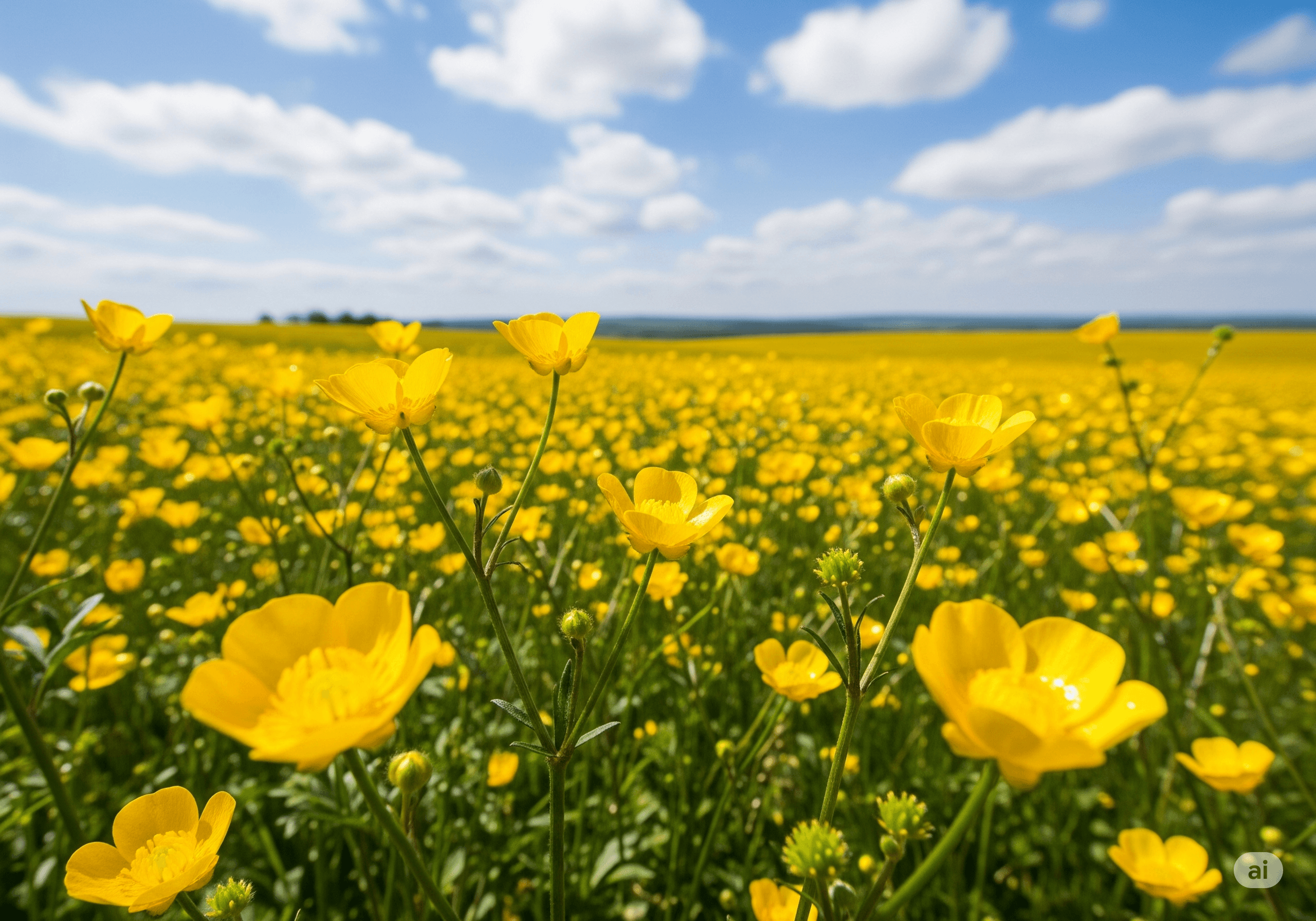
Buttercups symbolize innocence, youth, and the simple joy of childhood. Their bright yellow blooms are often associated with sunny happiness and the carefree days of youth – so much so that calling someone “my buttercup” is a term of endearment. However, in the Victorian language of flowers, buttercups could carry a slightly cheeky meaning: they sometimes signified childishness or immaturity (as in “you are being playful or a little naive”). Despite that, the overwhelming connotation of buttercups is positive: the phrase “bursting with buttercups” evokes fields full of laughter and light. They can also represent humility (their blossoms sit close to the ground) and neatness or order in a rustic sense. Another layer of meaning comes from a traditional children’s game – holding a buttercup under the chin to see a yellow reflection, which is said to indicate a love for butter – adding to their association with play and fond childhood memories. Overall, buttercups speak to unbridled happiness and the gentle virtues of youth.
History and Cultural Significance
Buttercups are common wildflowers in many parts of the world, particularly Europe, Asia, and North America. Their simple presence in fields and meadows has endeared them to folklore and rural traditions. One well-known British folktale involves the buttercup’s yellow glow: it’s said that the flowers got their color from the butter that milkmaids spilled, or from the lips of cows that ate them (even though buttercups are actually mildly toxic to grazing animals, causing them to avoid eating too many). Culturally, buttercups often appear in nursery rhymes and childhood songs as symbols of simplicity and joy. For example, in the 19th century, some books of manners cautioned against giving buttercups in serious courtship because of their "light" meaning (implying the giver thinks the recipient somewhat frivolous) – a guideline reflective of Victorian nuance. Scientifically, the genus name “Ranunculus” means “little frog” in Latin, because many buttercup species like damp habitats – this connection to small frogs adds to their playful, natural imagery. Today, beyond wild buttercups, hybrid ranunculus are cultivated as gorgeous cut flowers in colors beyond yellow (pink, red, white) but even these more formal buttercups still carry that undertone of radiant charm and youthful exuberance. They are popular in springtime bouquets where a touch of whimsy and bright cheer is desired.